Day 79 – Hoi An Food Tour
Datelines: Hoi An, Vietnam – Friday, May 21, 2010
I’ve engaged in writing gimmickry before: the list, the interview, and more lists. By far, though, my favorite is exploitive pictures and descriptions of food. The narrative isn’t complex. Just: “picked up food, put it in mouth, tasted good/not good.” Planning the day is even easier: find restaurants and eat the most interesting things on the menu.
It came to this because I’d pretty much run out of things to do in Hoi An. Today was my last day in town and I’d tried to book a cooking class and learn how to make some of the city’s more famous dishes. Unfortunately, all the classes I wanted to take were full. Instead of going in on a class with a less reputable kitchen I opted to go on a self-guided food tour. If I couldn’t cook the food, at least I’d eat it.
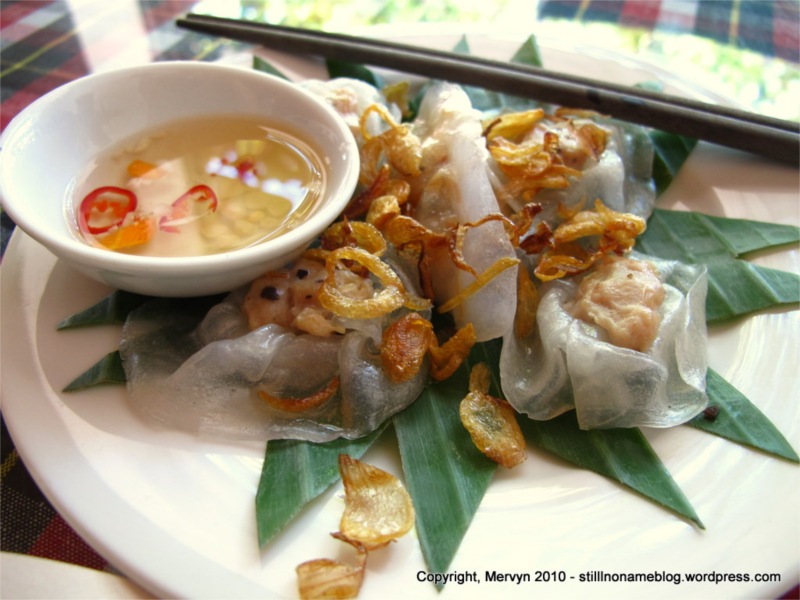
First up, a sampling of a dish called White Rose, shrimp encased in steamed rice paper (see above). This is a light, airy dish. The rice paper practically melts in your mouth. The shrimp is mixed with seasoning and is revealed as the paper disappears. What surprisingly makes the dish is the fried garlic. It adds a burnt, biting flavor to the dish. Even more important, though, it adds texture. The garlic is a bit crisp and a bit chewy, which contrasts with the softness of the rest of the ingredients. It also provides a nice orange color. I’ve had this more than once and today it did not disappoint.
It didn’t hurt that I was able to wash it down with a nice, bitter cup of iced coffee.
While I waited for my appetite to return, I decided to try and find Ba Le Well. Locals come to the well to draw water to make a cao lau, a local dish composed of soft flat noodles topped with pork slices and finished with bean sprouts, greens, and crispy croutons. I’d had this dish before, so finding the place where generations of cooks came to draw cao lau water seemed like a decent way to take a break. I work hard. Real hard.
Finding the well turned out to be harder than advertised. The guidebook was hazy on directions, but after wandering a residential area and walking up and down alleys where only natives tread, I think I found it. It was a small, square hole in the ground. There was even a man dipping large blue canisters in to get water. It may not have been Ba Le Well, but after wandering around in the heat, no doubt trespassing onto private land and scaring peace loving locals, I decided it was close enough.
Break over, I headed for the next destination. Appropriately enough, it’s Bale Well Restaurant. Just down from where I found the fake/real Ba Le Well, this local favorite specializes in pork, fried spring roll, or Hoi An pancake wrapped in rice paper and herbs. I’d been here before with my friend from the tailor shop. I decided to return because I hadn’t had a chance to take a pic or contemplate the food. I knew it tasted good, so figured that it deserved a second visit.
Turns out, it probably deserves a third, fourth, or fiftieth visit. There’s a reason why locals come here. There’s a reason why the restaurant, which started in a small venue, has moved to a larger location and expanded. There’s a reason why the family that owns this place has been able to put up additions to its house.
The food is damn good. A simple guide to eating here. When you sit down, a waitress will bring over a plate of rice paper, a plate of herbs, and a plate of barbequed pork. Shortly after, you’ll also get a plate of fried spring rolls and a bit after that a plate of Hoi An pancake. Your job is to pick up a piece of rice paper, slap some herbs and lettuce on it, put on meat or roll or pancake, roll up the rice paper, dip it in peanut sauce, and eat it. You can mix and match meat. You can add chili sauce to your peanut sauce.
This is self-assembled food at its finest. The rice paper adds a bit of flavor but is really just there to keep your fingers clean. The fresh veggies and meat are what make the dish.
Then there’s the Hoi An pancake. The pancake is fried and made of rice paper, egg, and seasoning. The pancake is fried on one side then folded in half around bean sprouts and shrimp. The outside is slightly crisp, but most of the half circle of goodness is light and airy. Some unknown ingredient gives it a little sweetness. This is by far my favorite Hoi An specialty. I could eat this all day. I could also gain 500 pounds.
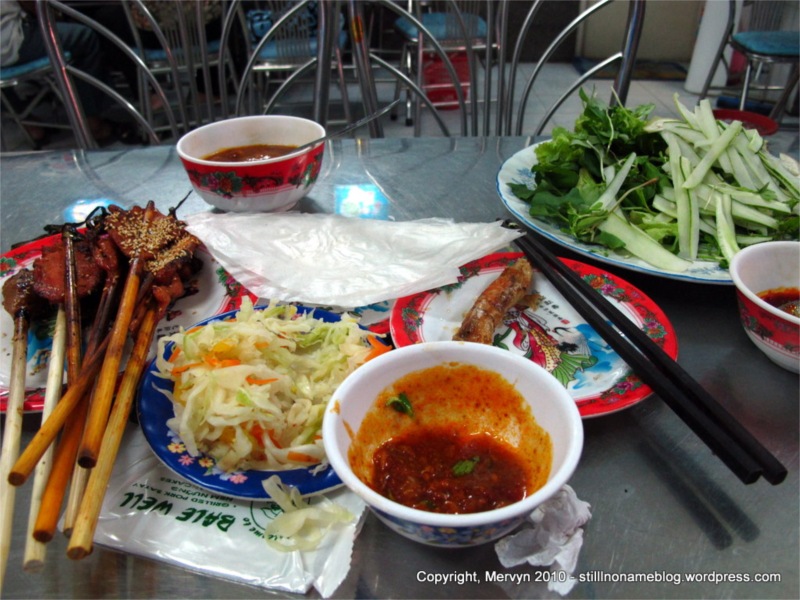
I gorged myself on fresh vegetables and meat. All this decadence cost me 80,000 dong, which sounds like a lot until you remember your maths and realize it’s about $4.50 USD. Fantastic.
By now it was sunset. I walked off part of my meal and headed for my last spot, Mango Rooms, for dessert. Mango Rooms is a hoity-toity restaurant that specializes in new twists on traditional Vietnamese dishes. It also is very pricey. Thus, dessert only.
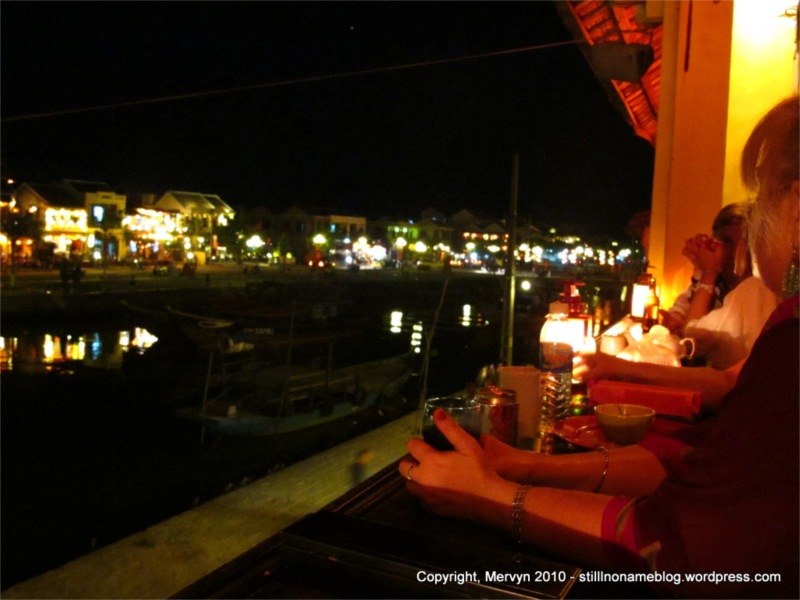
I opted to sit upstairs and ended up on the balcony. If you can stand sitting in a little bit of a cramped space, the Mango Rooms’ balcony is a great place to take in the river and the street below.
But let’s get to the food. I was just in for dessert, but I couldn’t resist ordering a mango and passion fruit shake. This was a bit of genius in a cup. The cook hadn’t just added passion fruit to a mango shake, he‘d added the passion fruit seeds as well. The black, slightly gelatinous seeds became like little tiny boba with a little crunch in the middle. The seeds were quite sour and added a big bite to what otherwise would have been a smooth mango shake. Delicious.
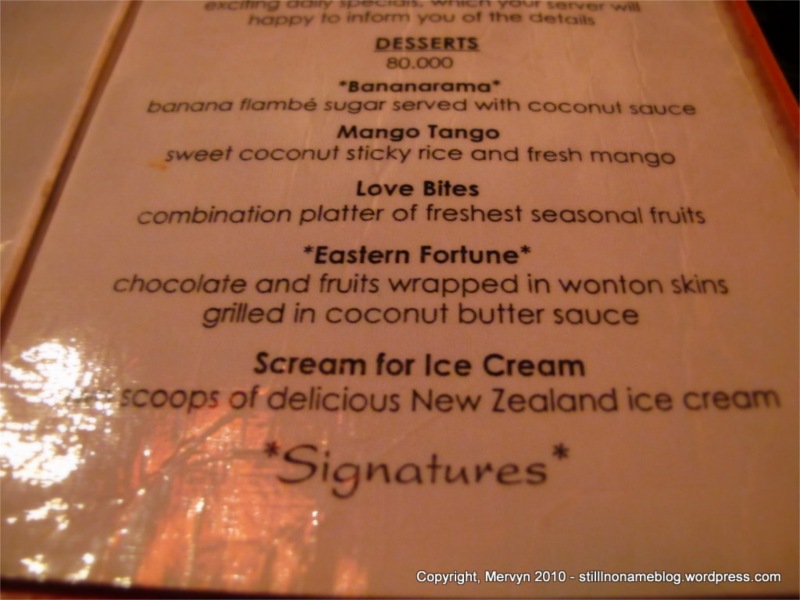
The best, though, was the dessert itself. I went with something called “Eastern Fortune” which the menu describes as “chocolate and fruits wrapped in wonton skins grilled in coconut butter sauce.”
I describe it as “the best dessert I’ve had in the last month.” It’s so good that I’m not going to include a picture of it with this entry. The picture just couldn’t do it justice. The wonton wrapper was sweet and crispy and perfectly cradled the fruit and chocolate. The fruit was either banana, jackfruit, or mango. The thing that made it stand out, though, was the coconut butter sauce. I spent the next 20 minutes nibbling and tasting, trying to figure out whether it was coconut with butter or butter made out of coconut.
I still don’t know which it was. I do know, however, that I didn’t want it to end. I stretched the experience out as long as I could. The two Australian ladies next to me finished their drinks, appetizers, and mains and I still had one wonton left. I’d drag my fork through the thick white coconut sauce and nibble some more. Only out of pride did I beat the two Aussies to the bill and out the door.
The dessert cost as much as my whole meal at Bale Well Restaurant, but it was worth it. A sublime end to a day of eating. I must resort to writing gimmickry more frequently.
GALLERY: Click through to see bonus pictures of a mango and passion fruit shake, the chips and mango salsa, a basketball game Mervyn stumbled on between feedings, and a picture that doesn’t do justice to the deliciousness that is Eastern Fortunes.
Dateline: Cham Island and Hoi Ann, Vietnam – Thursday, May 20, 2010
Today I did two dives with Rainbow Divers off of Cham Island. The sites were about one and a half hours by slow boat from the Hoi An docks. I won’t bore you with the details of what amounts to underwater birdwatching. I’ll keep my dorkiness to myself.
A few quick notes, though. Today’s dives were the first where I actually felt cold. We had long 3mm wetsuits and I was still shivering underwater. This is odd because it’s the tropics. It also reminded me that I can’t fight millions of years of evolution. My body has been honed to cope with extreme humidity and heat. Dump a little water on me and put me in a slight breeze and I’m liable to get hypothermia. Don’t laugh. I have relatives who’ve lost toes to frostbite in 60 degree cold spells. Really. I don’t lie. Ever.
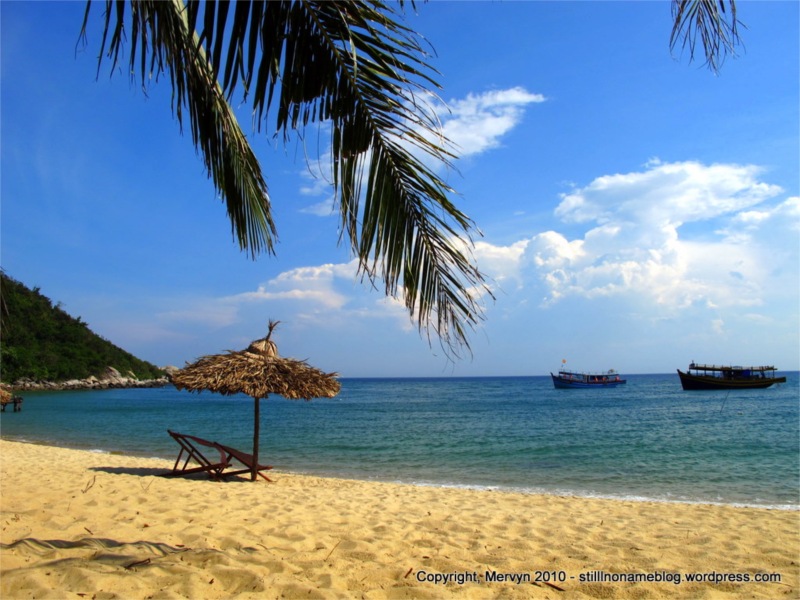
Also, the reefs here are relatively well preserved. Diving in Vietnam has been consistently better than the bombed out dives I did in Cambodia. The government’s done a decent job of preserving its marine life. Go communism!
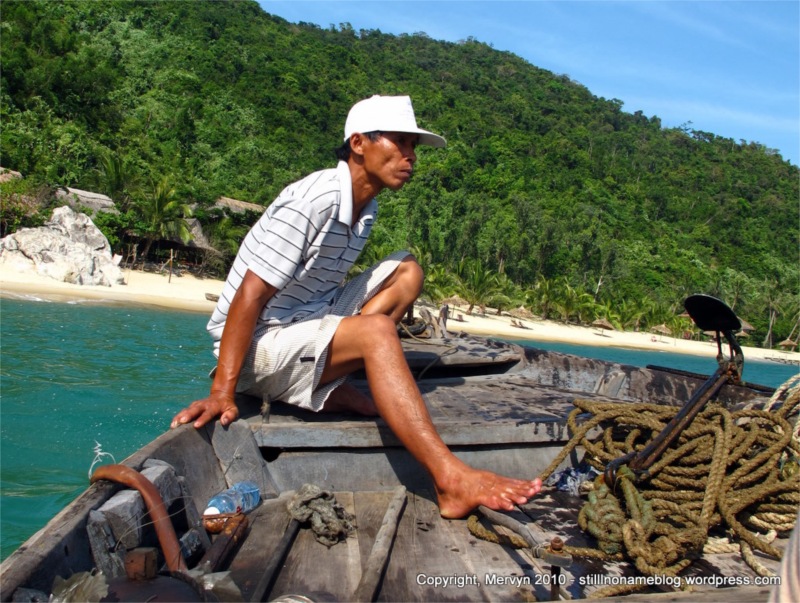
After we finished our two dives, we stopped on Cham Island for lunch. A boatman from the island ferried us to shore. The place was nearly deserted except for another dive boat that took their meal on the other end of the beach.
I chatted with two American teachers after lunch. They’d gone straight from college to teaching English around the world. The guy was well traveled, going everywhere from Russia (worst place to teach) to Poland (okay) to Vietnam (best net pay). The girl had been in Vietnam for three years and was an administrator at her school. When they learned about my background they encouraged me to teach business English. This apparently pays quite well. Something called “legal” English also fetches a premium. They seemed happy and content. It’s good to know I have a fallback career.
When we got back to shore I ran through chores of visiting the tailor for a refit, shopping around for a cooking class (idea nixed because all next day’s classes were full), and eating (Hai Scout Café).
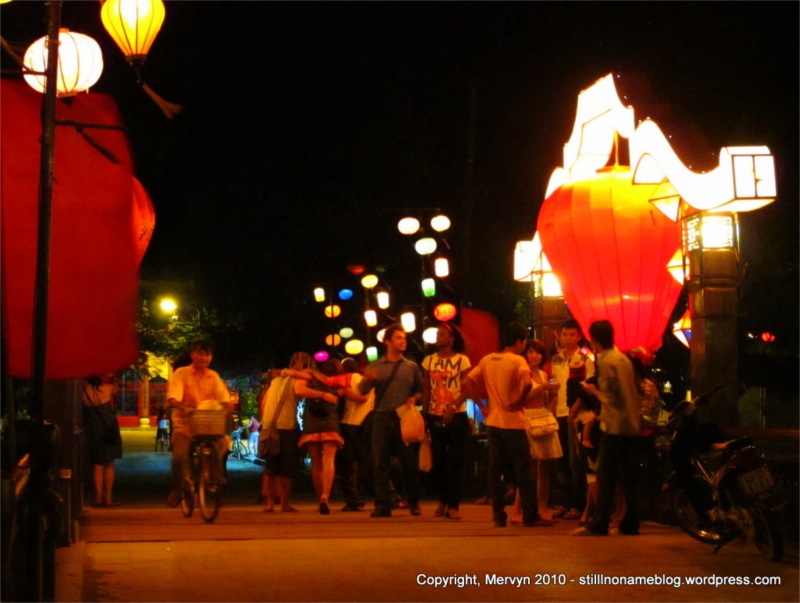
Then I just wandered Old Town. Hoi An at night is a great place. The local government has banned combustion engine vehicles from Old Town after sunset. Only pedal or electric bikes are allowed on the narrow dirt streets.
That means serene silence. No honking horns. No exhaust. It’s actually peaceful. Just the occasional shop owner calling out to, “Come visit my shop,” and the sounds of the languages of the world drifting round the alleys and walkways. Travelers stroll, shop, and eat.
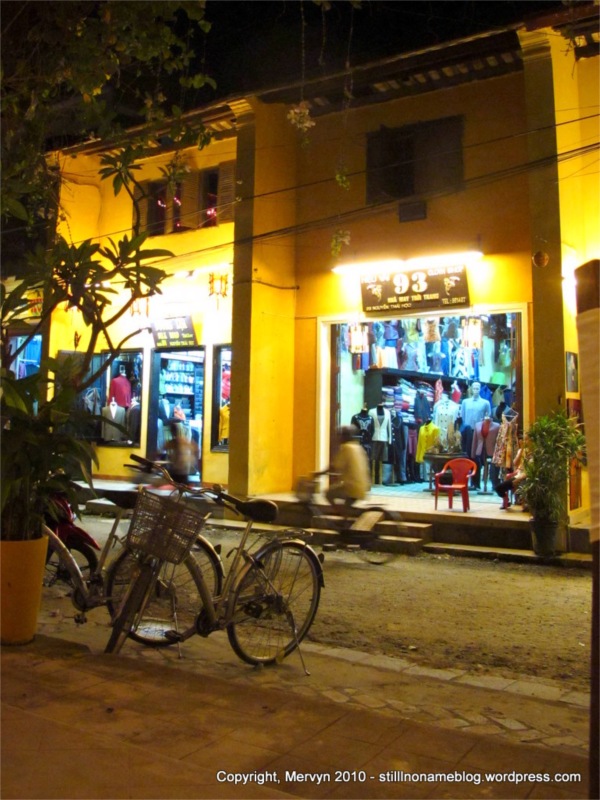
Everyone, locals included, sits outside enjoying the cool night air. Down by the river, you can hear diners chatting and clanking silverware from the balconies above. Despite the dubious authenticity (this isn’t the “real Vietnam”) it’s quite lovely. Every once in a while even I need a break from the raw energy and heat of Southeast Asia.
Diving, eating, walking through quaint city streets. I may have said it before, but I’ll say it again: I’m totally digging Vietnam.
GALLERY: Click through to today’s gallery where you’ll find, amongst other things, bonus pictures of a wicker boat, a Cham Island boatman, and yet other TV soap opera set that Mervyn stumbled on while wandering Old Town Hoi An.
Day 77 – Waaaalt! (Thuy Son’s Cave Temples)
Dateline: Hoi An, My Son, and Marble Mountain, Vietnam – Wednesday, May 19, 2010
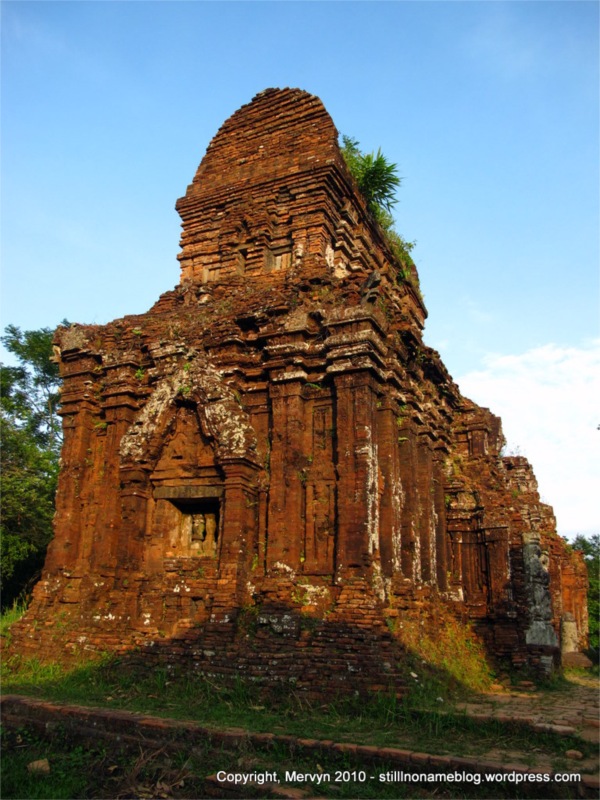
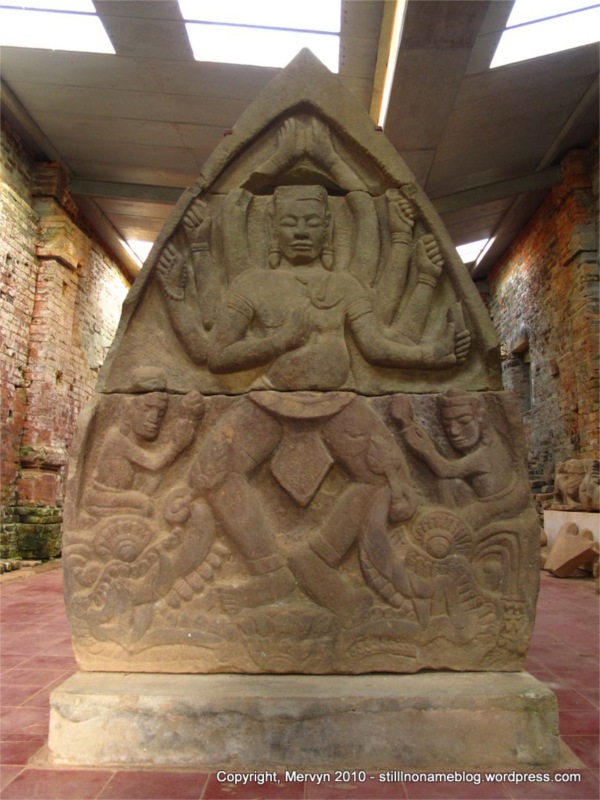
Another early morning. Today I jetted out to My Son (pronounced: Mee Sun), the ruins of the Champa civilization. The Champa kingdom held sway in the area between the 2nd and the 15th centuries. My Son used to be an intellectual and spiritual center of the empire. The ruins were more ruined after the American War.
I set off at 5 a.m. on the back of my motorcycle guide’s Honda cruiser. Using my experience from the last day at Angkor Wat, I decided to get an early start to beat the heat and get some decent light to take pictures. I’d planned on doing this on my own on a motorbike, but opted for a guide instead. My decision seemed like a good one considering it took us an hour to get there and the route didn’t seem totally straightforward.
We arrived at 6 a.m., but there were already a couple groups of tourists there wandering the small complex.
I’ll keep this short. After seeing the expansive ruins of Angkor Wat near Siem Riep, Cambodia, My Son is miniscule in comparison. It does offer different, unique architecture, but if you’re templed out after Angkor Wat, this isn’t going to revive your passion. That said, it is decent.
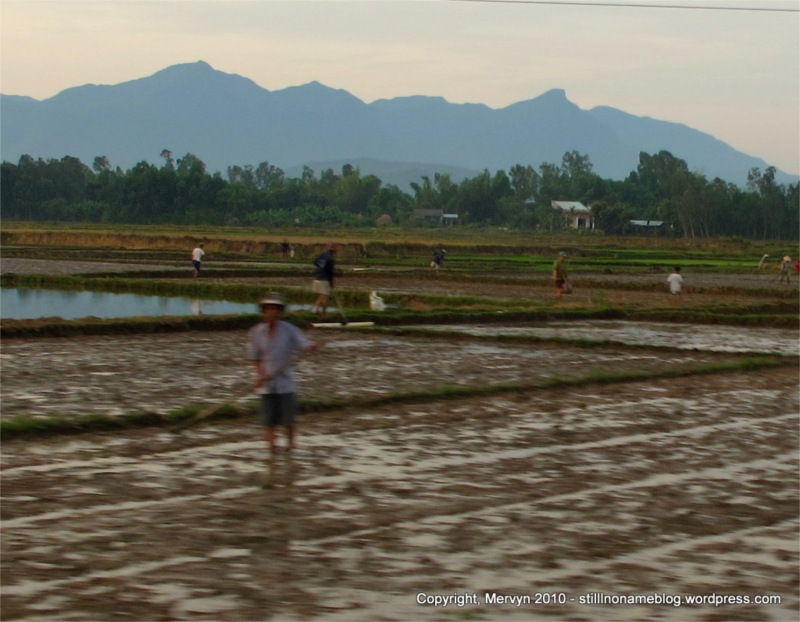
Afterwards, we headed out to Marble Mountain. The trip through the countryside gave me an unexpected experience. On the way into My Son, we’d driven through villages and fields. Some farmers were already out turning over the earth with tractors or caribou in preparation of the next round of seeding. Now the farms were in full swing. Men and women were out tending to the rice paddies. It was barely 7 a.m. and they were already deep into the fields toiling away.
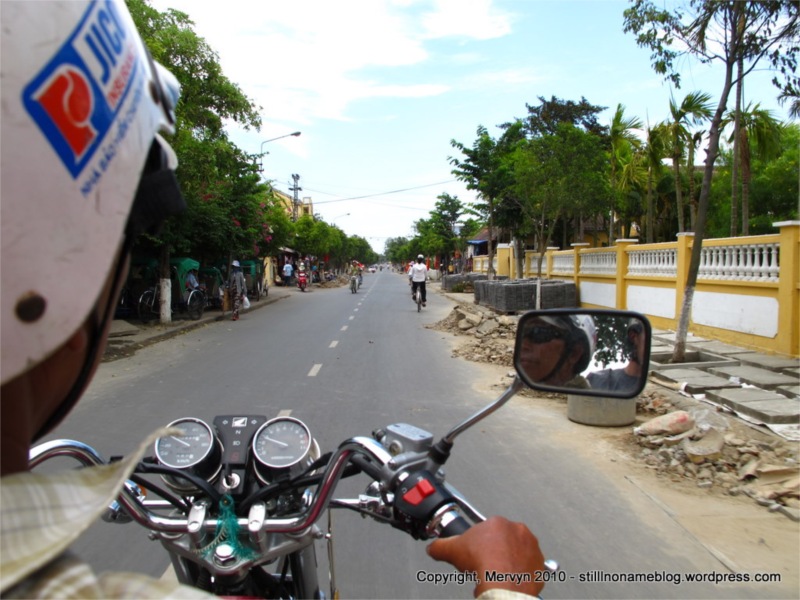
As we zipped by, my driver honked at oncoming traffic, people tending roadside shops, and kids playing badminton. I soaked in the countryside and contemplated my fortune. My grandparents owned a farm in the Philippines and pure happenstance spared me from tending fields similar to these. Far from the climate controlled high rises of San Francisco, people like me still got up before dawn to grow rice. A lot less separated me from this world than you might think.
We arrived at the Marble Mountains and I ascended the steps to the plateau of the most famous, Thuy Son. Where My Son offered something all too familiar, Thuy Son presented something unique. The mountain is one of a number of peaks that somewhat resemble the rock outcroppings of Railay, Thailand. Local artisans used to mine these hills for marble that they carved into works of art. These days they wisely get their marble from China and leave the tourist attraction untouched.
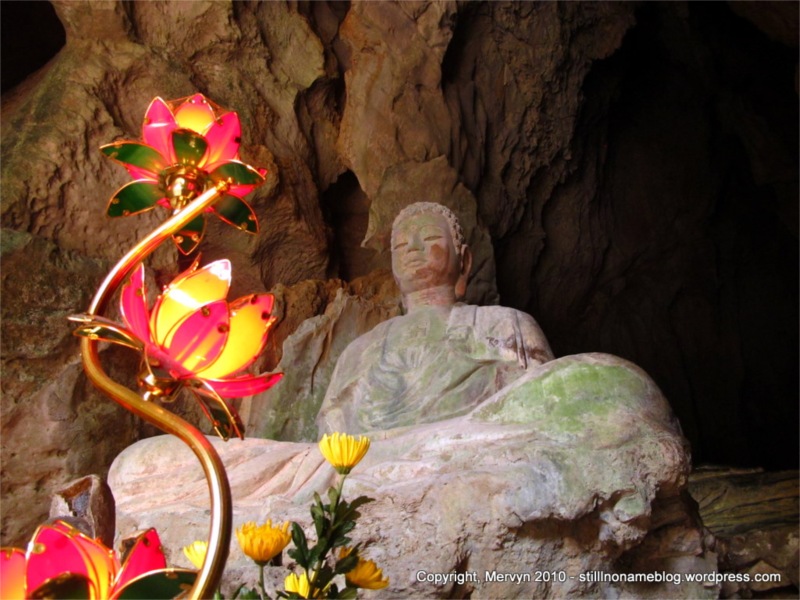
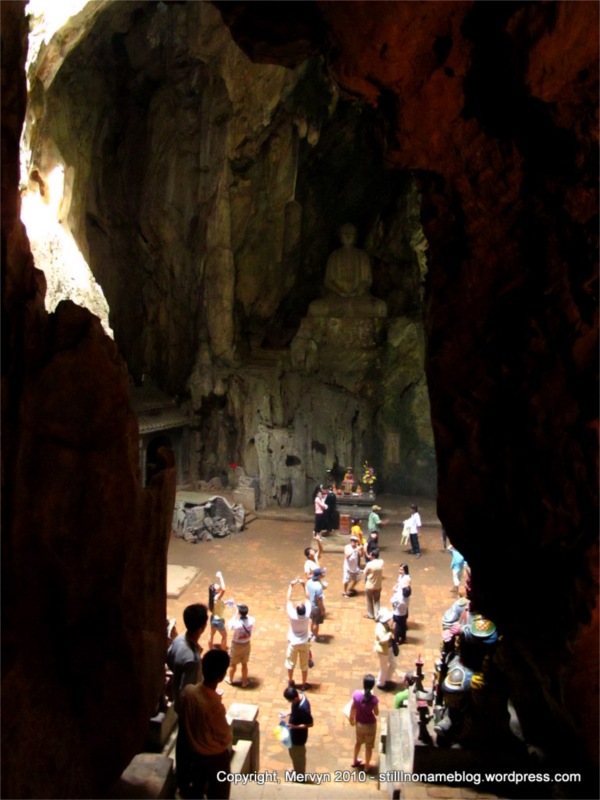
Carved into Thuy Son’s rock are Hindu and Buddhist sanctuaries. Most, like the statues in Dong Tang Chon (Tang Chon Cave) seem to be carved straight out of the cave rock (see pic at top).
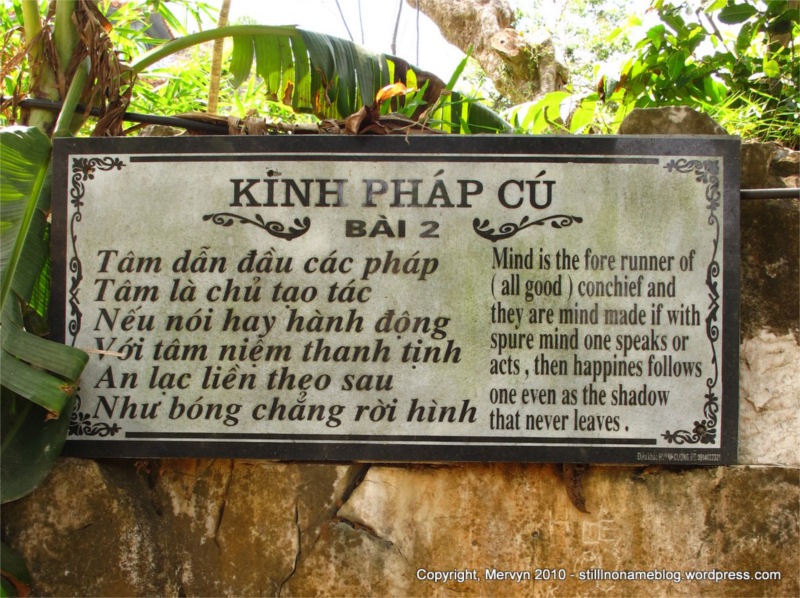
The most impressive is a chamber called Dong Huyen Khong (Huyen Khong Cave). I enjoyed a breeze that gusted over the top of the stairs overlooking the Buddhist and Confucian shrines below. That tiny feature added to the meditative feel of the natural cathedral, a sort of cool eye to the sun and heat storm raging outside.
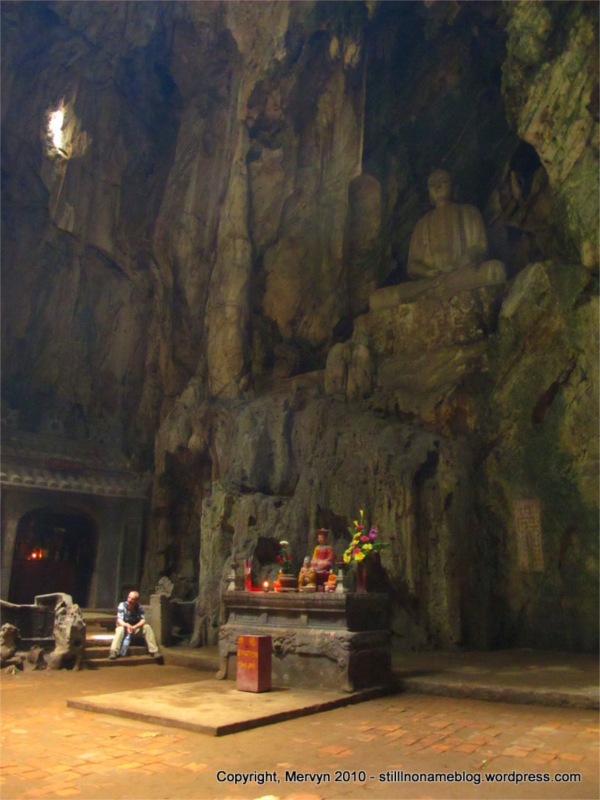
It’s also offers a bit of insight into the complexity of the American-Vietnamese War. The Viet Cong used this cave as a field hospital. Just a few hundred meters away is China Beach, a name the Americans used to refer to a 30 km stretch of coast that starts at the Marble Mountains and stretches almost to Hoi An. Looking down from Thuy Son, one can see the ocean and sand of the spot just south of Danang that American soldiers from around Vietnam used as a place for a little R&R before returning to combat. This rest stop for U.S. soldiers was only a few hundred yards away from a treatment center for VC casualties.
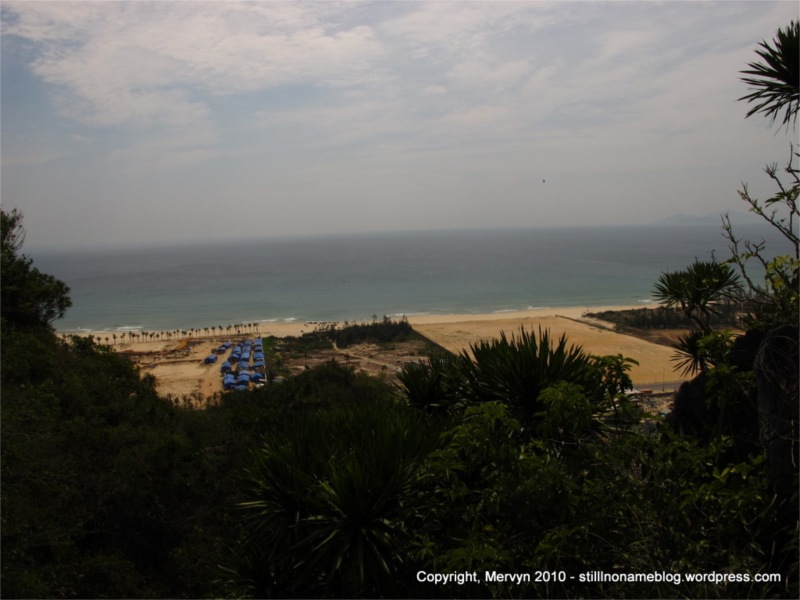
After a couple of hours exploring Thuy Son, I descended the mountain to meet my guide, Mr. Son. We made a short side trip to visit Thanh Ha, an artisan village specializing in traditional handmade pottery. They still use foot powered pottery wheels that sit on the floor. I watched a grandmother kick one of these to speed while her granddaughter sat cross legged on the floor as she threw pot after pot.
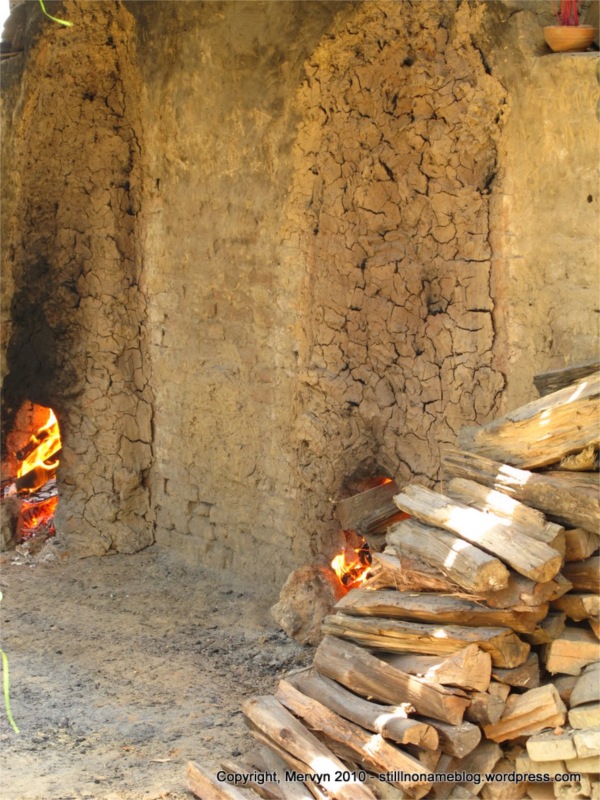
The pots were then set out to dry in the sun then sealed into an old fashioned kiln where they were fired over the course of 3 days. A man fed stacks of wood into the clay ovens in the midday heat. Even the heat for the kilns was handmade.
Mr. Son then offered to take me to the beach near Hoi An. Here is one of Hoi An’s underrated pleasures. Something that, without my guide, I’d never have bothered to explore. I’m not much of a beach bum. I get bored too easily and I keep wanting to find some shade.
This beach, though, was my kind of stretch of sand and ocean. Where the beach in Nha Trang was crowded, the beach here was nearly deserted. The water and sand were just as good as anything in much more touristed Nha Trang. Best of all, as far as I could see, there were a couple rows of comfy reclining chairs and umbrellas. Perfect for a breezy afternoon nap. I had a simple lunch of wontons in a mango salad and took a cup of iced coffee under a shaded lounge chair.
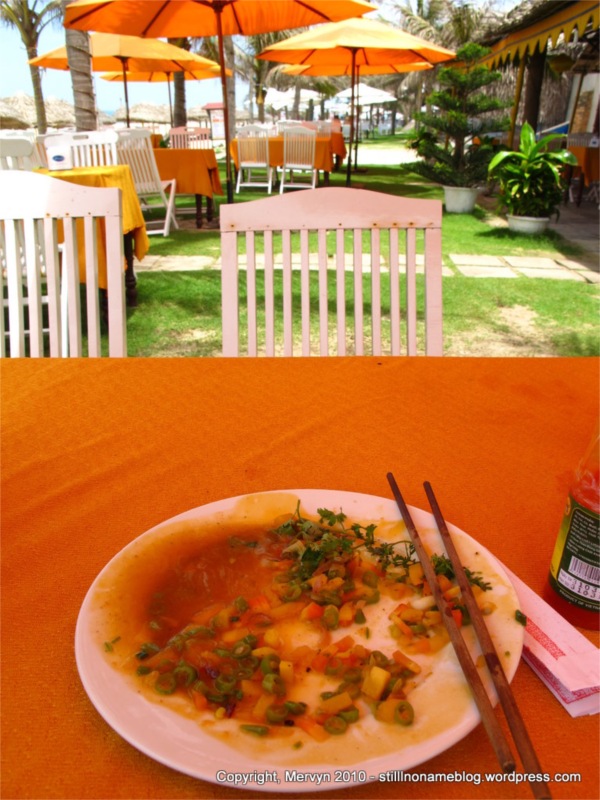
As I dozed I marinated in the perfect cap to a busy day. And it was only 1:30 p.m.
This early to rise thing is a killer.
I managed to fill the rest of the day with clothing fittings, dinner, and a stint of writing. I even booked a dive trip for the next day.
I even get to sleep in–the dive company won’t pick me up until 7 a.m.
GALLERY: Click through to see bonus pictures of Mervyn’s favorite beach in Vietnam (so far), more My Son ruins, and the wondrous caves the Marble Mountains.
Dateline: Hoi An, Vietnam – Tuesday, May 18, 2010
In my experience, getting up early is for old people. The older you get, the less sleep you need so you’re up at the crack of dawn to exercise or work or do whatever old people do when they’re awake before they should be. For some reason, old people also seem to go to bed early, too. Never been able to figure it out.
Today, I simulated fogey-dom and joined my elders in rising before the sun had crested the horizon. That’s because I spent the night on a sleeper bus going from Nha Trang to Hoi An. We boarded at 7:30 p.m. and most people had zonked out after a rest stop an hour and a half later. Like geriatrics, we were up at 5 a.m. because we’d gone to bed early and because the sun was already pounding us through the buses large windows.
Night buses in Vietnam tend to arrive at their destinations before 7 a.m. which is in keeping with the local custom of early to bed and early to rise. Guess they figure there’s no point in arriving at 9 or 10 in the morning. It’d be the equivalent of arriving at noon for us Americans—you’d be getting in 5 hours into the normal work day. If you want to accomplish anything in your day, best to be there when business starts at six in the morning.
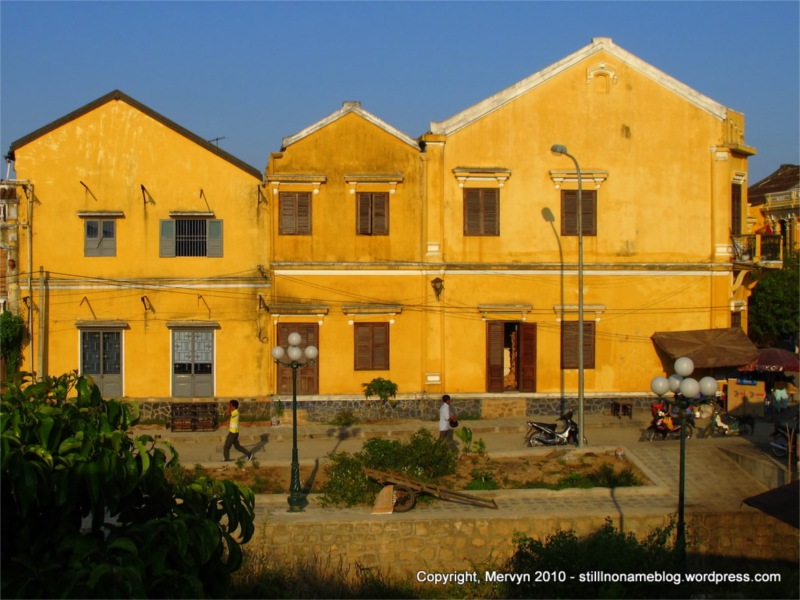
When we arrived, I found a hotel and decided to take my momentum and go straight into a self-guided tour of the “Old Town” portion of Hoi An. The city is a preservation site geared towards visiting tourists. It’s also the place where visitors stop to buy inexpensive custom-tailored clothes. Its primary commerce, though, is tourism around a UNESCO World Heritage site. The downtown area is a mix of French colonial buildings, assembly halls, and old Vietnamese merchant houses.
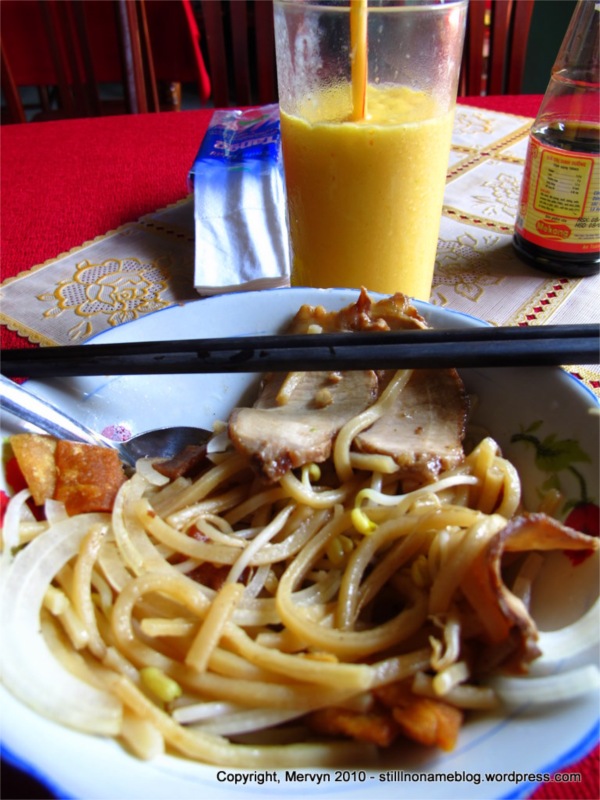
The assembly halls blend Japanese, Chinese, and Vietnamese architecture. They are the result of a lot of immigrant merchant Chinese groups. Each ethnic group (Fukien, Cantonese, etc.) built its own gathering place to meet and honor their ancestors.
For me, the assembly halls sort of started to look like the people who’d previously occupied them—after the third or fourth they all looked alike. A few interesting notes, though. Each usually had lots of large, conical spirals of red incense hanging from the ceiling. In the center of the winding red cone hung the names of dead relatives. The incense is supposed to be able to burn for over a month, the flame smoldering its way up to the top of the spire. It’s a form of honoring ancestors.
They were striking and, since every single one was lit, the assembly halls always smelled heavy of perfume. Every once in a while the ash from one would fall next to me onto the ground. A strange but fascinating tradition.
I noted previously that I’m tracking the path of a Top Gear episode. Walking through Old Town I stumbled on the tailor shop featured in the Hoi An portion of the show. I got a little too excited. I did calm down enough to snap a pic.
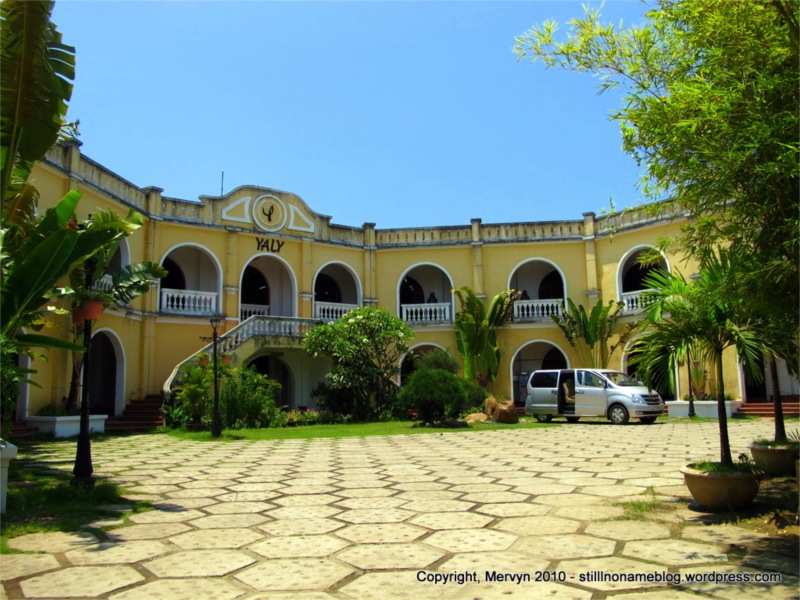
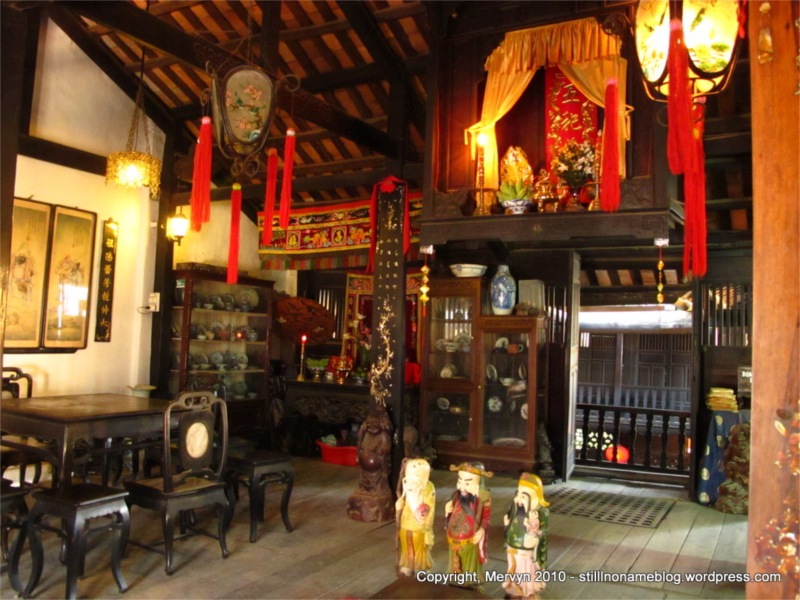
For me, though, the rewards for walking the dusty streets lay in the old houses. These are private residences that the families have opened to the public for viewing. They each exhibit some aspect of Old Town that’s up for preservation. My two favorites: Tan Ky and Phung Hung.
Tan Ky was built by a Chinese merchant and has remained in the family. It sits on the edge of river and every year floods during the rainy season. The guide explained that the flood helped remind everyone that possessions were not the key to happiness. If they had too much stuff, they couldn’t move it all upstairs when the flood came and they’d lose it to the waters. Best to keep material possessions to a minimum and find happiness elsewhere. Looking at the décor, this means inlaying the interior of the house with detailed art.
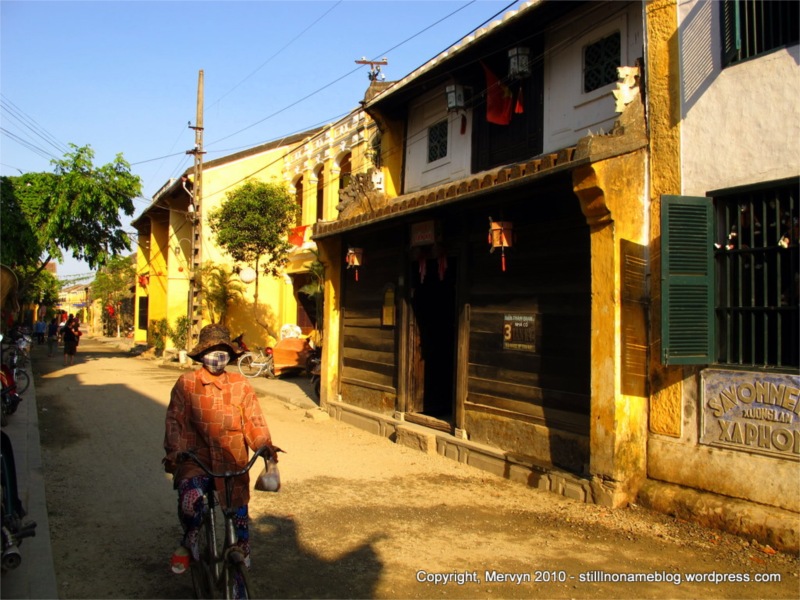
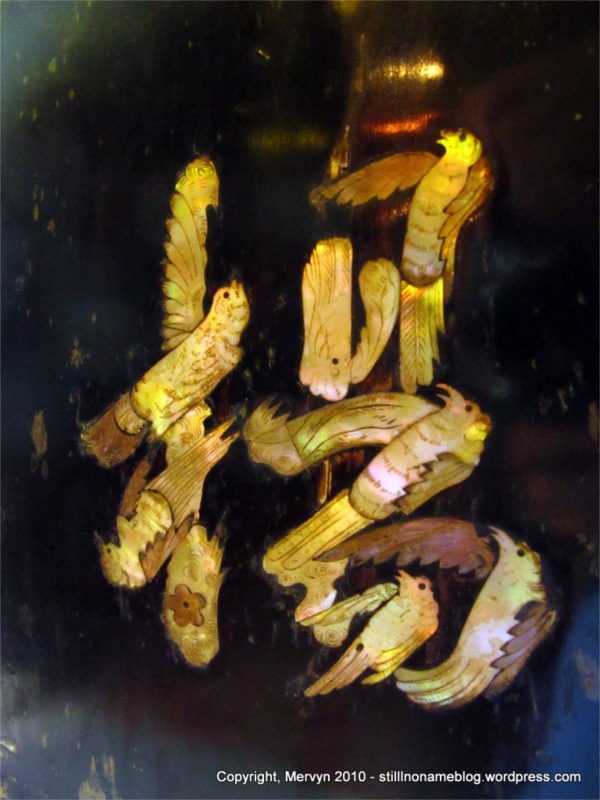
One of the artistic highlights was a series of Chinese writings on the pillars. From afar they looked like normal white characters on dark wood. Up close, though, you saw that they were actually small, posed birds made from painted and carved mother of pearl. Those clever Chinese immigrants.
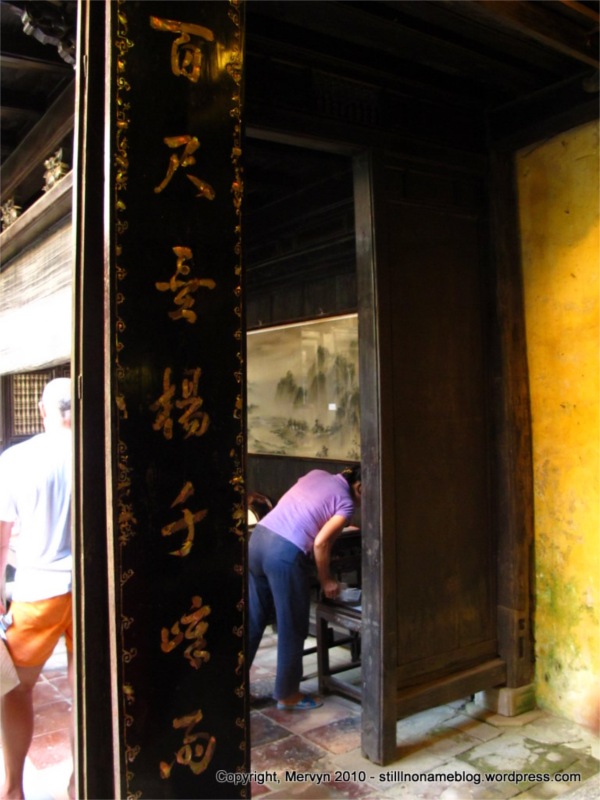
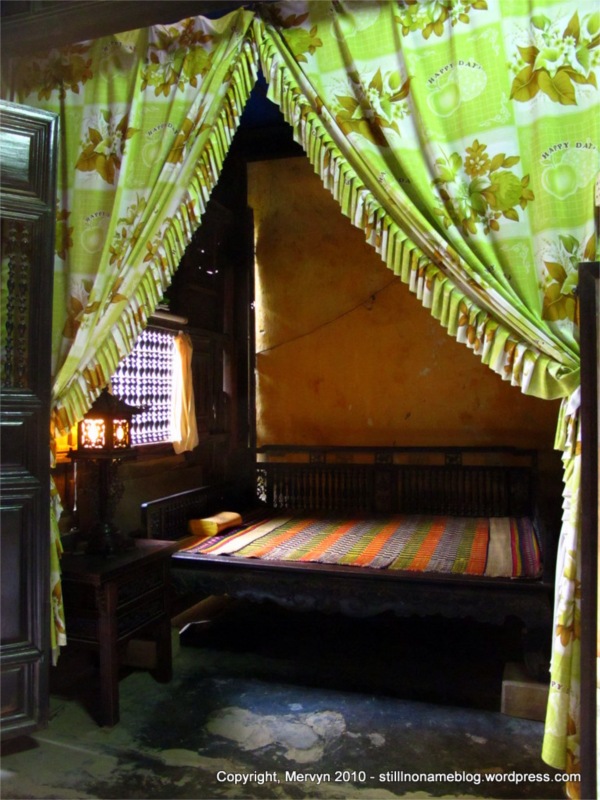
The house was still a working residence so the family slept, cooked, and lived in it. Tourists aren’t allowed upstairs, but you could see a small bedroom downstairs. The entrance consisted of an elaborate shrine to a sea deity. Not sure if it works, what with the floods every year. Perhaps it just keeps the house from being swallowed completely.
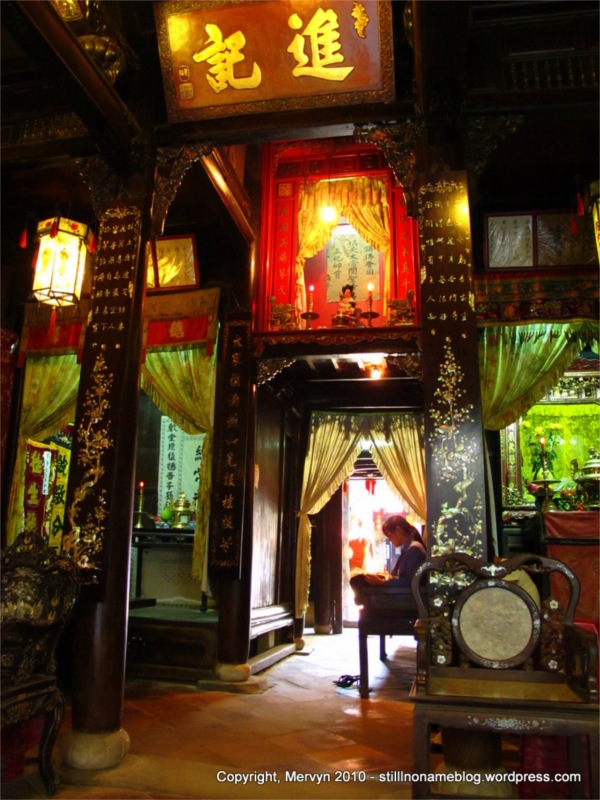
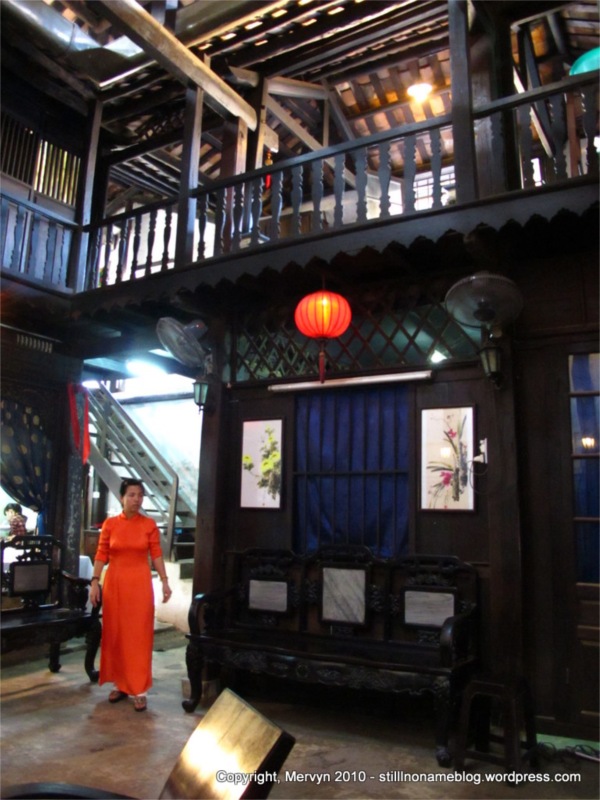
The next highlight was Phung Hung, which looked like a set for a classic kung fu movie. In the middle of the house was a spot where balconies overlooked a seating area. I could imagine warrior monks flying down from above to battle drunken rabble rousers. Upstairs was a nice hanging shrine to. . .uhhh. . .someone. I don’t know because the girl who guided me through the place reciting history seemed to have had her soul removed. When she asked me if I wanted to buy something I might have thought she was mumbling to herself if she hadn’t been making eye contact. She offered me tea and even poured me a second glass, the whole time moving as if she were an automaton whose face parts had been frozen into a blank stare.
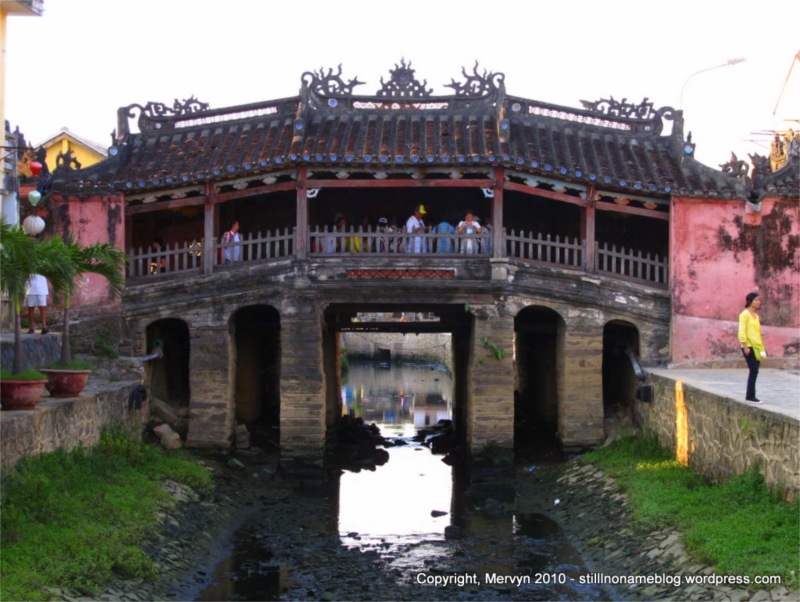
I left Phung Hung and wandered some more, but everything started to blend together. Even the supposedly iconic Japanese covered bridge failed to distinguish itself. Maybe it was the heat. Maybe it was the fact that I’d been up for 12 hours and it was only 4 p.m.
It could also have been that I’d accidently gone shopping. Shopping always tires me. I’d met a tailor at lunch and visited his shop. A couple of New Zealanders there were return shoppers and were happy with the results. I took a flyer on a couple casual shirts, pants, and a coat.
The Kiwis had bought some suits and dresses even as they told me that they weren’t sure when they’d use them as they were abandoning desk jobs to become dairy farmers. For the lifestyle, they said. As they tell it, everyone in New Zealand wants to be a dairy farmer to the point that it’s really hard to break into the industry unless you have connections. Who knew shoving your arm up a cow’s uterus to turn a birthing calf was so much fun?
The tailor and I got along so well that we decided to meet for dinner. We hit a local joint and had various meats and fried goods wrapped in lettuce, herbs, pickled roots, and rice paper. Delicious.
At 9 p.m. I begged off going out to a bar and opted to go to bed. It felt like I’d been awake for two days. Maybe that’s what it’s like to be an old person. The days seem interminably long. Everything starts to blend together like the Chinese assembly halls or historic houses in Hoi An. When you’re old, you’ve seen it all; nothing is new. Over time, you can’t distinguish one event from another. Yesterday looks like today which sort of looks like fifty years ago. Perhaps when you’re old, it’s all a confusing mass of blended experiences. The only response then, is to sleep and hope it all comes clear tomorrow. And that’s what I did.
GALLERY: Click through to see today’s gallery featuring pictures of dragons, bonus shots of the kung fu house, snaps of a TV soap opera set Mervyn stumbled on while wandering, and more pretty pictures of buildings and food.
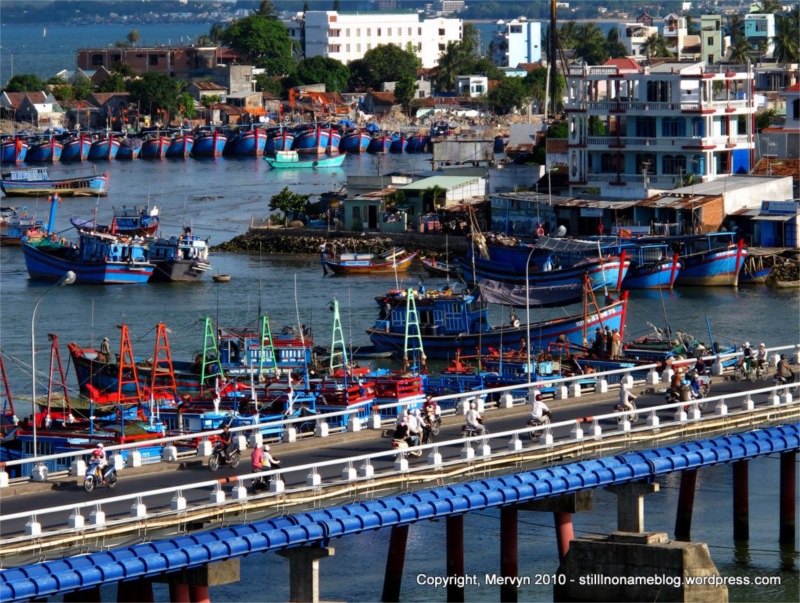
Dateline: Nha Trang, Vietnam – Monday, May 17, 2010
Today I stumbled on a little bit of Top Gear. A couple years back, the British automotives TV show did an episode where its three hosts trekked through Vietnam on motorscooters. They started in Saigon, cruised up the coast, and finished off by transforming their scooters into boats for a race through Halong Bay. Think the A-Team, but with less skill and more Monty Python.
The show is consistently one of my TV favorites. Imagine a couple chaps at the pub getting into a meaningless argument about “which would be faster in a drag race in Dubai: a McLaren F1 or a Bugatti Veyron” except instead of going home to incredible hangovers they instead go to the airport to ship two cars to the desert capital and to actually find out. They’re drunkards with an out-of-this-world budget. One of the things I’m looking forward to most when I get stateside is running through new episodes of the series. I’m all for a little lunacy.
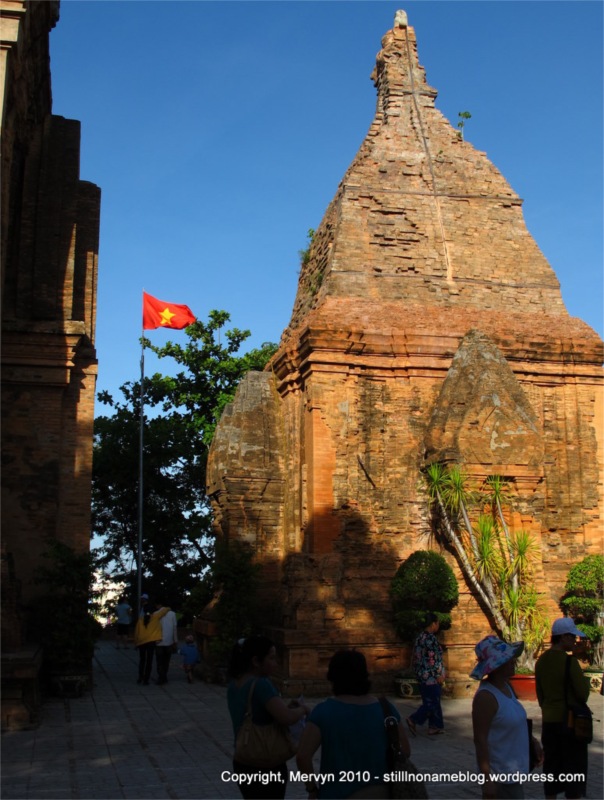
I channeled the Top Gear lads today and decided to forgo a guide and drive myself 6 km out of Nha Trang to the Po Nagar Cham Towers. How hard could it be?
First up, though, I decided to visit the Long Thanh gallery to view a collection of black and white photos by a local photographer. He’s an award winning artist known for still using film and developing all his portraits by hand. He basically has my dream job, except without the writing.
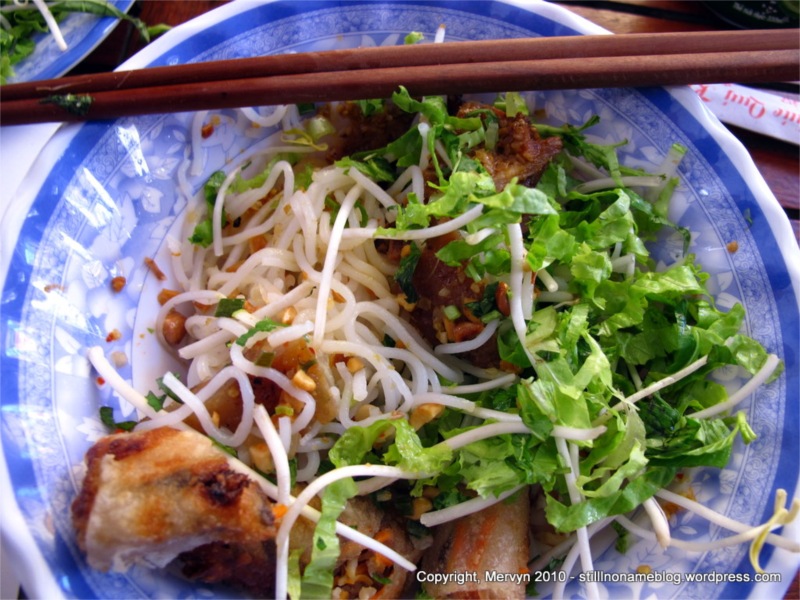
Needless to say, I didn’t find the place straight away. I got lost and, in frustration, stumbled into a random place for lunch. No one really spoke English so I ended up ordering off a series of pictures with English words on them; think giant “Learn Names of Vietnamese Food” flashcards. I ended up with pork slices and fried spring rolls over rice noodles. Perfect. I think one of the slices was pure pork fat, which was like biting in to a little one inch square of heaven and cardiac arrest. I loved it.
As I sat contemplating my life, I realized that a darkened shop across the street matched the address of the gallery. I paid the bill and walked across the way. It was locked up, but I followed the suggestion of a sign that suggested they were open and that I should ring the bell. A lady descended interior stairs, wordlessly let me in, and flipped on the lights.
That’s when I discovered one of Nha Trang’s underrated treats. The gallery was filled with wall after wall of fantastic art. Every single photo captured a bit of the soul of Vietnam. Besides the two beautiful pictures mentioned in Lonely Planet (two girls in the rain lit by an otherworldly sunbeam and a boy running across the backs of water buffalo) there were scores of others. I knew right away I’d found my Vietnam souvenir.
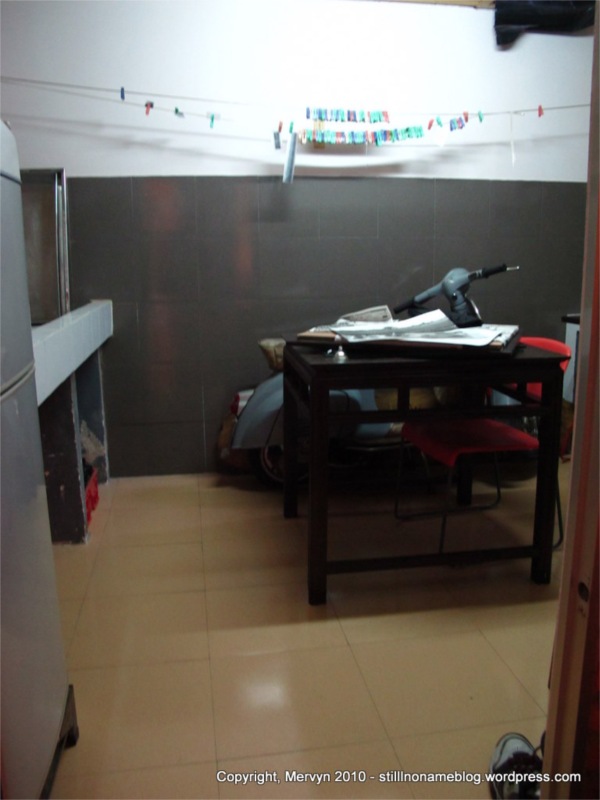
I don’t do trinkets, but I do large pieces of art. I like to find pieces that move me—the kind that make my heart flutter as they remind me of one of my favorite countries. To date, these have all been paintings. Vietnam is already on the “greatest hits” list and deserves a spot on my wall. Long Thanh got a few of those spots.
With his help, I selected three portraits from the scores that I had my eye on. He pulled them straight off the wall, thumb printed the backs, and handrolled them into a tube for shipment.
Did I mention he develops all his pictures by hand? There are no mass produced prints. There’s no cheap, plasticky paper. Every single one of his works is developed straight from the negative in his little darkroom in the back. You can actually feel the difference. It’s the difference between eating a scoop of lasagna churned out by a cafeteria and a slice that’s been baked by an Italian grandmother in her home kitchen—you can sense the love in one and the assembly line in the other.
Afterwards, Long Thanh pointed me in the direction of the Po Nagar Cham Towers (“Three intersections, left turn, 6 km”) and I headed off. I counted off the lights, made my left, and checked the odometer. How hard could it be?
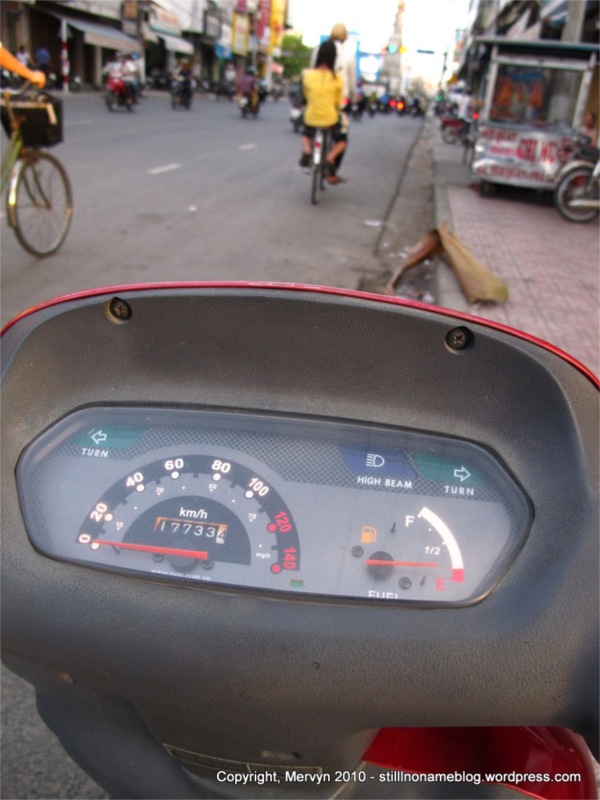
Problem. After 5 minutes of driving, the odometer hadn’t moved. Neither the speedometer needle. Guess the whole front panel didn’t work.
I immediately overshot the Po Nagar Cham Towers and ended up on a twisty mountain road straight out of the Top Gear Vietnam episode. The boys had traveled out of Nha Trang and this was the fastest way out of town to the highway that skirted the ocean to Hoi An. I became Clarkson, May, and Hammond right down to the dodgy motorbike and useless helmet. The road was windy and perilous. I almost shook off the front end because, despite pavement, the road had ridges.
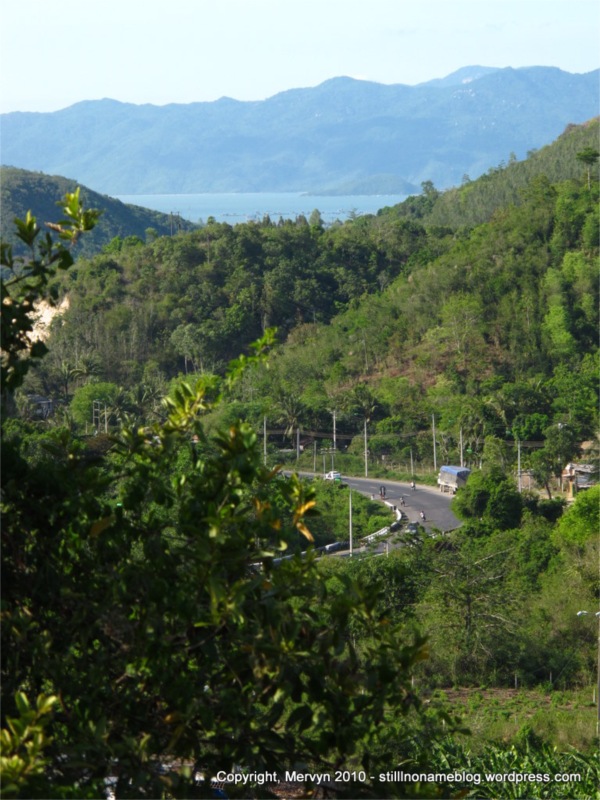
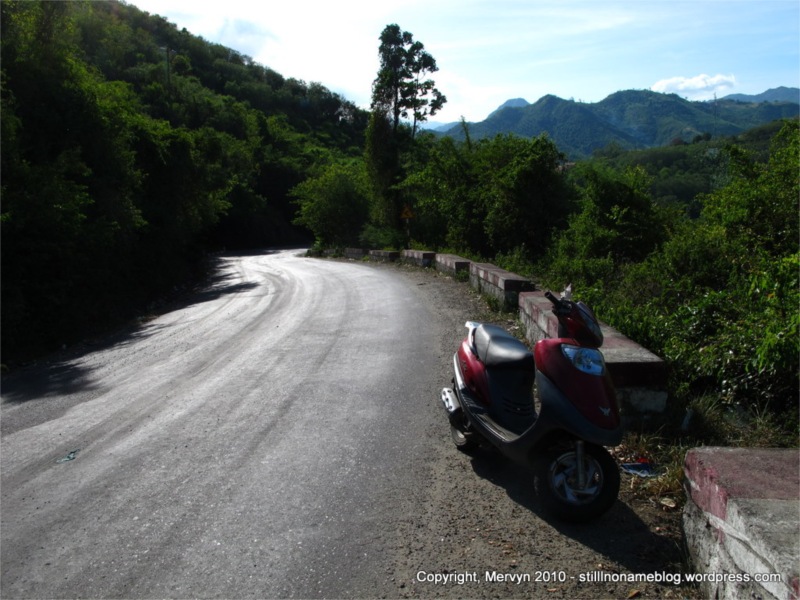
I didn’t care. I almost drove straight to Hoi An myself until I realized that (a) I didn’t have my luggage and (b) I would certainly die alone on a coastal mountain road.
I headed back to town, retracing my steps and going the wrong way on the twisted “one-way” hill road. I even managed to find the Po Nagar Cham Towers and return the motorbike in time to take the night bus out of Nha Trang to Hoi An.
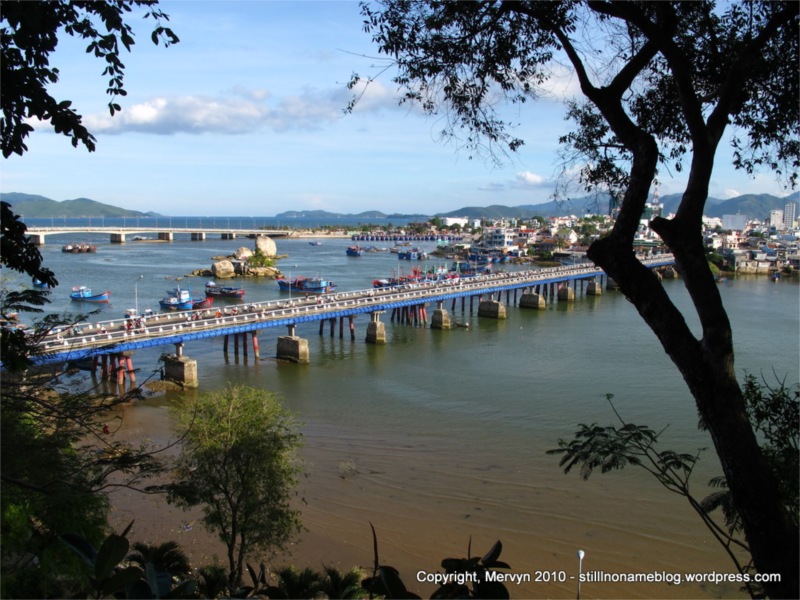
For the price of my $10 ticket, I got to experience the Top Gear route in the dark from the bed of a double decker high bus. If it’d been light out, it might have been as thrilling as the impromptu bike trip I’d almost taken earlier that day.
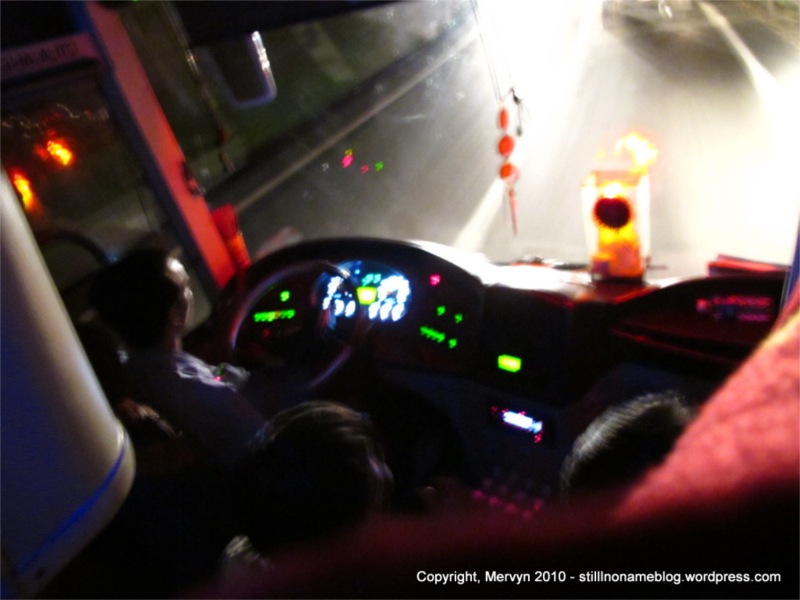
The bus bobbed up and down the same ridged road. I could see the lights of fishing boats bobbing in the ocean. The driver careened around corners, slow-moving trucks, and stone-faced families on motorbikes. I snapped a couple pictures of the daredevil pilot at work until I realized every time I snapped he’d take his eyes off the road and look back at me because he’d see the flash of the metering light. The pics were cool, but not as cool as living. I put the camera away.
Sitting on the dash was a boxed statue of Buddha or some other god. The figurine faced forward, no doubt there to ensure safe travels. Probably didn’t hurt that the idol’s box was ringed in Christmas lights that flashed between green, red, and yellow. A sort of divine warning light to oncoming drivers: “This bus believes it is immune to death and drives accordingly; plan the next 3 seconds of your life with care.”
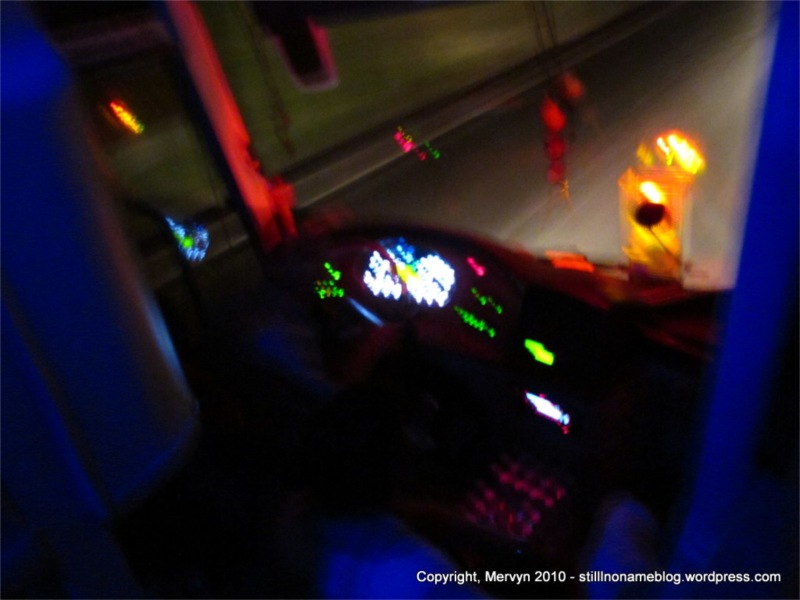
It seemed to work. I wasn’t even scared thanks to my patented ability to turn off my brain. For me, that’s really not as hard as it should be.
GALLERY: Click through to see pictures of Mervyn with photographer Long Thanh, the photos that Mervyn purchased, people sleeping on a bus, and more pictures of bridges, roads, temples, and insane Vietnamese bus drivers and their gods.
Day 74 – Good Morning Vietnam (Diving Nha Trang)
Dateline: Nha Trang, Vietnam – Sunday, May 17, 2010
First off, people here get up freakin’ early. I rolled into Nha Trang, a coastal resort town, on a night bus from Ho Chi Minh City (Saigon) at 5 a.m. this morning. As we motored in through the outskirts of town, we passed people opening their shops, auto repair guys welding parts together, and builders already underway on their construction. It’s not just the adults, either. Kids were kicking around soccer balls and biking to wherever they bike to on an early Saturday morning.
Note that they weren’t just up at 5 a.m., they were already working. Fully dressed, clean, nose to the grindstone. If Vietnam achieves developed world status, know that, in part, it’s because these are some early birds. If I were the worm I’d fear for my life. I’d also be an insomniac.
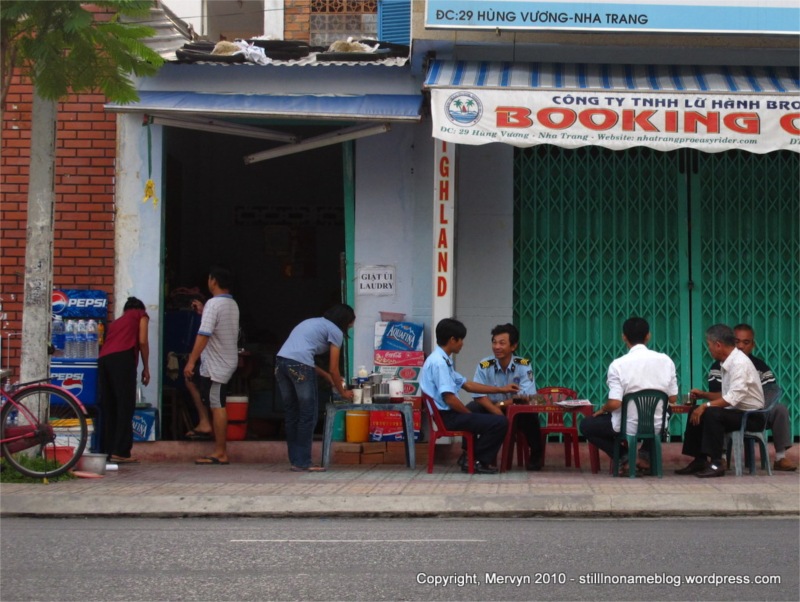
A mix of Vietnamese and tourists hopped off at the last stop, the local travelers looking much more spry than their foreign counterparts. I hopped a motorcycle taxi to Rainbow Divers and waited for the shop to open.
The dive staff trickled in, then boarded a bus to the docks. Another guy came and opened up the shop, which doubles as a restaurant and bar. I sat down for an iced coffee and gravely disappointed my waitress by not speaking Vietnamese.
At around 7 a.m., we departed for the docks. I looked around at the other customers and, per normal, I was the only brown person.
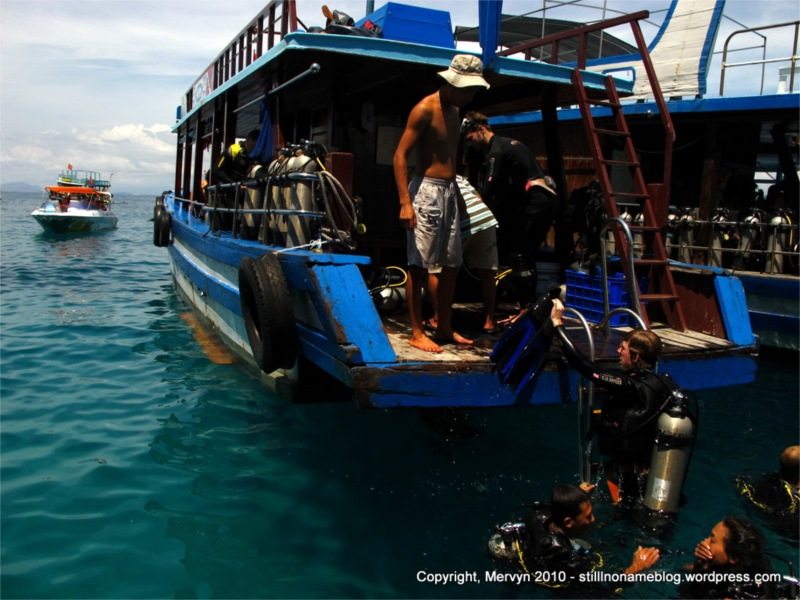
We hit the docks, got on the boat, and started heading out to the first dive site about 4 hours away. A kilometer or two out, we stopped for a quick boat briefing. That’s when I got the shock of my nascent diving career: the Vietnamese dive guides outnumbered the foreign dive guides.
This may not seem remarkable, but it is. Getting a dive master or instructor certification is quite expensive, even by Western standards. It’s a fortune for most Vietnamese or other Southeast Asians. In my 25 dives in Asia, I’ve only met one local dive master and that was way back in Thailand. I also suspect that the textbooks and tests aren’t in Vietnamese. These people have worked hard to get where they’re at. It’s an impressive sight.
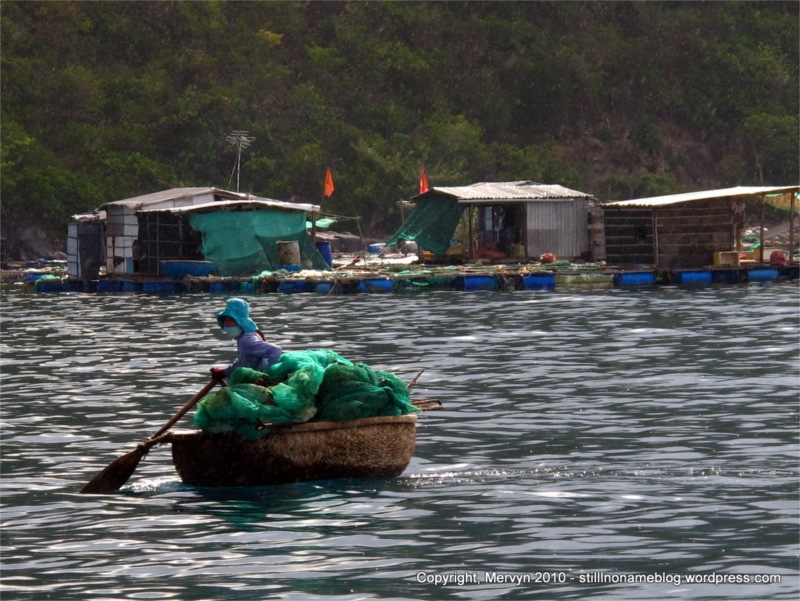
All of them must have come to the docks on their own, because I didn’t see any of them get on the staff bus at the dive shop. At least I didn’t notice. Perhaps I’m a subconscious racist–maybe they did and I just thought they were all dive boys are snorkel guides. Whatever. They’re here and that makes me happy.
I’ve often wondered what it would take to get locals to run their own dive sites in Asia. Seems like Vietnam’s well on its way.
This trend seems to hold up when, after our first dive, we dock with some other dive boats. On other boats I can see and hear Vietnamese teaching other Vietnamese how to dive. Vietnamese in wetsuits are joking with the Vietnamese captains on their boats. On our boat, there’s even a Vietnamese guy who’s diving while his family snorkels. He must have also come to the docks on his own. Or. . .yeah, the racist thing.
Nha Trang is light years better than Sihanoukville, Cambodia. It’s not as spectacular as the Similans in Thailand, but I get the feeling few places will be. Visibility is good. There are some different species of coral, anemone, and fish. Of course, I find myself a few good nudibranches. (Writing this out makes me think I should really finish up those Similan dive posts. At least post pics or something. Someday. . .)
After our second dive we head back to Nha Trang. There’s no afternoon diving. Something to do with the tides or current. If we want a third dive, we’d have to go at night.
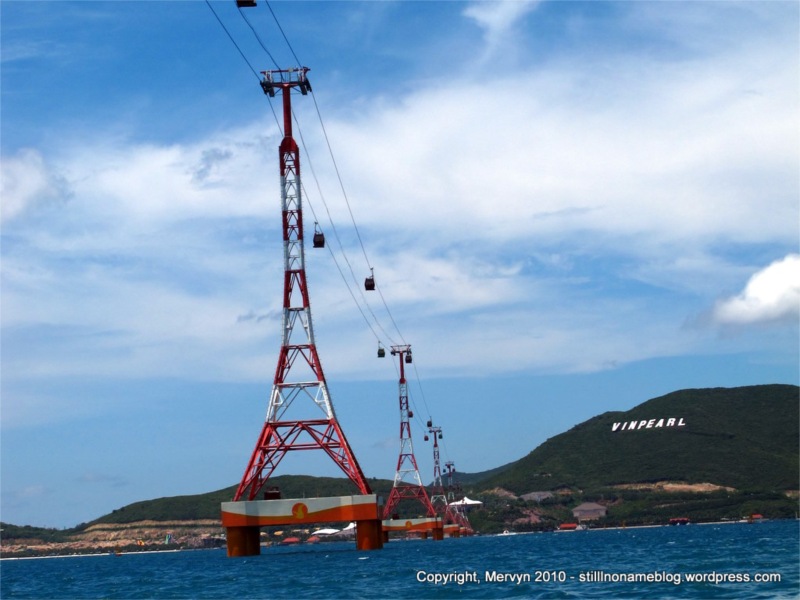
I finished up my dive logbook at the Rainbow Dive restaurant, got it stamped by my Vietnamese guide Khai, and pay up. I head out to find a room. It’s only 1 p.m. and I’ve still got a day ahead of me.
Or so I think. I end up spending the afternoon sitting my room, escaping the heat, and watching a movie on TV that’s in English but has Vietnamese subtitles. It’s a crappy, illogical romantic sorta comedy with Hilary Swank, Harry Connick, Jr., and Phoebe from Friends. I watched it mostly to see what I can learn about Vietnamese. I learn something: pronouns are even more complicated than I suspected. Yesterday, I said I counted six terms of address. Well, today I counted 3 more, and only had a mild grasp on when they were used. Yikes.
When the heat cools off I head off to Nha Trang’s famed beach. This is a resort town, almost more for locals than for foreigners. When I get to the sand, I find everyone out in the water. It’s like the whole town, plus all their out of town relatives are lounging.
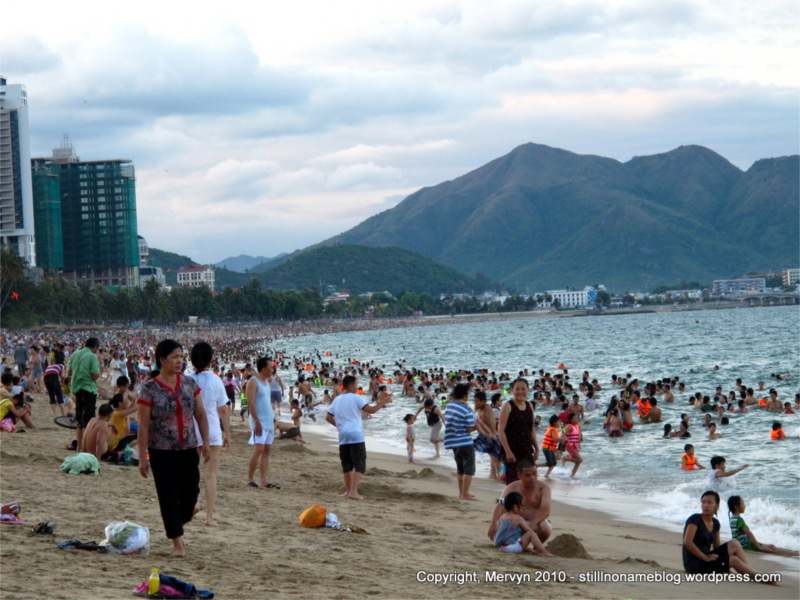
Big differences between Vietnamese beaches and American beaches, though. There’s a lot more soccer, a lot less Frisbee (none), and none of the local women are in bikinis. On the last one, I suspect this is a combination of cultural conservatism and a woman’s beauty being tied partially to the lightness of her skin. Whatever it is, all the women I saw were wearing t-shirts and sticking to the shade. The most daring wore short shorts.
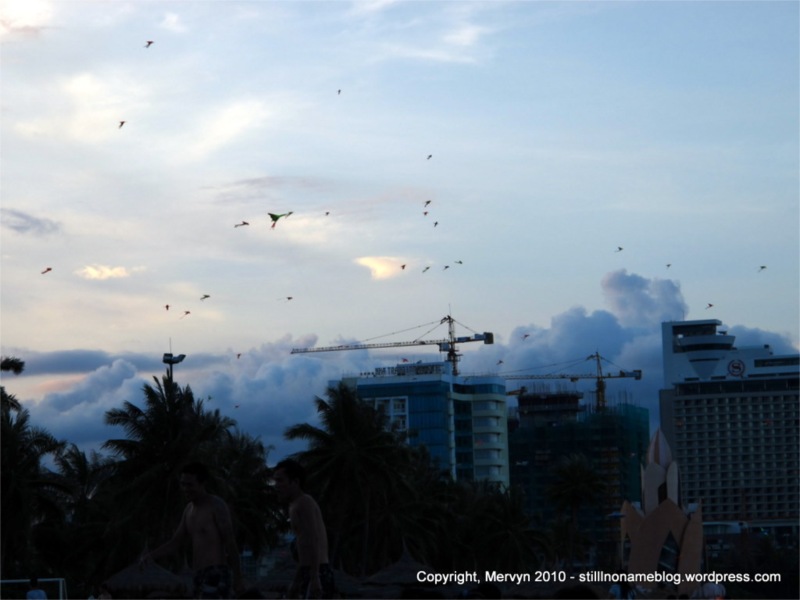
When I looked back inland, I saw what looked like birds or insects hovering in the beachfront breeze. When I looked closer, though, I saw they were kites. Almost a hundred of them. Made me wish I had one.
I wandered back to find dinner and do some internet time. I also bought a bus ticket to Hoi An. Tomorrow night I’ll be on another night bus for 12 hours. Fantastic. I roll out at 7 a.m. this time. People will have been working for 2 hours. I’ll just be coming to, hopefully. That’s just fine with this worm.
Day 73 – Ahn Khoe (Talk to Me Nice in Vietnamese)
Dateline: Ho Chi Minh City, Vietnam – Saturday, May 15, 2010
Vietnam is a confusing country. Actually all countries, even my homeland of the United States of America, are confusing. They all run deep with contradictions and have strange cultural norms.
For example, the U.S. is supposed to be a free market economy. We champion capitalism and freedom of trade with other nations. We talk about the market being the most efficient way of selecting winners and losers. We in America let the best and the brightest float to the surface by allowing them the freedom to succeed or fail in the crucible of capitalist competition.
Big talk. When the market decides that big banks suck at their jobs and should go bankrupt, though, we the people give banks/carmakers/insurance companies/over-leveraged-homeowners over a trillion tax dollars–originally made by responsible suckers like you and me—so they can go on living the life to which they’ve grown accustomed when they should have suffered financial deaths. Then we don’t even have the guts to at least make sure we never “have to” give them money again.
So there’s that.
Here in Vietnam, I have less of a grasp on the local language, so I can’t delve too deeply into the big picture cultural contradictions. I’ve got enough things I’m pissed off about back home, so it’s just as well.
There are small cultural differences, though, that I can pick up. Today, let’s look at lingual formalities.
Here in Vietnam, it’s very important to address someone correctly. You can’t just ask them their name and use that. You have to determine where they stand in relation to your station in life.
Every Asian culture has this to some extent. Most of my cousins call me kuya, a Filipino term for “older brother.” Simple. There’s a term for older sister, too. There’s also the word po that’s used for anyone who outranks you or is older. Besides that, I don’t notice very many terms other than those you normally see in English (grandmother, grandfather, uncle, aunt, etc.).
Vietnamese is very different. I can count at least six different terms of address. One for someone as old as your grandparents, another for someone as old as your parents. One for someone that’s a little older than you and one for someone that’s a little younger. One for someone who could be your child or grandchild.
Of course, each of these differs depending on the sex.
Why does this matter? Why does this make Vietnamese hard? Can’t you just refer to people by their names or just say “you”, “he”, or “she”?
Well you can’t. That’s because each of the terms of address is used as “you” or “I”. Let me give you an example. First up, you have to know that em is a sex neutral term of address for someone who’s younger than you. You also must know that ahn is, amongst other things, a term of self-address from a male who’s a little older than you. So here goes.
If I address someone who’s younger than me, I don’t just say, “Thank you,” I have to say “Thank you younger person.” (Cam on em.)
It gets even worse. The terms of address don’t just determine the pronoun that I use on other people, it determines the pronoun that I use on myself.
An example. If I want to tell someone who is a little younger than me, I can’t just say, “I’m fine,” I have to say, “I, you’re older brother, am fine,” (Ahn khoe. Literally: I’m fine.)
Sweet lord. Really.
The effect of this is that Vietnamese people will unabashedly ask you how old you are if they can’t determine your age. It’s a standard question a Vietnamese will ask a foreigner along with “Where were you born?” and “You need motorbike?”
So, Vietnamese is easier and it’s harder. Isn’t that the way it always is?
GALLERY: No pictures today. You’ll have to sustain yourself with the previous 700 words or so (i.e. 7/10ths of a picture).
Dateline: Ho Chi Minh City (Saigon), Vietnam – Friday, May 14, 2010
I don’t know how I ended up here. Scratch that. I only kind of know how I got here.
Where here is is sitting out in front of the Ha Vy Minihotel in a one-foot tall plastic chair tapping on the top of what looks like a hardboiled egg. I say “looks like” because I’m pretty sure it’s what in the Philippines is called balut. If you don’t know, balut is a fertilized chicken or duck egg that’s been allowed to develop to the embryonic stage, then boiled. You eat it like a hardboiled egg, but with a lot of extras. And it looks kind of funny. Not “haha” funny, but “strange” funny. That’s because it looks and has (mostly) the consistency of a hardboiled egg, except if you look closely it also kind of looks like a baby chicken.
Don’t worry, there are no pictures.
It’s not like I didn’t put myself in this position. I came to these guys’ country. I decided to hang out with these guys while they were at work, tending to the hotel’s lobby. I’ve eaten with them. Shared their drink.
What’s surprising is that somehow I’ve traveled all across Southeast Asia, sampling all manner of new cuisine–crocodile, snake, and. . .other stuff—and yet I find myself street side eating something I could’ve had in the Philippines. Balut.
Go figure. Maybe we Southeast Asians are more alike than we realize.
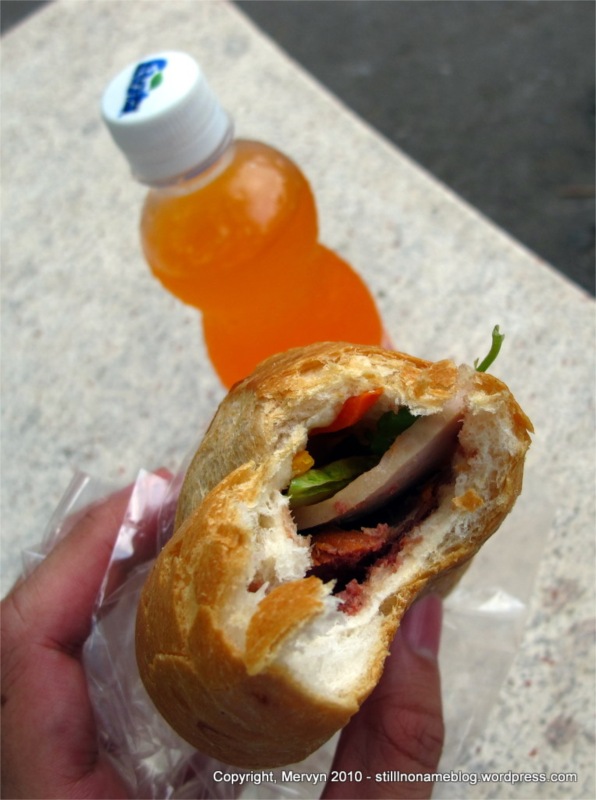
This afternoon, though, I did something that these guys probably wouldn’t do, whether by choice or opportunity: After a Vietnamese sandwich in the park, I rode out to Serenetafor coffee and to write.
Now, I pride myself in the ability to retrace my steps to places I’ve been to before. I once described to a friend how to get from downtown San Francisco to Loma Linda using no street names, just landmarks. “Fourth left after the Stater Bros. next to the big tree.” This ability is what allows me to explore cities without fear of ending up in Canada.
I’ve been to Sereneta before.
And yet I had to backtrack three times to find the right alley. Seriously, I hate the French.
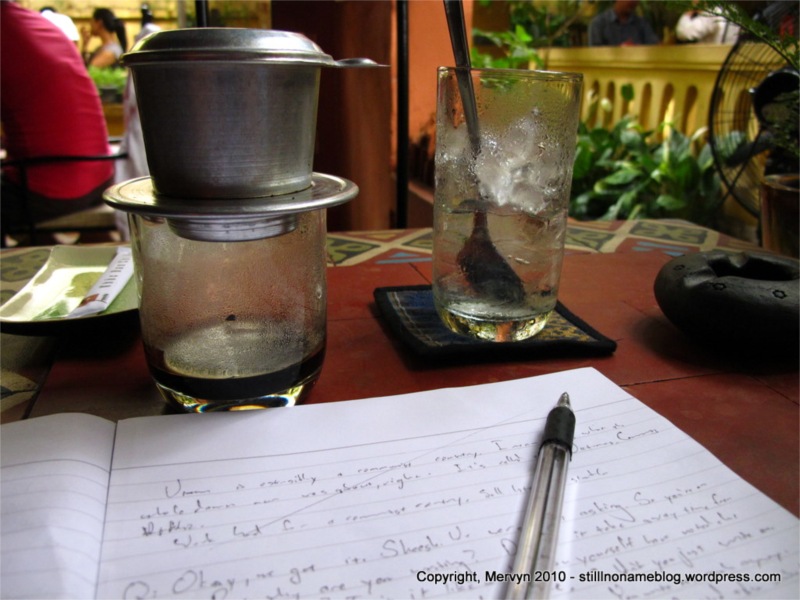
I did manage to scribble out some good stuff. That’s what I told myself. I was so hopped up on caffeine my chicken scratch handwriting had devolved into an even worse scrawl. I might have accidentally written the next great sonnet or the plans to build a nuclear sub; it’s impossible to say—it was so illegible. I’ll have to consider cutting down to one iced coffee a day.
For some reason, Sereneta served me the iced coffee in a mini-distiller thingy. I had to wait for the hot water to drip through the coffee grounds. It took so long that, by the time it was done, half the ice in my glass had melted. It also only generated three-quarters of an inch of java.
That didn’t affect the taste, though. When I drizzled the sludge over the ice and took a sip, it was as robust as ever. This stuff is strong. No wonder I was buzzing.
Work finished, I headed back to the hotel for a nap. When I came to, I had a quick dinner of Pho 24. When I got back to the hotel I booked a night bus ticket to Nha Trang and that’s when I found myself caught up eating a second dinner with the hotel guys. They provided me my second Vietnamese of the days, the balut, and Rice Krispies treats. I bought the soda.
So here I am. Eating, drinking, messing around with my Vietnamese. Happenstance, fate, whatever brought me here, I can’t complain.
GALLERY: Today’s gallery contains just the two pics from today’s post. No bonus pics. All dissatisfied customers are entitled to a full refund.
Day 71 – tiếng Việt
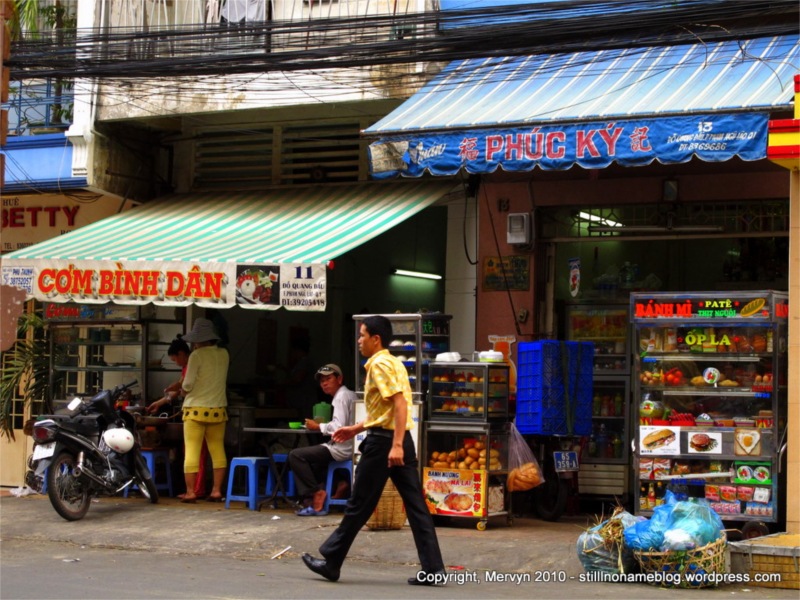
Dateline: Ho Chi Minh City (Saigon), Vietnam – Thursday, May 13, 2010
I’ve always said food and language are the two quickest ways to integrate yourself into a culture. If you can explain yourself to someone, ask about their family, talk about the local football team, you’re well on your way to a better relationship.
If you can’t do that, find a favorite dish that the locals know most Westerners can’t stomach, eat it in front of them, then declare that you love it. In that case, a smile and a thumbs up can do the work of a thousand words.
Having taken this tenet fully to heart, it should be no surprise that I’ll eat just about anything a local is eating.
It should be even less of a surprise that I also try to get a grip on the local language, whether it’s Thai, Khmer (Cambodian), or the language of California’s Central Valley. In each I’ve managed to learn how to say: “Please,” “Thank you,” “How much?”, and how to count to 1,000. Well, that’s not totally accurate. Do people in the Central Valley know how to count to 1,000?
Each language has presented its own challenges. Thai has 50 tones, at least two of which I cannot differentiate. The writing for Thai and Khmer doesn’t look anything like English. I only spent three days in Malaysia. Khmer often uses a base five countng system. That means to count to 10 you count: 1, 2, 3, 4, 10, 11, 12, 13, 14, 20. If you thought math was tough, try doing it using a completely different number system. 20 + 20 still equals 40, but "40" in base five actually means "20" in base ten. Anyone up for multiplication? Point is, Khmer has its challenges even if it doesn’t have tones.
Vietnamese, however, has been a bit of an exception. It’s not easy—it’s tonal (six tones); the grammar is mixed up compared to English; there isn’t much past, future, and present tense—but there are at least a couple things that make it easier.
Most importantly: If you can read English you can read Vietnamese. Oh, the pronunciation is different and there are a few weird looking symbols tacked on the alphabet. That’s all true. But it doesn’t look like chicken scratches or like someone dropped a box of toothpicks on the ground and called it script. You might not get the pronunciation correct, but you can get close.
A Vietnamese “A” looks like an English “A”. The “ph” in Vietnamese makes the same sound as the “ph” in English. And all those little apostrophe, pointy hat, dot looking symbols? Those are actually helpful. Most of them tell you what tone to use with the letter.
I think of it like a drummer reading notes on a music sheet. As a drummer, when I look at my music sheet, all I see are symbols when to hit my drum. There aren’t any symbols that tell me to play a “C sharp” or an “A flat”, there’s just “hit” and “don’t hit.”
As an English reader (a drummer of the lingual world) I know how to read the rhythm and the cadence of Vietnamese script. Now I just need to figure out how to do what the Vietnamese readers (tonal linguists) do, which is also read when I need to say something higher, lower, rising then falling, or just falling. The little symbols that Vietnamese throw on their script are just there to help. It’s just another layer on top of something that I already know.
Being able to read is huge. It means that you can study on your own. You may have no idea what you’re looking at, but you can go to your Viet-to-English dictionary and pick out the word and learn the English definition. You can’t say the same for Khmer or Thai, which are beautiful written languages but are about as easy to read as professional poker player Phil Ivey’s face in a bank vault with the lights out and your thumbs jammed behind your eyes.
You can say the word out loud, stare at a visual representation, memorize what the word looks like, then mispronounce it later when you try to use it. The native speaker will look at you like you have an arm growing out of your forehead and you’ll have to repeat what you’ve said a few times using different tones and pronunciations, but in the end he’ll probably figure out what you’re saying. Most of the time he’ll even pronounce it back to you the way it’s supposed to sound. So long as you can stand his accompanying laughter, it works. If you can manage to laugh along, it works even better.
The point is, it’s a start. For someone like me, a visual learner, it’s a huge start. It also means that I’ve learned a lot more Vietnamese in the last two weeks than I have either Thai or Khmer.
I bring this up because today I spent a couple hours hanging out with the younger hotel staff working through some Vietnamese words. We all had phrasebooks out and were trying out words on each other. I’d trade them English words for Vietnamese words. We’d laugh at each other’s pronunciation and give corrections.
All in good fun.
The similarity in written language is a subtle, perhaps underestimated factor in the future of Vietnam’s growth. They’re a blossoming economy. Their population is mostly educated with a literacy rate of about 90%. Its people are looking for ways to connect themselves to the outside world’s economy and culture.
I think they have a leg up on much of Asia. We can’t just read their language; they can read ours. It’s a two-way street. Their ability to pick up English faster may be something that connects them to the outside world more quickly than other nations. The government certainly thinks so. It’s incorporated English language into the state curriculum.
If I were an oddsmaker, I’d definitely weigh the similarity in written language as a positive in favor of the Vietnamese. They can more easily access the most widely spoken language in the West and Westerners can delude themselves into thinking they’ll be able to get a grip on Vietnamese. If you’re willing to put up with the “communist” dictatorship, there’s a lot of money to be made here. Or at least some Westerners are going to think so.
Between this country’s history with the U.S., the friendly people, the relative ease with which one can learn the language, I feel like most Americans would feel more comfortable here than they might expect. Now, if only the Vietnamese would do something about a few of their foods. . .
GALLERY: No extra pics in today’s gallery. You’ll have to just live with the one.
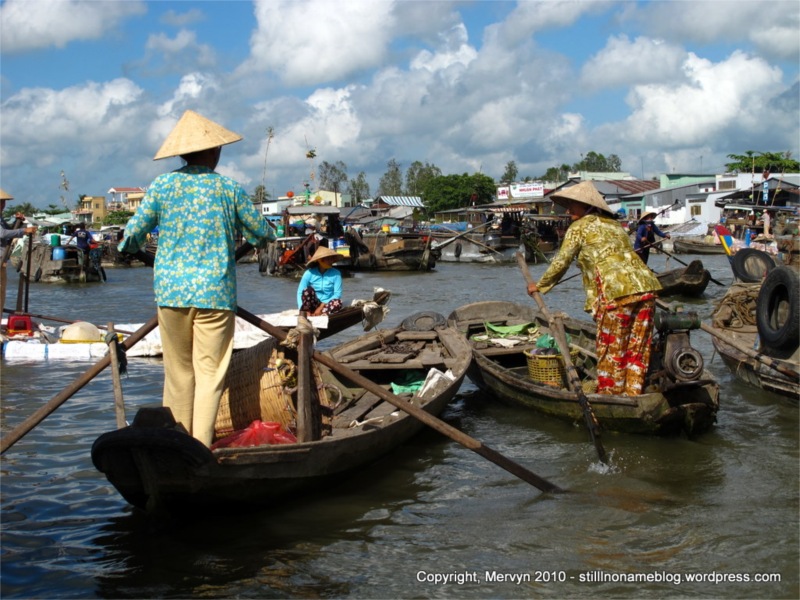
Dateline: Can Tho and Cai Rong & Phong Dien Floating Markets, Vietnam – Thursday, May 12, 2010
There’s something about the waterway culture that appeals to me. Perhaps it’s just natural. My ancestors were from the Philippines, a country where you were never more than a coconut’s throw from the ocean. Those who could not adapt to the water were selected out. If you didn’t like the water you were always in a dour mood what with all the surrounding sea. This disposition made you less attractive as a mate and less likely to breed. I mean, would you want to have kids with a person who was always upset that there were no deserts? Consequently, as aquaphiles got it on more than aquaphobes, each successive generation became more enamored with water. Fast forward a few million years and you get to me, a man who has an irrational fascination with water.
My island blood naturally prefers scuba diving over snowboarding (what is this “snow”?). My culinary mind doesn’t think of fish as meat but as just another vegetable albeit with eyes. I find boats romantic. I feel more at home here in river and ocean riddled Southeast Asia than I do in California’s high desert. I’ve always known that I need to live near a lake, ocean, or river. My blood flows with more water than most.
All this partially explains my fascination with floating markets. I can wander regular markets for hours looking at vegetables, fruits, meats, snacks, nuts, or whatever. I enjoy watching the hustle and bustle. People haggling, examining produce, asking whether there’s another shipment coming in. It’s constant energy and it all centers around food.
Take this culinary zoo and put it on water and, well, I’m smitten.
Today, I finally got my floating market. It’s not Thailand’s version, but I got it. It was pretty awesome.
This morning, our tour group crawled out of bed at 6 a.m. and scarfed down the hotel’s free breakfast. I fortified myself with a cup of delicious iced coffee.
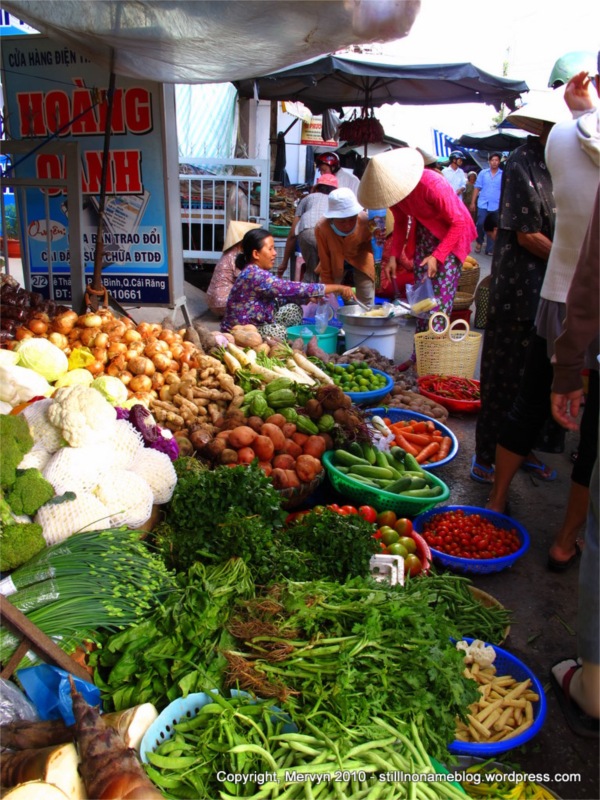
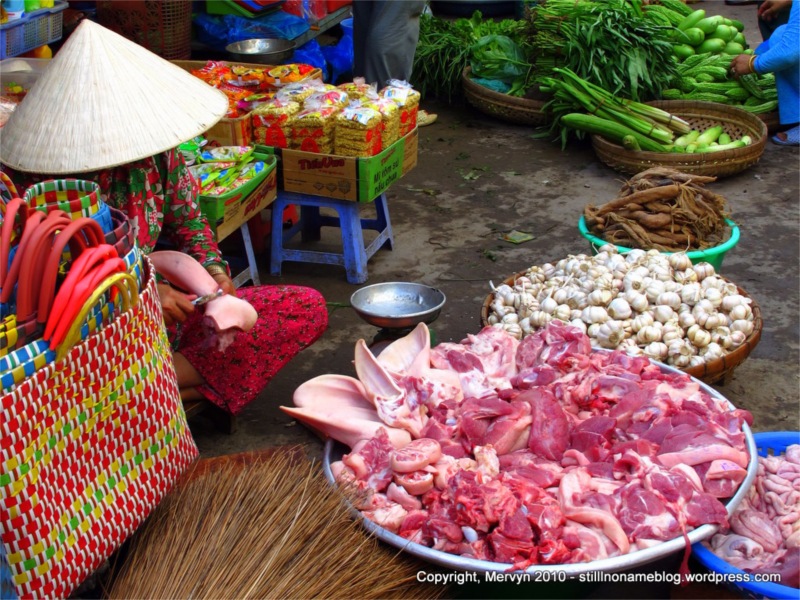
From there we boarded a boat for the day’s activities. First up, the land-based fish market. While it was by the river, it wasn’t just fish. There were vegetables, fruits and an assortment of meats. Beef, squid, chicken, and pig ears. They had it all. I even saw a less cooked version of last night’s dinner: snake. Looking at the carcass at the market, it looked like my dinner had been butchered into smaller strips. Unless I’d had a tiny snake.
Bah, who cares. Looking at it in the light of day didn’t change the fact that it tasted good.
We took a break at a small Chinese temple. Nothing remarkable. As per normal there was a lot of red and gold.
We walked back through the market, got on the boat, and headed out to the floating market. By now it was well past 8 a.m. Our guide informed us that the market opened at dawn and didn’t run past noon. We’d missed the initial rush, but the market would still have a lot of activity.
Proprietors from the areas surrounding the Mekong Delta would load their boats up with local produce and goods and head down to one of Can Tho’s floating markets. They’d dock there for three or four days until they’d sold off their wares. People row smaller boats out to the big boats to shop, going from seller to seller comparing products and prices. They’d offload their purchases and bring it back to land to sell. The floating market was basically a water-based wholesale market.
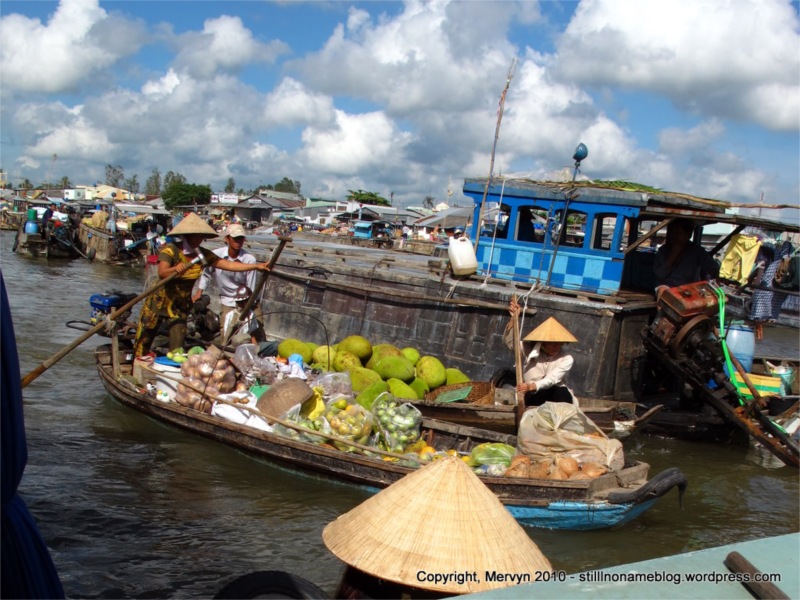
Once a seller ran out of goods, the seller would head back to its hometown upriver. Rinse, repeat.
It’s not just wholesalers and buyers. A whole industry supports the market. There are floating food hawkers, boats selling drinks, and even floating lottery ticket salesmen. Capitalism’s going strong.
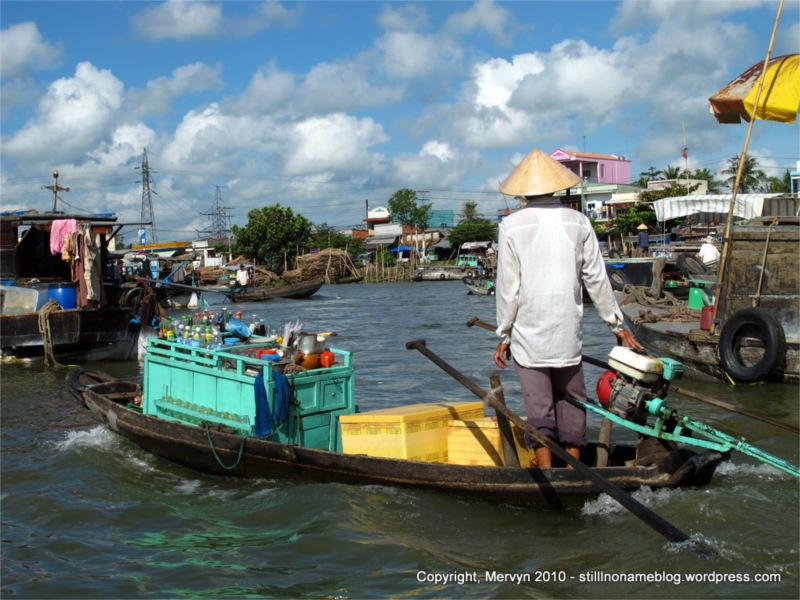
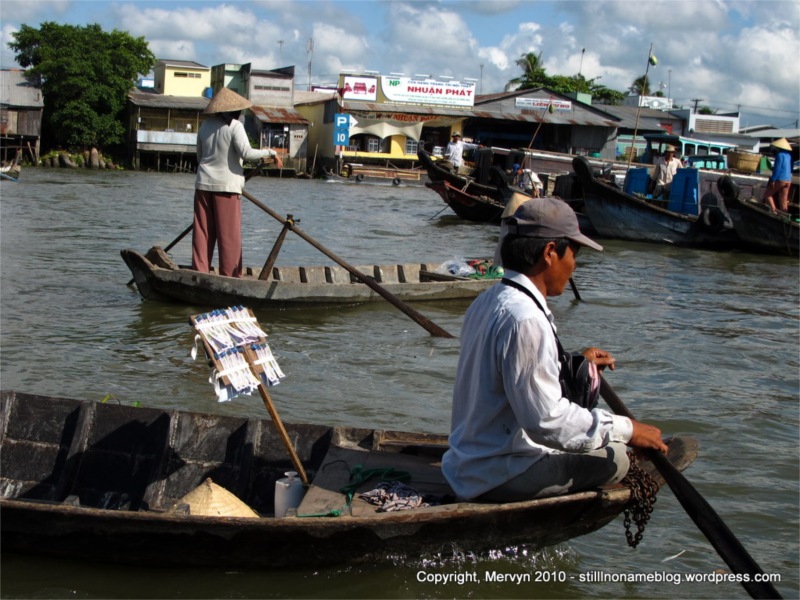
The big upriver boats are a maze. They stretch for as far as the eye can see. The landscape is also constantly shifting as boats come and go. It’s as if your local supermarket made the produce aisle hundreds of yards long and rearranged shelves on a daily basis. If you wanted yams, for example, you’d have a hell of time finding the right boat. No one wants to row from vessel to vessel asking if it has yams, especially not in the tropical heat. It was only 8 a.m., but I was already sweating under our boat’s canopy. I couldn’t imagine power rowing aimlessly around the river.
The sellers had, of course, come up with a solution. There’s no need for the buyers–who for whatever reason all seemed to be female—to wander. That’s because each proprietor mounts a few samples of their goods onto long poles and posts it on their boat like a tall skinny sign. If you were selling shoes, for example, you’d hoist a couple of shoes up your makeshift wooden flag pole and wait for business to come to you.
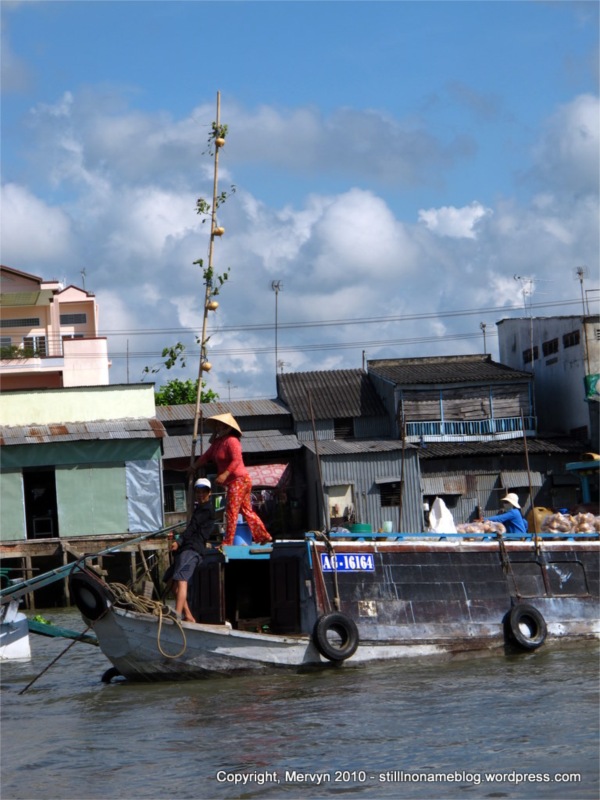
I could have spent a few hours just people watching. Sadly, it was over all too soon and we were motoring off to our next destination, a rice paper and noodle manufacturing operation.
Actually, a “manufacturing operation” is really an oversell. It was really just a small family business. A few people pounding and grinding rice into flour, mixing it with tapioca, and cooking it up and drying it in the sun. The makers used rice husks to fuel the fires that cooked the rice paper. They’d then feed the circles of rice paper and tapioca through a roller device that cut the discs into noodles.
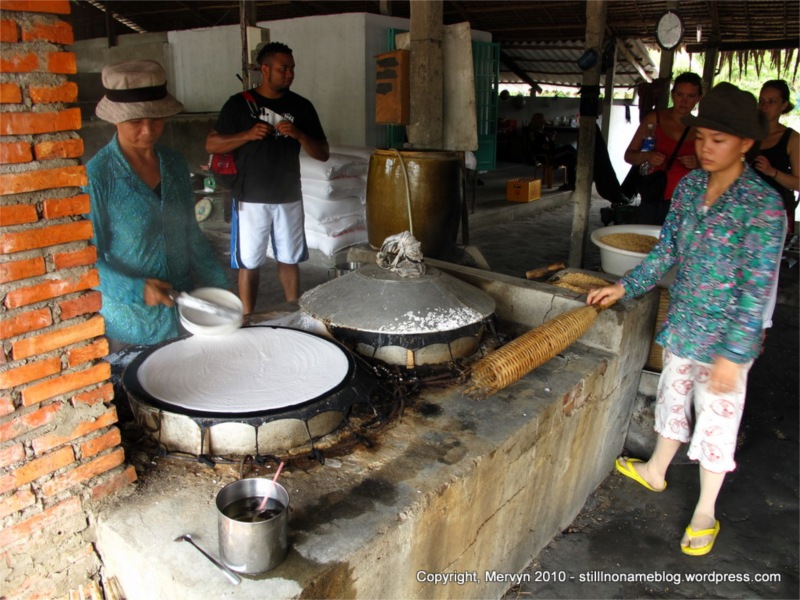
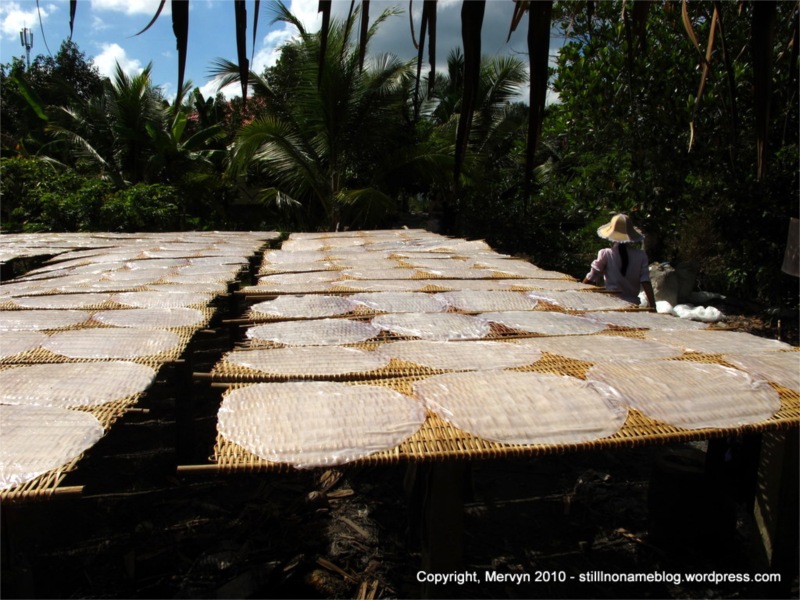
As an American, I’ve grown accustomed to thinking that most of my food comes from big operators that use big factories. Other than small-time farmers or specialty food providers, I assume that my staples come from large-scale operations. Seeing staples like noodles and rice paper being made by a small-time operator made me realize that the rest of the world hasn’t caught up to America’s food industry. This is not a bad thing.
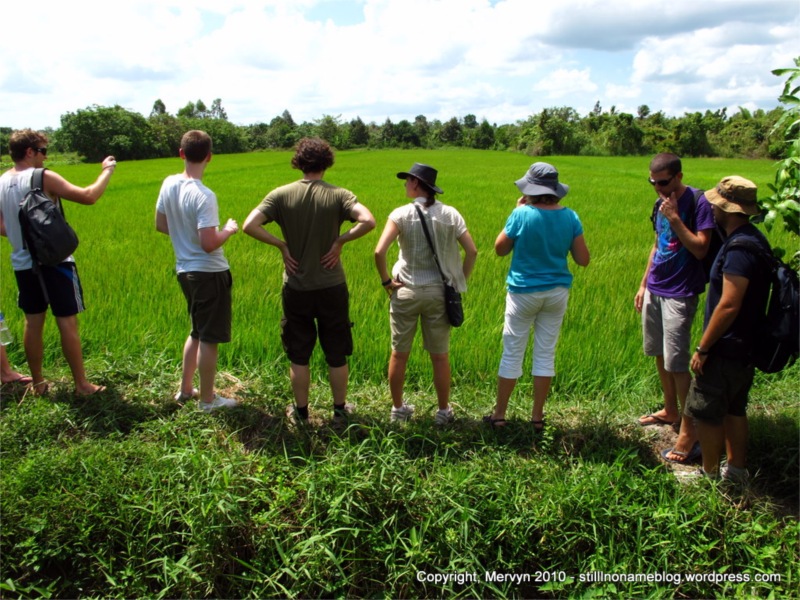
We next visited a “monkey bridge” that was built over a water-filled bomb crater. There was no need for the bridge other than to give tourists a chance to try one out. It was, though, a rather fanciful way to retool a bomb crater. From there we walked through groves of tropical fruits to a rice field.
Let me take a break here to recognize the beauty of this. My family still owns a family farm in the Philippines. If my life had broken differently, I could be planting rice for a living. My parents came to the U.S. for a better life for themselves and their children. They’ve succeeded. So much so in fact that I can now play tourist to rice fields instead of worker. Instead of being stooped over in the field shoving rice seedling into the ground I can stand up straight, smile, and wave to a camera. Thanks Mom and Dad. If your son dies from food poisoning next week in Hanoi know that he appreciates what you’ve done. And that he died a happy, adventurous eater. (Mom and Dad, that’s also my way of saying that I will keep on eating things that will make you question how I was raised. My questionable judgment is a related risk to having had me in the land of opportunity and freedom—I might just go out there and exercise my rights.)
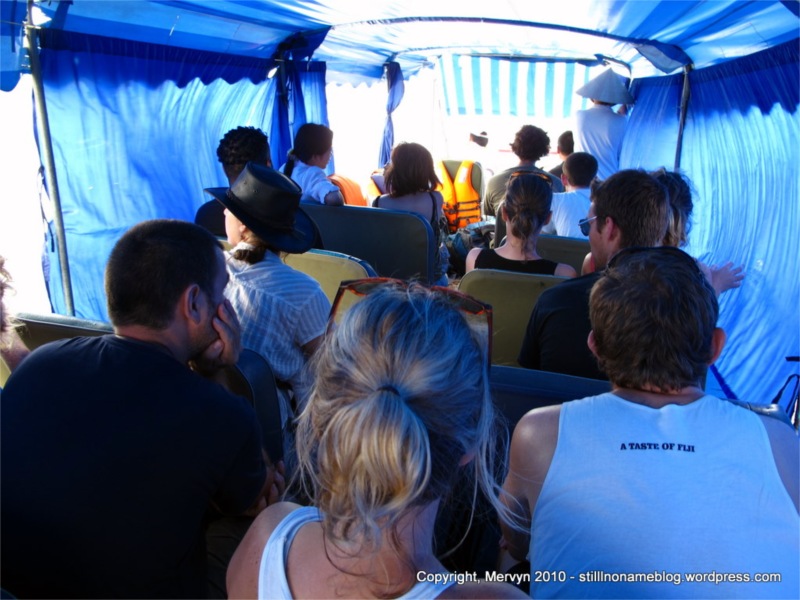
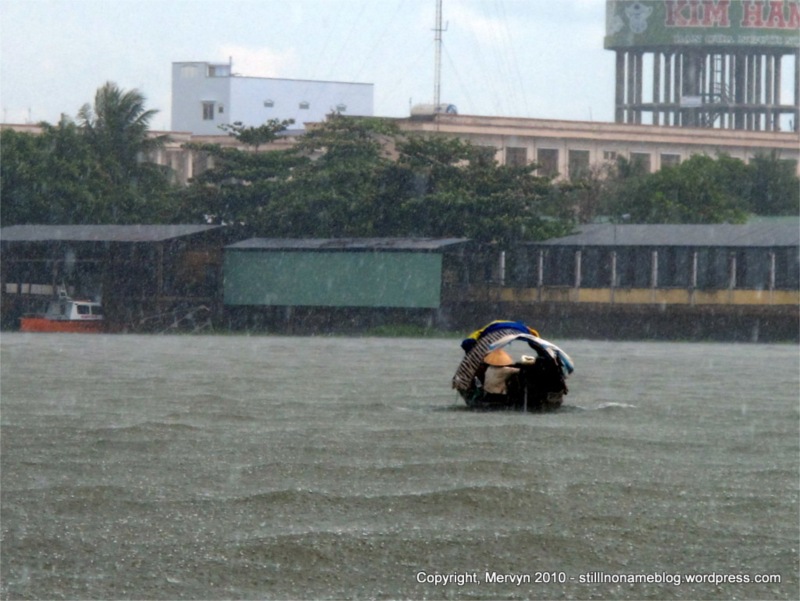
We headed back to the dock through an afternoon rain storm. We pulled down the shades on the boat for shelter. Half an hour later, the sun was back out and once again beating down in earnest. Typical.
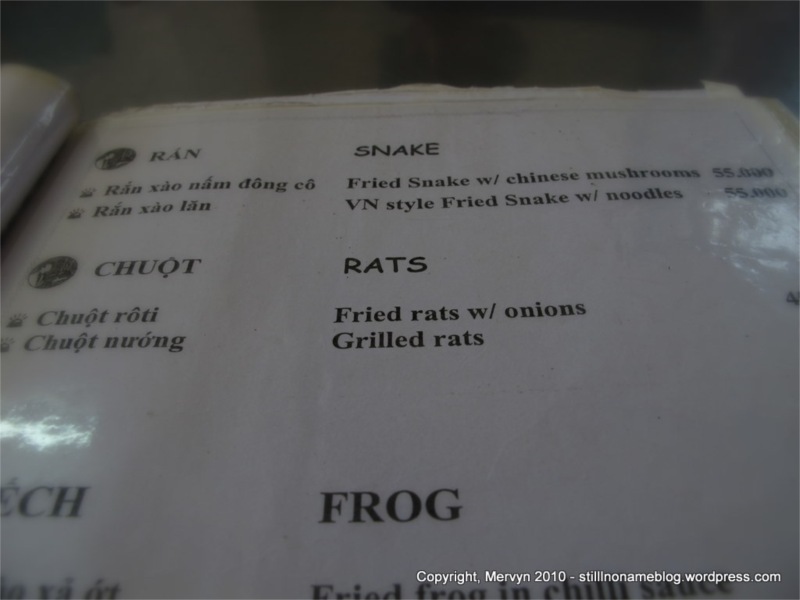
We had a quick lunch near our hotel. The menu offered a particularly adventurous option, but I opted out. I’d had enough from the day before. Plus there are places even I’m not willing to go. At least not without seeing a local eat it first. You never know if they’ve put stuff on the menu as an inside joke just to see how far they can push tourists. Not that I’d ever do this. Ever.
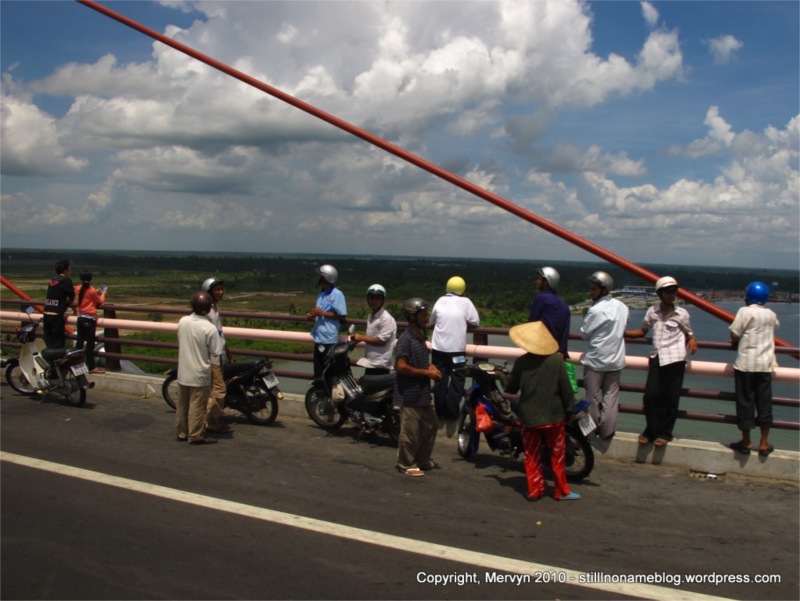
From there our motley crew of tourists split up. I joined a few people on a bus back to HCMC (Saigon) while the rest stayed on for a third day in the Mekong Delta. As we made our way slowly back to Vietnam’s largest city, we crossed a large, modern suspension bridge. Once again, groups of locals gathered by the side of the road chatting, eating, and enjoying the view and the breeze.
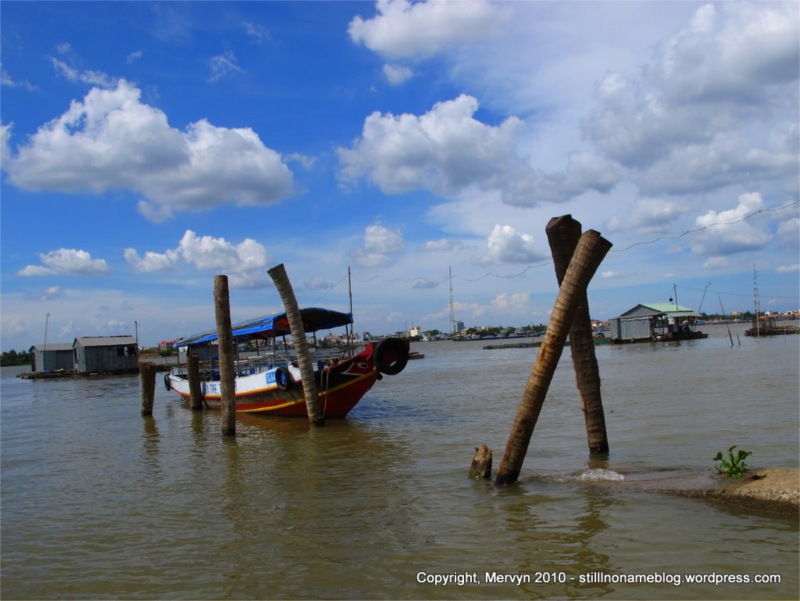
Ah, tropical life by the water. I can’t fight a millennia of genetic engineering. And I won’t. Maybe one of them can save me a spot somewhere in the shade. Next chance I get, I’ll be right there with them.
Dateline: My Tho, Ben Tre and areas surrounding Mekong Delta, Vietnam – Tuesday, May 11, 2010
When you travel you have to be ready for unforeseen opportunities. Sometimes you deep water solo. Sometimes you stand in line behind a bunch of Malaysians in Penang and end up eating new foods. Sometimes you spend three hours feasting and drinking with Cambodians.
Today was one of those days. Today was day one of a two-day tour of the Mekong Delta. I’d booked it through my hotel. We left Ho Chi Minh City (Saigon) at 8 a.m. An hour or so later, after a pep talk/history lecture from our chirpy guide, we were in My Tho, a large city in Vietnam’s Mekong Delta.
We boarded a tour boat and motored our way to Unicorn Island. We visited a coconut-candy factory. We cycled around the island’s village. We rode along thin, elevated dirt paths. We passed kids on their way to and from school. Despite all the tourist boats, this wasn’t just a tourist trap. People actually lived here.
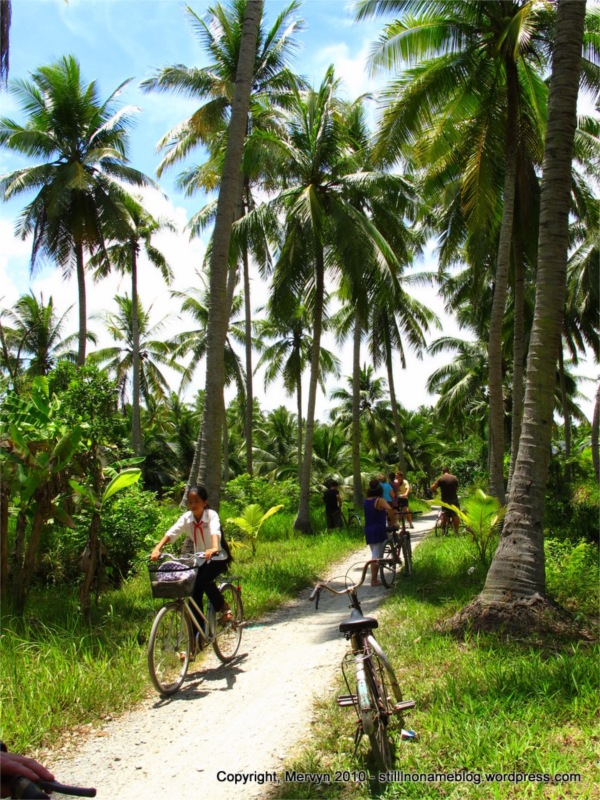
We had a simple lunch. I chatted with a guy from the Australia, two girls from France, and an Irish and Spanish couple. The couple had quit their jobs to travel. One of the French girls was on an extended holiday after working in New Zealand; her friend was a lawyer on vacation from France. The Aussie was from the Solomon Islands. He was on holiday and had gotten stranded in Vietnam when Hong Kong denied him entry because of he was carrying his Solomon Islands passport instead of his Aussie one. His friends had abandoned him to go on their own through HK and Taiwan; he was hanging out in HCMC where they’d later meet up.
In other words, the regular motley crew of travelers.
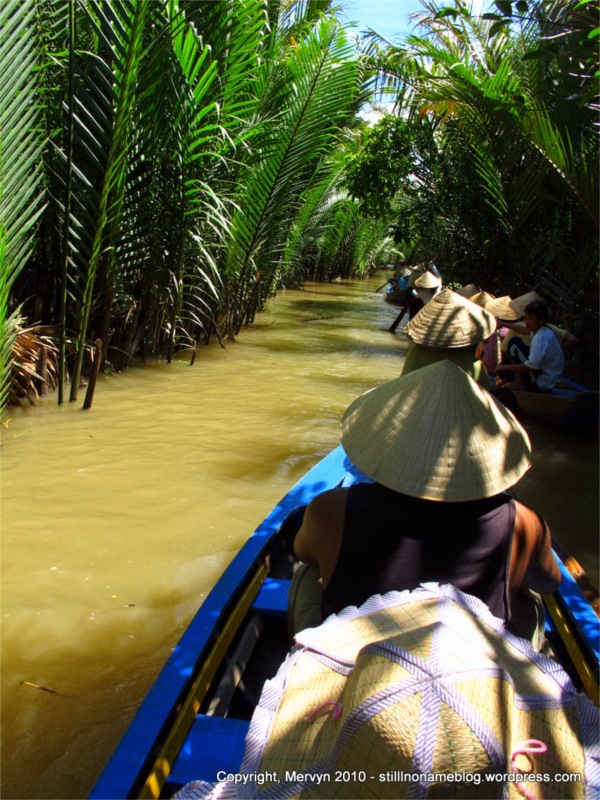
After lunch we boarded canoes for a trip through the island’s jungle canals. Local women in pointy woven hats paddled us from the island’s coast to our inland destination. The women were kind enough to loan us pointy hats of our own to protect us from the sun. I took full advantage.
When we disembarked, we listened to a band play Vietnamese southern folk music. This managed to be more atonal and wobbly than anything you’d hear out of America’s deep south. It seemed to have a musical structure, I just couldn’t decipher it.
That’s when an unforeseen opportunity presented itself. The locals and our guide sat down for a snack, leaving us alone to hang out. We were cooling ourselves under electric fans when someone ran up and said, “Anyone want to try dog?”
Oh my God. Really? I figured I’d get a shot at trying this Vietnamese staple, but I also thought I’d have some time to prepare myself. I’m an adventurous eater, but sometimes even my mind must be given time to catch up with my bravado.
I hurried over to a nearby table where the locals were toasting and picking at a pile of barbequed meat. Our guide was daring everyone to try. She took great pleasure in shoving meat at us and asking, “You try?”
I did. A little piece.
Now, I love dog. Usually, though, I prefer mine much more raw, alive, and in fewer pieces than the pooch I held in my hand. It was dark, fire charred, fatty, and moist. When I popped it in my mouth it tasted like a cross between pork and beef. I chewed and was surprised that it was soft and tender. For a split second, my mind wandered and I pictured puppies. In a flash, I switched off my brain (one of my few talents). No good would come of thinking or of gagging in front of my hosts.
I swallowed and found that the meat had a bit of a gamey finish. It reminded me a bit of duck because of all the fat.
Now, down to the dirty: Did I like it?
I have to say that as long as I think of it as just meat, the answer is, “Yes.” It’s flavorful and interesting. I’d have to try different preparations to be sure that it was the meat itself and not just the way it was cooked.
If, however, I think of it as puppies, it’s a bid harder to stomach. I’m also not sure I could eat it if I saw it whole, rolling around on a spit. In contrast, I have no such qualms about pork, beef, chicken, duck, or any other flesh. It’s such a strange, arbitrary distinction. It is real, though.
The experience does illustrate why I am an adventurous eater, though. When any of us ate a piece, the locals would cheer. When one of the guys went back for another taste, he was smilingly offered a shot of local wine as a reward. The only thing that builds bridges faster than language is an ability to appreciate local food. By being willing to try anything more than once, I can connect with people in a way that a more prudish eater cannot. To me, the risk is well worth the reward.
It was a fascinating little culinary side trip. If I’m presented with a chance to eat it again, I’ll give it another shot. I don’t think that I’ll be ordering it on my own, though.
Sadly, the experience was so unexpected and shocking that I didn’t have the wherewithal to snap pictures. You’ll just have to use your imagination. If you dare.
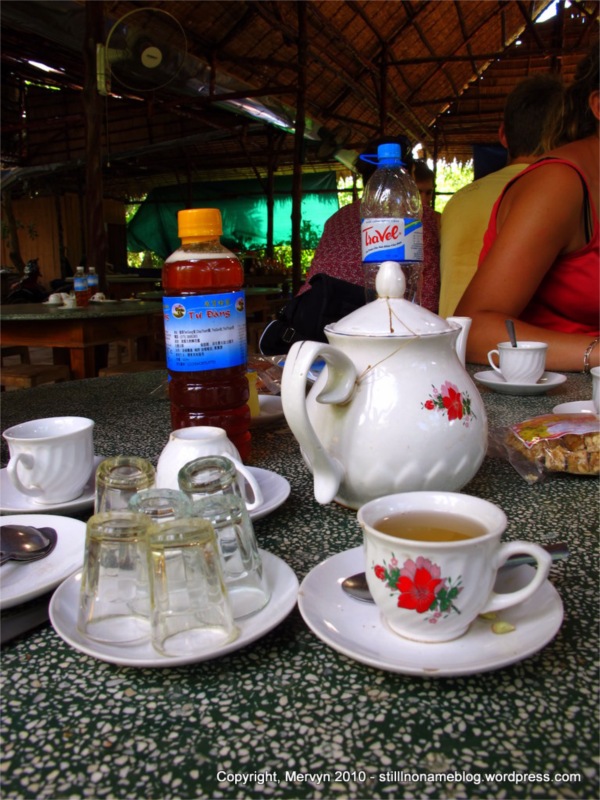
After folk music and canine we walked to a bee farm to try some locally made honey tea. Quite good. Our guide brought out a honeycomb and handled it barehanded without gloves or those little smoke cans you see on TV. That seemed more daring to me than eating canine, but maybe that’s just me.
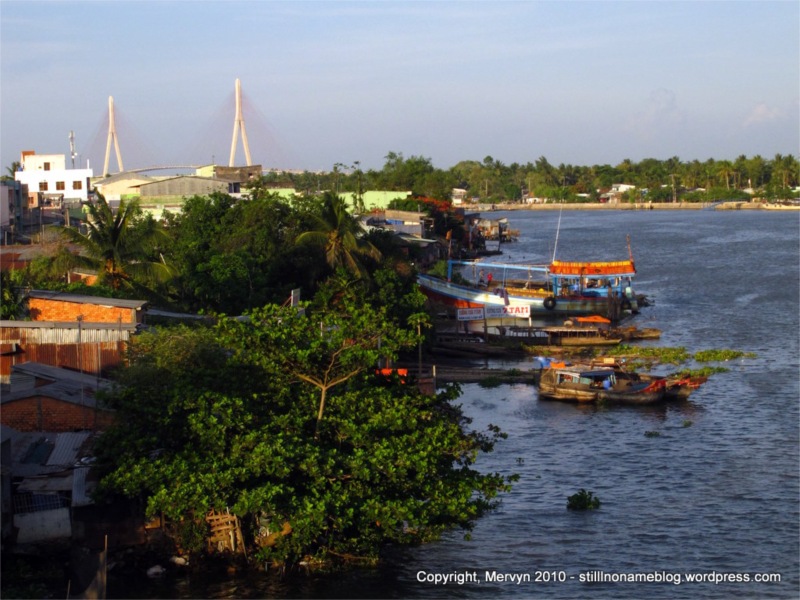
We then boarded the boat back to the bus and drove two and a half hours to Can Tho, the provincial capital. We passed small villages and crossed high tech suspension bridges. The melding of the developed and the developing world was quite dramatic. On the local equivalent of the Bay or Golden Gate Bridge, people had stopped their motorbikes on the mini-shoulder to eat, hang out, and watch the sunset. I wanted to hop off the bus and join them.
We dropped some folks off at a local home stay. The rest of us headed off to our hotel. After a nap, I ventured out for dinner. I settled on a nearby restaurant called Sao Hom, which turned out to be located in the local equivalent of San Francisco’s Ferry Building. This former old market and passenger port was now home to shops and eateries.
This place provided me with my second unexpected culinary opportunity: snake. I opted for the set menu of fried snake spring rolls and snake curry.
This was a classy joint even by Western standards. Outdoor seating with a riverfront location. I was joined by a hoard of boisterous French tourists. They loudly engaged in coordinated drinking and toasts. I ordered a soda and settled in for my second food adventure of the day.
First up, the rolls. They were good. Snake meat is dark and, as served to me, was in thin strips. If I were the kind to be disturbed, I’d say it looked disturbingly like miniature serpents. Like they’d been trimmed of Medusa’s head. The meat was flaky, if that makes sense. Not dry, though. It was a bit tough. It’s the kind of thing on which a more civilized person would have used a knife.
The curry was good too. It was spicy, so it was harder to pick out the snake flavor. It was, however, obviously serpentine; the meats were again in long, thin strips. Every once in a while I’d trip myself out by crunching on something. Every time I’d be relieved to find it was just a peanut.
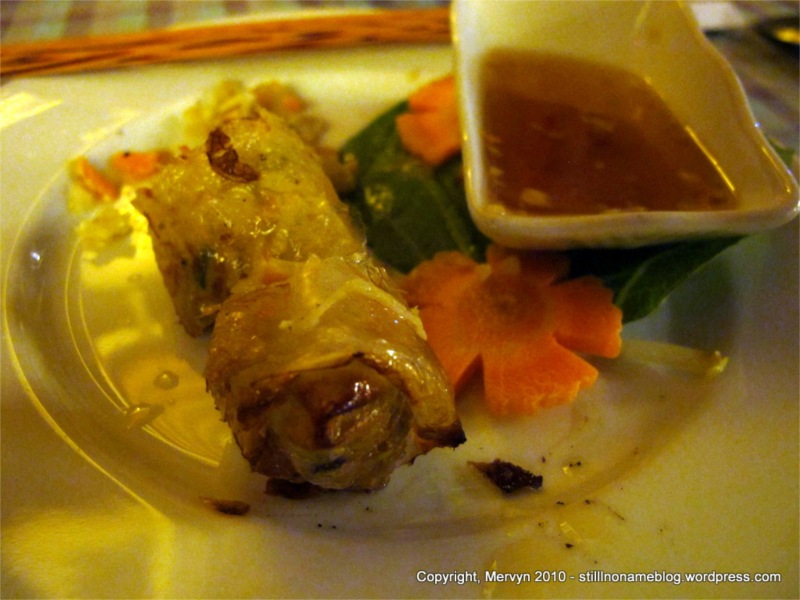
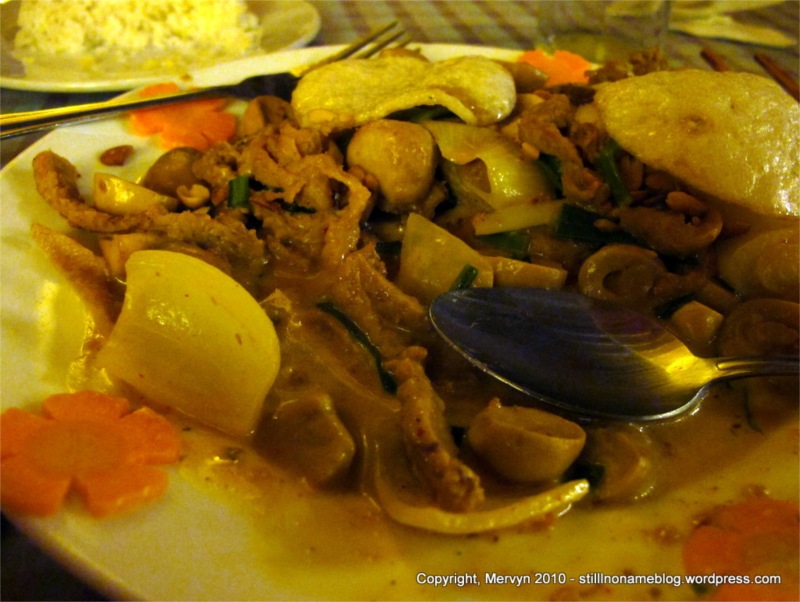
It was way too much food for one person, though. I had to apologize to my waitress afterwards. I tried to explain that it was good, but I just couldn’t eat all of it. She humored me.
I headed back to the hotel through Can Tho’s empty streets. Overall it was a good day. I’d expanded my food horizons—it turns out there are two more things in this world that I don’t mind eating. Just don’t make me look them in the eye as I swallow. At least not yet.
Day 68 – Always Finding Food
Dateline: Ho Chi Minh City (Saigon), Vietnam – Monday, May 10, 2010
On occasion, we must rediscover certain self-evident truths. For example, life sometimes reminds us that oven mitts are helpful if you’re going to pick up a cookie sheet that’s just been in the oven. Or that what goes up must come down. Or that you never get involved in a land war in Asia.
Today I rediscovered the following: I am terrible at finding things that are sitting right in front of my face.
I planned on this being an eating day. Me on a food tour, with my bike at my hand. I’d jet around the city seeking food that’s not bland. A “quest” if you will.
I secured myself a decent map of HCMC restaurants. Saigon wouldn’t fool me with its dastardly French-planned streets. I plotted a course to a couple of eateries and a coffee joint and set out.
First destination: lunch at Huong Lai, a gourmet Vietnamese restaurant. All the wait staff are from disadvantaged families or are former street children. The restaurant trains them, gives them an education and a place to stay. They then get jobs at other restaurants in the city.
I love fine dining. I love inexpensive fine dining. I love inexpensive fine dining where my money goes to a worthy cause.
It was just a matter of finding the place. Just for fun, I’m going to include street names so you can get a feel for what I was searching for while negotiating traffic on a motorbike. I knew it was midblock on D Ly Tu Trong between D Dong Khui and D Pasteur. To get there from the Ha Vy mini-hotel where I’m staying, I just had to go straight through two roundabouts and then make two left turns. Simple.
I zipped through the roundabouts; one of which housed the Tran Nguyen Hai Statue that I visited yesterday. No problem.
I made my first left onto D Dong Khui. No problem.
I could not, however, make my second left onto D Ly Tu Trong because it is a one-way street. No problem, though. I made a left at the next block, went down two blocks and headed back up D Ly Tu Trong. I didn’t see Huong Lai.
I circled again. Again, I didn’t see Huong Lai.
I pulled over, consulted the map. Confirmed that I was in the right spot and circled again.
I repeated this a couple more times. All the while I’m motoring through Saigon traffic, through blaring horns, through searing heat. I was tired. I was hungry. It felt like a cosmic joke.
I started to feel like a lunatic. It’s like the place didn’t exist. But I knew it did. I’d called them the night before about their hours. A human being gave me relevant information. Presumably the place hadn’t shut down in the last 12 hours.
Finally, I saw it. The restaurant front was a small building nestled between two larger structures. It was partially blocked from the street by a couple of trees. Oh, and the sign used a strange font. No excuses. Just saying.
I walked up a winding, wooden staircase and found a quaint little dining room. All the staff was young except for the manager. I opted not to try out my limited Vietnamese to give them some practice with their English. They kept up with my fast, slurry California accent. Impressive.
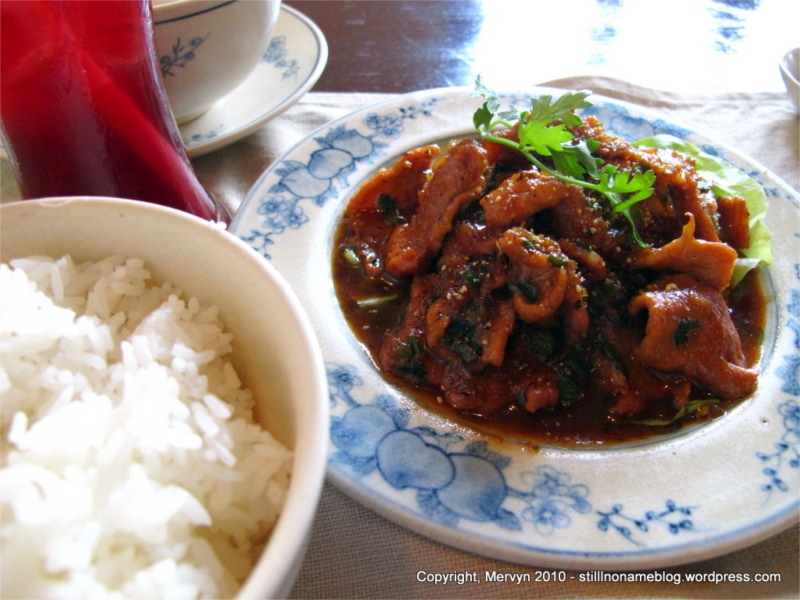
I had the fried pork with black pepper and a glass of mulberry juice. The pork might have been a tad overdone, but I didn’t really mind because the flavor was good. Good bite balanced with some sweetness. The mulberry juice was rich and dark red. Never had mulberry juice before. I like it.
For dessert I had the house-made longan ice cream. There was a whole, peeled longan in it with the seed still intact. A great touch. It gave me a chance to eat a whole fruit while enjoying the cool, creamy ice cream. A great finish.
The service was attentive but not overbearing. I didn’t feel like they were hovering over my shoulder, but they managed to be there whenever I needed anything. They’ve been instructed well.
Vietnam does not have a tip culture, but since I was at a charitable organization, I left a bit for the staff. Not much by U.S. terms but quite large when compared proportionally to the bill which came out to 115,000 dong ($6.12). Gourmet food for the price of a fast food meal. Fantastic.
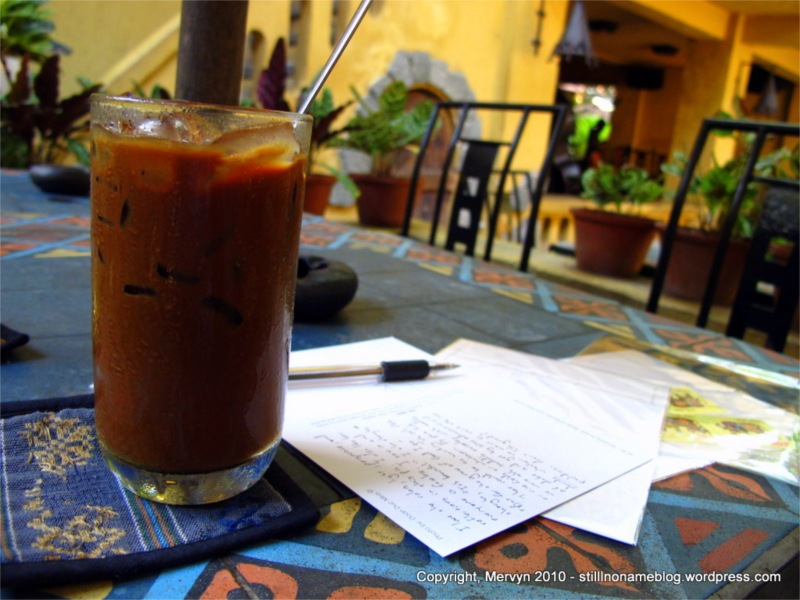
Next up: Vietnamese coffee at Sereneta, a place that’s supposed to have a lovely courtyard garden and pond. Perfect complement for my afternoon agenda which consisted of writing postcards and reading. I live a difficult life.
I bought the postcards and motored out to the corner of D Ngo Thoi Nhiem and D Le Qui Don, the location indicated on map. I found it in no time. What I didn’t find was Sereneta. I circled the block one direction, then the other. I pulled over and looked at the map. I circled again. I saw other coffee shops, but no Sereneta. I saw what looked like a school named after Marie Curie but no Sereneta.
I was going bonkers. Twice in one day? I had a map for God’s sake! I was at the right street corner. I checked again and noticed that the address was on D Ngo Thoi Nhiem and the guidebook, in an entry for a nearby bar, mentioned an alley. I circled again. Nothing.
Forget it, I said. There are a few cafés around here. I’d take my coffee somewhere and be done with it. I parked mid-block in front of a non-Sereneta café next to the Marie Curie school. Just in case, I walked towards the school.
That’s when I found an alley. Fact: there was a large delivery truck parked in it so it looked like a driveway.
I’m just sayin’.
I walked to the back of the alley and found Sereneta. I plopped myself down under an umbrella and fan. Fortified with Lactaid, I went crazy and ordered my iced coffee with milk. You only live once.
Delicious. Even better than the day before. Richer even.
I ripped my way through the postcards. I felt totally bourgeois—sitting in a garden by a pond writing correspondence, sipping on iced office while a servant/waiter regularly refreshed my complimentary glass of green tea. I almost felt guilty. I’m going to have to do it again.
Note: when you write postcards make sure you leave room for the stamp otherwise you’ll have to do a lot of scribbling and rewriting. Just sayin’.
I headed back to Ha Vy for a nap. Driving around and eating food is lots of work.
After sunset I headed out to find Nam Ka, a restaurant that Lonely Planet describes as specializing in “aromatic Vietnamese flavors.” Quite pricey by local standards (average of $10+ per main), but I was in full on splurge mode. Budget be damned, full speed ahead!
The restaurant was supposed to be on D Mac Thi Buoi just off D Dong Khoi near a roundabout. From the hotel, we were talking three turns max. How hard could it be?
My gawd. First off I was driving at night, which was a new experience. Things literally appear out of nowhere. Pedestrians are like ghosts that randomly phase in and out of view. You’ll be plodding along mid-block and the ghost of Ho Chi Minh’s grandson will appear in the middle of your lane. The apparition slips out of your headlight, then disappears. Then it happens all over again. You are constantly on the verge of killing or being killed by something that you’ll never see coming. It’s sort of like playing badminton in the impact zone of a falling satellite. One second you’re happily diving for a shuttlecock, then BAM. Totally out of nowhere.
When you’re trying to foresee where unforeseeable death might come from it’s difficult to concentrate on reading street or restaurant signs.
Of course I circled the block a million times. Of course I didn’t find it. I went with my Sereneta philosophy and decided to park and hunt on foot. I dropped the motorbike off with one of the many motorbike valets in the neighborhood and walked up and down the block. Nothing. NOTHING.
I pulled out the map, checked and rechecked my location. NOTHING. I was in the right part of town, an area filled with high-end shops and hotels. I was near the roundabout. I just couldn’t find it.
When I finally broke down and called the restaurant I found out why—they no longer exist. The phone’s disconnected. At least that’s what I think the Vietnamese lady on the recording said. Who knows. Maybe she was telling me their new location. Doubt it.
So, let me save you some trouble. Nam Ka has gone out of business. Even if they haven’t, they’ve annoyed me enough that I say we should all boycott. I’m not bitter.
I settled on Hoa Tuc, a Vietnamese place that’s situated in a courtyard a few blocks away. I reparked the bike, then set off. I felt so self-righteous after my Nam Ka experience that I immediately got lost and couldn’t find the courtyard. Sometimes we have to relearn self-evident truths multiple times a day, I guess.
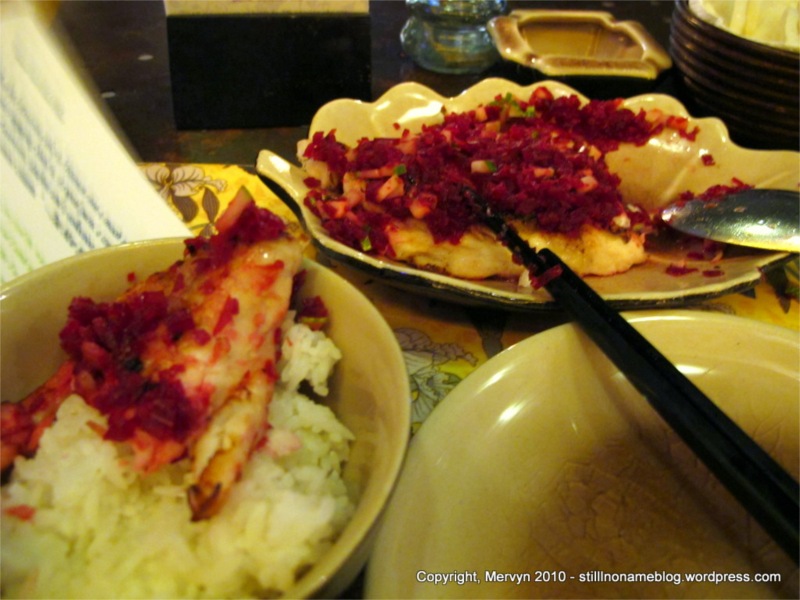
I found it. Eventually. I plopped down outdoors, ordered Vietnamese snapper with local peppers. Adequate, but disappointing. It managed to be both too dry and too moist. The meat was overdone while the skin and fat felt undercooked. A feat, but not a good one.
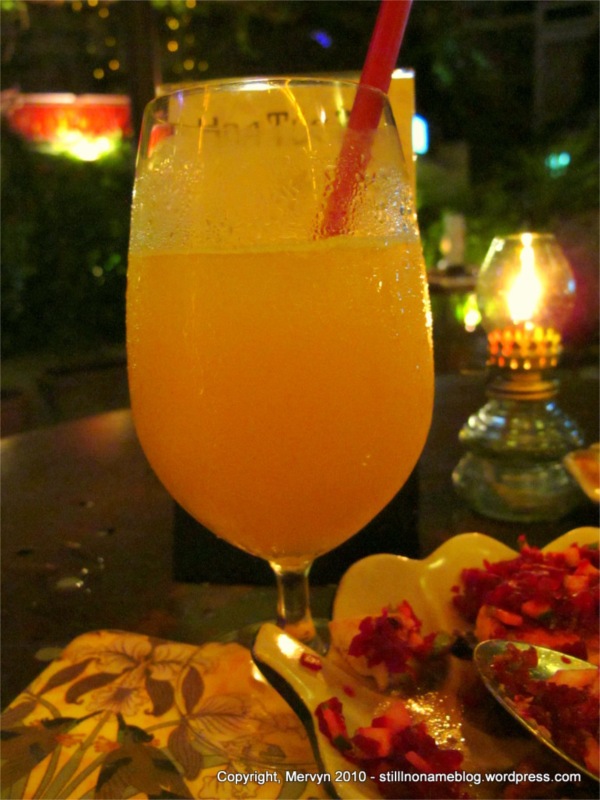
I did indulge my love of sugar cane juice. Delicious. It somehow felt too clean for my taste though. I much prefer the dirty stuff from the street hawkers.
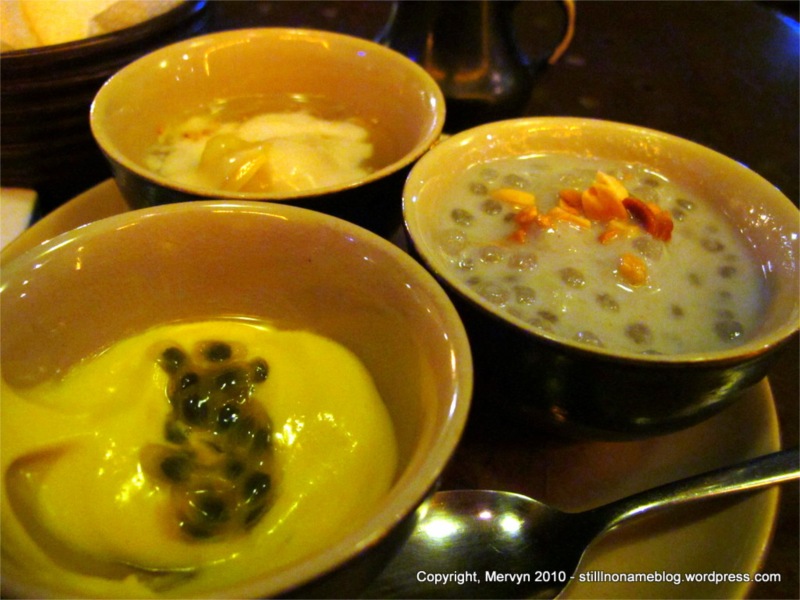
For dessert I went with a sampler trio. The waiter rattled off their names but I can’t remember them all. Let’s just say they were good. One was a citrusy custard, one tasted like Filipino ginataan (a sweet tapioca stew concoction), and one had banana and coconut syrup. All delicious in their own ways.
I headed out of the Hoa Tuc courtyard and managed to relocate the KFC where I’d parked the bike. I may not be the finder of things that are obviously there, but at least I can find things that I’ve located before. Evidently, when fighting a war with your disabilities, you must take every little victory you can.
Dateline: Ho Chi Minh City (Saigon), Vietnam – Sunday, May 9, 2010
I give up. I filled today with tons of activity, but none of it fits under a nice, neat umbrella theme. I’m also feeling lazy. So, you know what that means: a list! The oldest trick in the writer’s handbook. So, without further ado, a collection of random thoughts and less random occurrences. A traveling potpourri, if you will.
**I’ve done a great job the last few weeks of avoiding my traveling Achilles’ heel: buying books. Books are heavy. Books take up space. Books can be expensive. Since I haven’t indulged in any new reading materials I’ve actually reread books I’ve already purchased. In the case of Moneyball, I’ve re-reread. That’s right. Three times. Luckily, I have a high tolerance for repetitive activity. (Having said that, it’s a wonder that I haven’t been more successful in my relationships. But, I digress.)
I’m also hoping that through reading the work of good writers their ability will, through osmosis, transfer to me. Have you noticed a difference? Just say, “Yes.”
Thanks.
Today, though, I stumbled across a bookstore selling all kinds of really cheap books. I suspect that these books are bootlegs, but I couldn’t resist the bargain. I am of the Napster generation. We have no conscience when it comes to intellectual property. As Chuck Klosterman once wrote, there’s a reason why Talk Like a Pirate Day thrives—our generation has a little pirate in all of us.
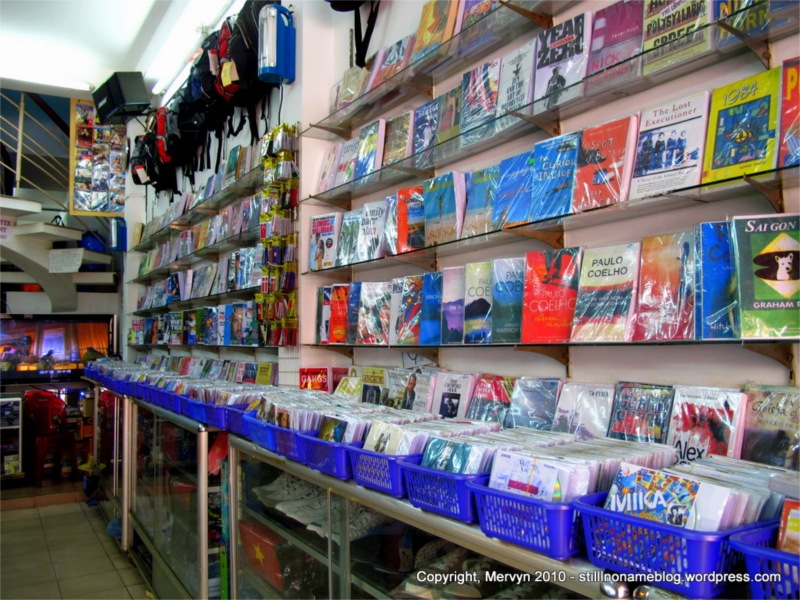
That, and finding a legit bookstore would have been harder than I’d want. Oh, and how do I really know if these are fakes. They could just have come from really crappy print houses that make the pages only look like they were photocopied. If I’m ever hauled into court, I’ll have to plead the Fifth.
I went a little crazy staring at all the books. I browsed for over an hour, peeling plastic off paperbacks and previewing content. Great irony of the shop: they were selling a copy of George Orwell’s 1984. A novel written decrying the dangers of Big Brother in a country that’s arguably one of the most Big Brother-esque in the world. Go figure.
I settled on two books that seemed to have good writing: a book by Jeremy Clarkson and one written by a former L.A. Times reporter about post-war Vietnam. From my brief read through I’m pretty sure their prose won’t infect my writing with suckage. If you notice a drop off in the quality of my work, you can blame it on Clarkson. I know I will.
**Today I had my first Vietnamese coffee. I know I know I know. I’m an idiot. That’s what I said to myself as I took my first sip.
I had mine iced. When the waitress brought it to me the cup was filled to the brim with ice and only half full of coffee. I followed the lead of those around me and pounded at the ice with the long metal spoon. In short order the ice melted and the coffee reached the top of the glass. You might think that this diluted java might be weak and watery. You’d be wrong.
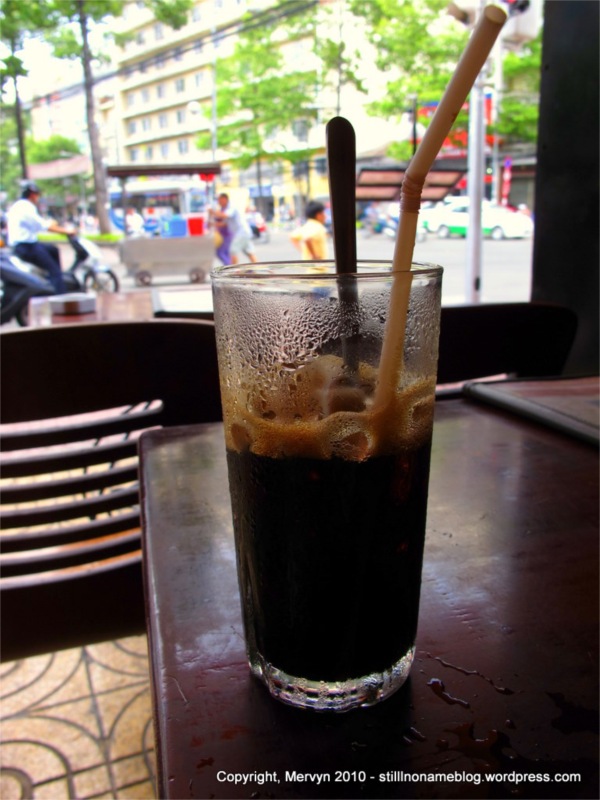
The stuff had viscosity. It was like drinking bitter motor oil. It was the love child of Bill Gates and the Sultan of Brunei, parading down a dusty Central American village street in a Rolls Royce Phantom dipped in gold and rolled in diamonds–it flaunted its richness without regard for consequences. The dark liquid led a bourgeoisie assault against my country poor taste buds.
I don’t drink coffee. I love it too much (if that makes sense). I will, however, make an exception for this stuff. It’s my cocaine. One taste and I know I’m an addict.
Prepare the cushy rehab facility. When I come down off this stuff in three weeks it’s going to be one hell of a low. Till then, I’ll be enjoying the ride.
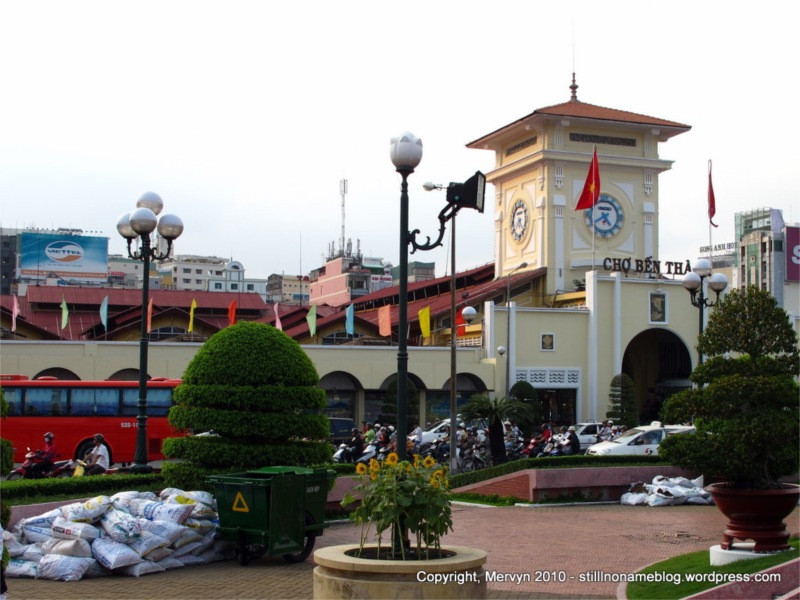
**I didn’t stop there. I walked out past the Tran Ngueyn Hai statue that sits in the roundabout. I was looking for the Ben Thanh Market. Like any worthwhile buzz, my high drove me out in search of snacks. I’d heard the market had good food stands.
Of course, in the heat, I walked right past the giant building housing the food stalls. Having unknowingly overshot my target and pouring sweat from the afternoon heat, I stopped at an ice cream shop for a break. I sat down under a fan and ordered a durian shake.
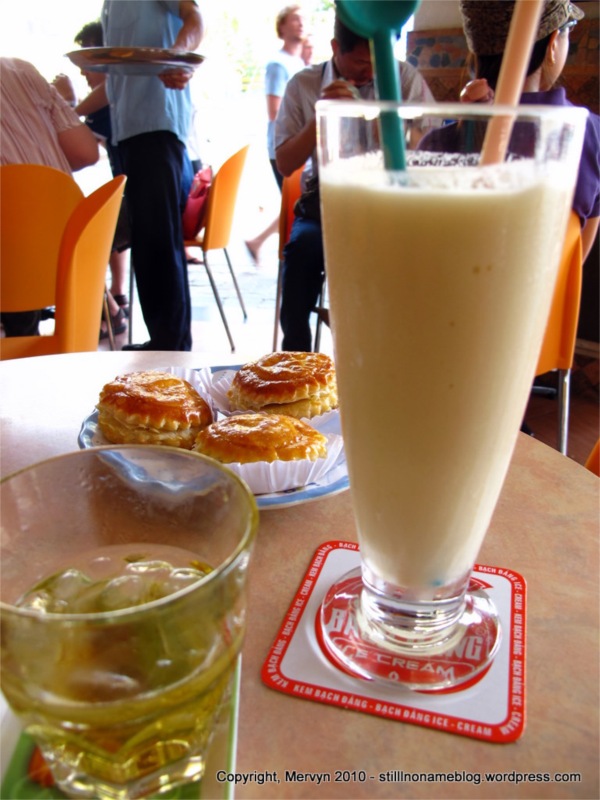
Good stuff. Real good. Some people say durian tastes like stinky feet. Not in shake form. It’s a complex flavor for sure. It morphs in your mouth. Blended like I had it, the sweetness removes much of what the uninitiated find offensive. At least in my opinion it does. Let’s just say it hit the spot and leave it at that. Not as addictive as Vietnamese iced coffee but definitely a worthy chaser.
**After my snack, I backtracked and found the Ben Thanh Market. I’d already had my snack so I just snapped a few pics of the exterior. I also stood in the traffic circle and just stared at traffic. I took way more pictures than I’d initially expected. Really, it’s fascinating. If you’re the kind of person that’s mesmerized by an aquarium of fish, then you’ll be captivated by Saigon traffic.
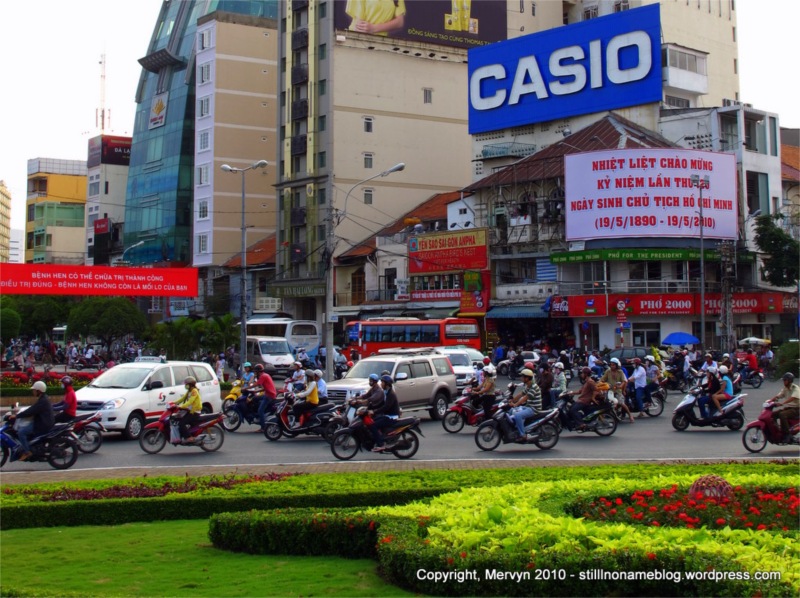
Click through to today’s gallery at the link at the bottom of the page for a bunch of photos. Pay particular attention to the series that shows a family crossing from the traffic circle to the park across the road. Notice how the traffic swirls around them as they edge across. Watch how the green bus “69” doesn’t even pretend it’s going to stop for them. See how they all survive.
Then, when you come to Saigon and are overwhelmed by the madness in the street, just remember the old granny and little kid in the pics and remember that they survived. If they can do it, so can you. Just gird your loins and walk. Slowly. And pray. With your eyes open.
Good luck.
**I walked through the park back to my Saigon home, the Ha Vy hotel. It being Sunday, there were lots of people recreating in the park (recreation can be a verb, right?). Most fascinating were the guys playing what appeared to be volleyball using their feet and a woven wicker ball.
I’m terrible at volleyball. I embarrass myself playing hacky sack. My only redeeming quality at soccer is that, when fit, I will never stop running.
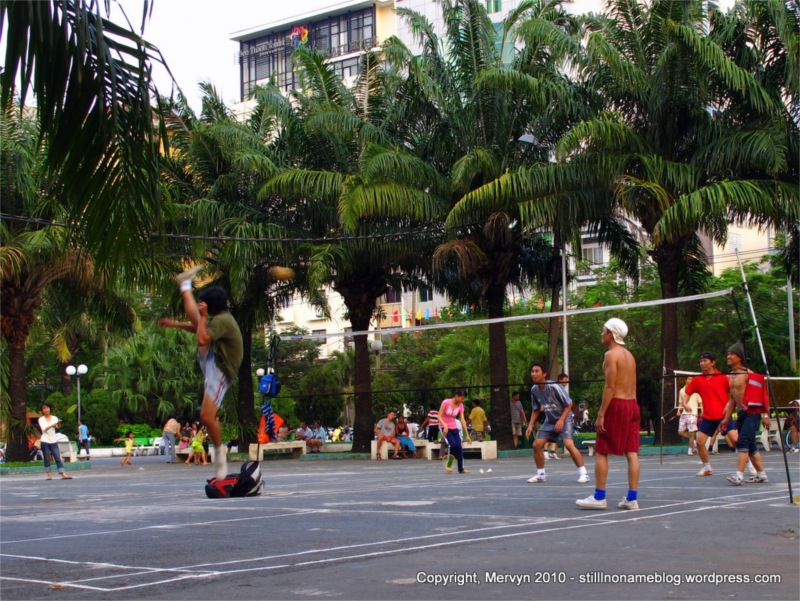
Recognizing all that, I know I will never play this game. The guys were pretty good. If the game is as big in Vietnam as it appears to be in the Saigon park, then the world better watch out. Once this country gets its nutrition and health care issues worked out, there are going to be a lot of world-class soccer players on the world stage.
I am, of course, assuming the skills translate. Of course, what do I know. I pulled a hamstring just watching these guys.
**I can’t figure out what about this country isn’t capitalist. Perhaps there’s something in the government that controls some of the means of production. I am woefully ignorant. I’m not sure a local could even explain it to me. It’s not like the Vietnamese authorities are explaining their policies to the masses. Transparency is one thing this communist regime’s managed to resist.
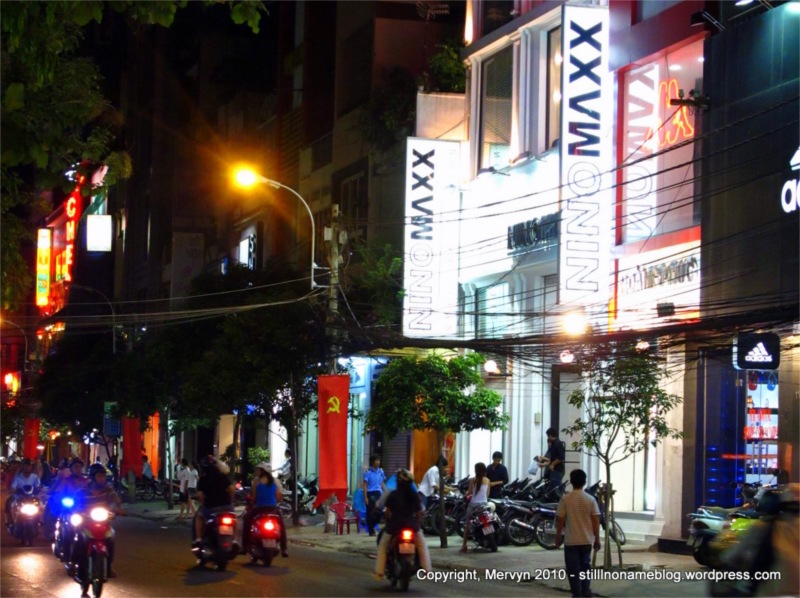
While walking through a nearby shopping district this evening I noticed a hammer and sickle flag sitting under a Ninno Maxx sign. Down the road were Boscini stores, Adidas shops, Versace galleries, and various high fashion establishments. Towering over the socialist, communist, Marxist regalia were some of the biggest capitalist brands on earth.
Times, they are a changing, I guess.
**I was in the shopping district to find Mon Hue, a local restaurant chain that’s supposed to have a good variety of traditional Vietnamese dishes. Like the Ben Thanh Market, I overshot the place like it wasn’t there. It’s like I didn’t want to find the place or something.
I sat down, confused the waitress by looking Vietnamese, then established myself as a foreigner by brandishing my English.
I had steamed rice paper rolls with beef and pork and Hue rice with clams. The food was pretty good. The rolls were straightforward.
The rice was not. It came with a clear soup. At least I assume it was soup. It might have been meant to be poured over the dish. It also came with a spicy purple sauce. At least I assume it was a sauce. It might have been a dish unto itself.
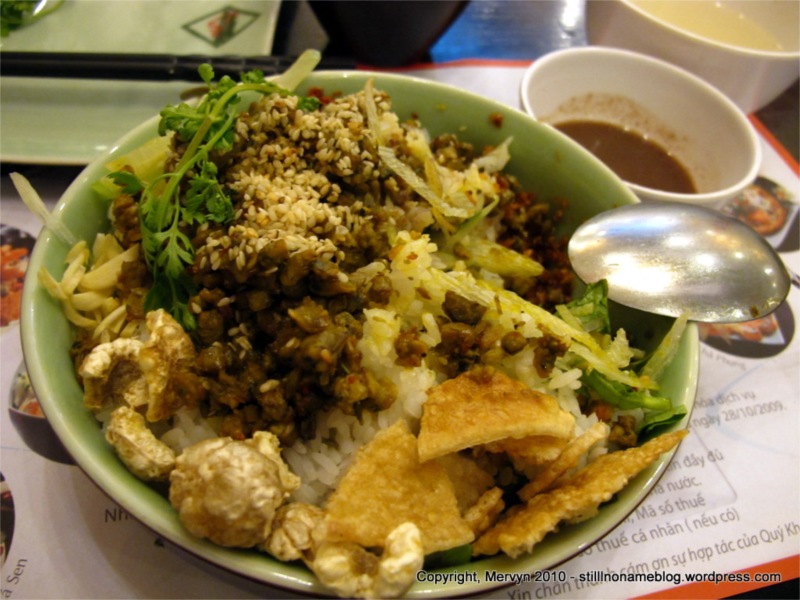
This was a “some assembly required” dish and I didn’t have the instruction manual. I soldiered my way through. It was a bit dry, but the flavors were interesting. A mix of spicy and seafood. If you don’t like the taste of the ocean, then this dish is not for you.
I had a tapioca coconut drink, too. This was interesting because each tapioca had a piece of coconut at its core. Like many Vietnamese drinks, the glass was full of ice and only half filled with juice. I had to mash at the ice with my spoon to fill the cup with liquid. Good stuff. Sweet but not too sweet. Refreshing.
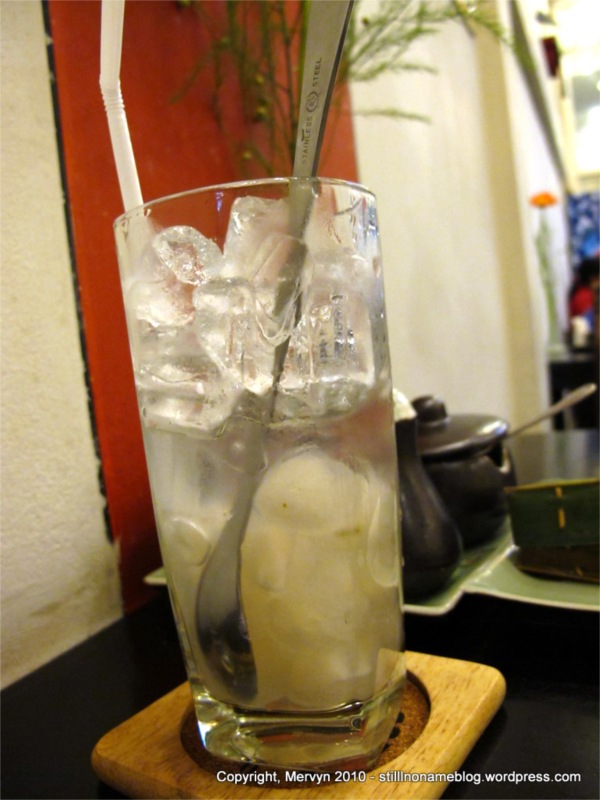
And that’s that. Lots of walking. Lots of eating. Lots of reading. Lots of staring at traffic. Lots of activity. None of it thematic. At least not in the state I’m in. Gawd I love Vietnamese coffee. Can’t wait for tomorrow’s fix. Until then
Day 66 – It’s Vietnamese for Capitalism
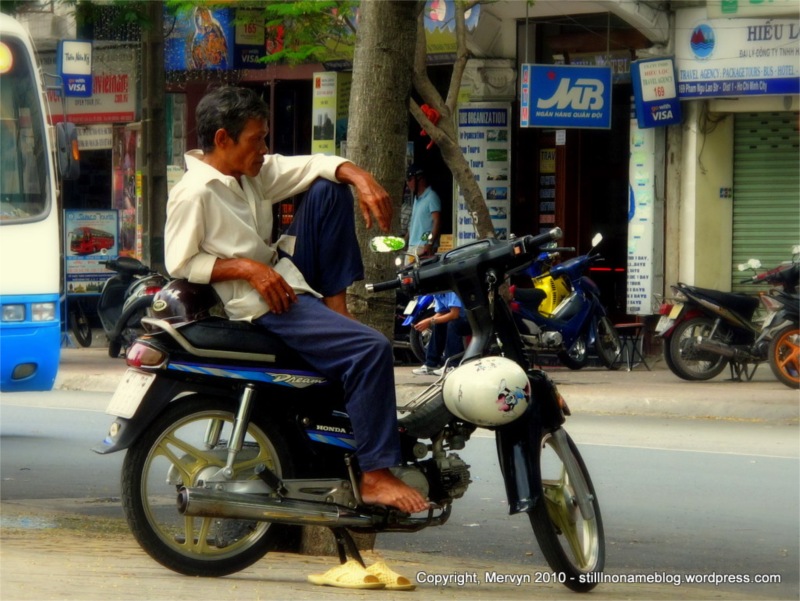
Dateline: Ho Chi Minh City (Saigon), Vietnam – Saturday, May 8, 2010
Vietnam is a communist country. There is no freedom of the press. There are no elections. The country is bathed in mother Russia red, yellow stars, and the cold war hammer and sickle. There is but one political party and it is socialist. The government controls the means of production. The government, however, does not command the army—the communist party does. When I checked into the Ha Vy Hotel here in HCMC, the hotel submitted my name, passport number, and visa information (and the information of all the other guests) to the local police. I am being monitored by the authorities.
In addition to the command and control credentials, the country has a less than stellar reputation amongst travelers. More than one person on the road has warned me that I need to check with multiple proprietors for prices of tours, buses, or rooms. Some tourists have paid $25 for tours that cost another person only $4. Cab drivers will sometimes quote you prices ten times the typical rate for trips across town. In Vietnam, if you’re going to pay the lowest price, you’re going to have to keep your head on swivel and be willing to bargain.
Westerners often complain that they’re being cheated. If the moto driver is willing to take 15,000 dong ($.85) for a trip to the War Museum, why would he try to get me to pay 150,000 dong ($8.50)? If I can buy the bus ticket directly from the bus company for $5, why would the tour company charge me $20? To many tourists, it seems like everyone around is running game. It’s a giant hustle. The locals are all cons and we Westerners are their marks.
And here, my friends, lies a great irony: the Western travelers are complaining that the local communists are being too capitalist. The citizens of ostensibly free market nations can’t handle themselves in their own economic system. They don’t want to be “cheated” they want the “real price.”
Think about it, though. What is “price”? It’s an Economics 101 question. Isn’t price really just what a seller and buyer agree is a fair amount for the service or good in question?
You see it all the time. Some baseball memorabilia collectors are will pay $1 million dollars for a rare baseball card. Fashionistas will fork over $50,000 for a custom made designer dress that they’ll wear only once. The health conscious will pay $50/hour for instruction from a yogi or personal trainer. Believers will give 10% of their income for the services rendered by their local church, mosque, or temple.
How much are all these things worth, anyway? When it comes down to it’s just cardboard with a ballplayer’s picture on it; it’s pieces of colored cloth stitched together by illegal immigrants; it’s professional physical abuse; it’s the maintenance of one’s eternal soul. These goods and services are valuable to some, worthless to others. Some will pay; some will not.
The reality is that there is no universal “price.” We each have to decide how much something is worth. Don’t think the Picasso is worth $5 million dollars? Then don’t pay the seller for the painting. Think $60/hour is too much to pay for that pierced, tattooed babysitter? Don’t take his offer. Instead, call around and see if someone’s willing to take less.
A price is really just what a customer agrees to pay and a proprietor is willing to accept. That’s the heart of capitalism. People have the freedom to choose. They have the freedom to make “mistakes” or reap “windfalls.” The foolish pay too much to the savvy. The inept sell for too little and go broke. It’s nothing personal; it’s just business.
The only place where there is a “real price”—a price that exists outside the relationship between buyer and seller—is a command and control economy. A top-down system where a central power determines what a seller should sell for and what a buyer must pay. In other words, a communist system.
The beauty is that it’s here, in one of the world’s few communist regimes, the locals are engaged in the highest forms of capitalism and market freedom. The traveling masseuse riding around on the bicycle shaking a rattle; the lady with a stack of books propped on her hip; the driver asking, “You need moto?”; the tour operator working on commission; the girl hauling around a drawer full of gum, toys, lighters, razors, and toothpaste–they’re all going to try to figure out how much you’re willing to pay then they’re going to charge you that amount. If you purchase, it’s because you were willing. If the price were really too high, you would have forgone the good or service. Or, you’d have tried to buy it from someone else.
So suck it up Western travelers. We’ve grown soft living in countries where everyone’s rich and willing to pay roughly the same amount for a good or service. We’ve lived too long in a world where market information flows freely—a market where there are few inefficiencies.
The people here are poor. They’re hungry. They will work market inefficiencies to their advantage. It’s our fault that we don’t know the market; that we don’t know that just around the corner we could pay half. These people are cousins to Wall Street’s cutthroat bond traders and hedge fund managers. Like their more respected brethren, they’ll sell at whatever price the market (we) will bear to get that last dollar.
Don’t hate. It’s all in the capitalist game.
Day 65 – Get Smart at The Independence Palace
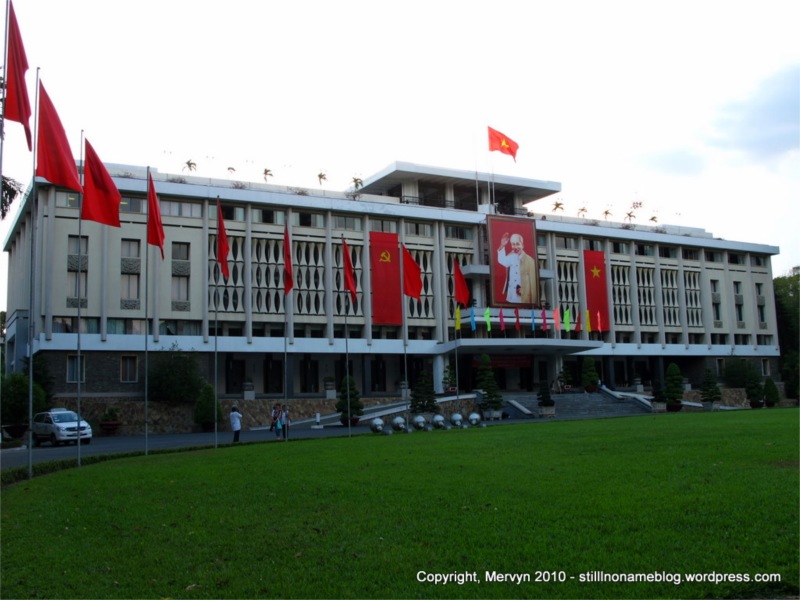
Dateline: Ho Chi Minh (Saigon), Vietnam – Friday, May 7, 2010
I loved Get Smart. The hit TV comedy of the 1960’s chronicled the high jinks of inept spy Maxwell Smart. The iconic image of Smart talking into a telephone hidden in his shoe is etched into my memory from summer vacation reruns. Smart’s spy base was hidden deep underground. A labyrinth of long, bare, metal walled hallways led between anonymous offices and radio rooms. Operatives huddled over transistor radios, spinning dials and adjusting frequencies trying to clear the signal coming in through their oversized headphones. Chief occupied a sparse office where he’d direct operations. Then there was 99, Smart’s fetching partner. She balanced Smart’s stupidity with intelligence and killer looks. Her fitted outfits broke up the monotony of the ascetic maze of underground tunnels.
In the basement of the Independence Palace I got a glimpse of the world that inspired the show. The Palace, which Lonely Planet refers to as the “Reunification Palace,” is in the center of Hi Chi Minh City. Formerly the residence of the president, it was essentially the White House of South Vietnam. The administration directed the South Vietnamese forces from bunkers beneath the palace. The north gate is the site of one of the iconic images of the Vietnam-American War—a tank breaking through the palace gate, the final signal of the fall of Saigon.
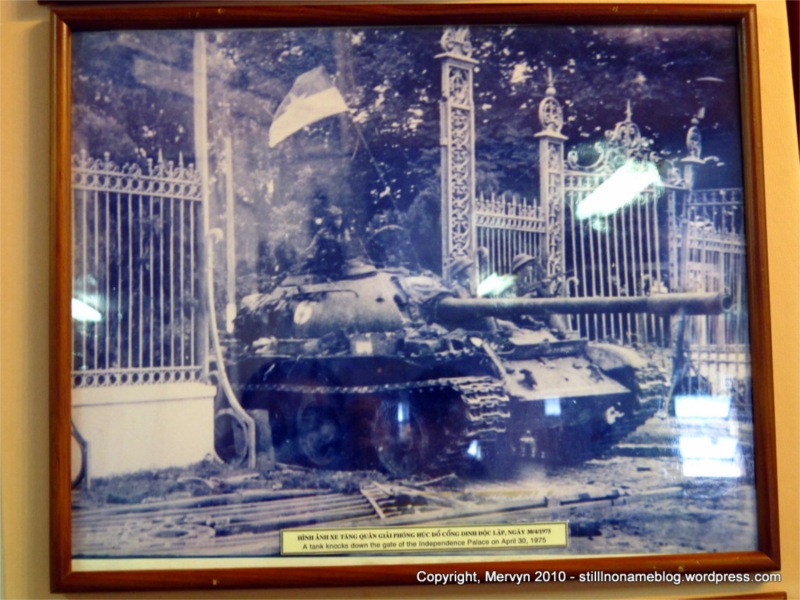
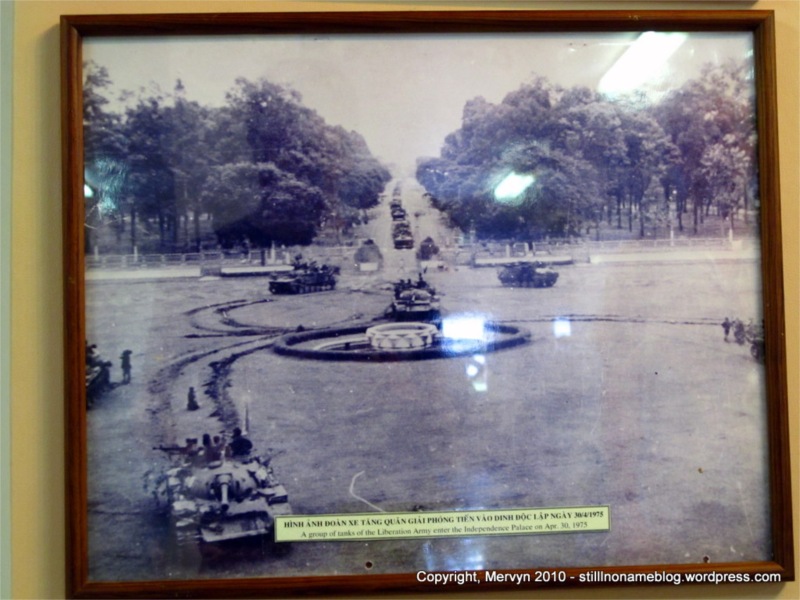
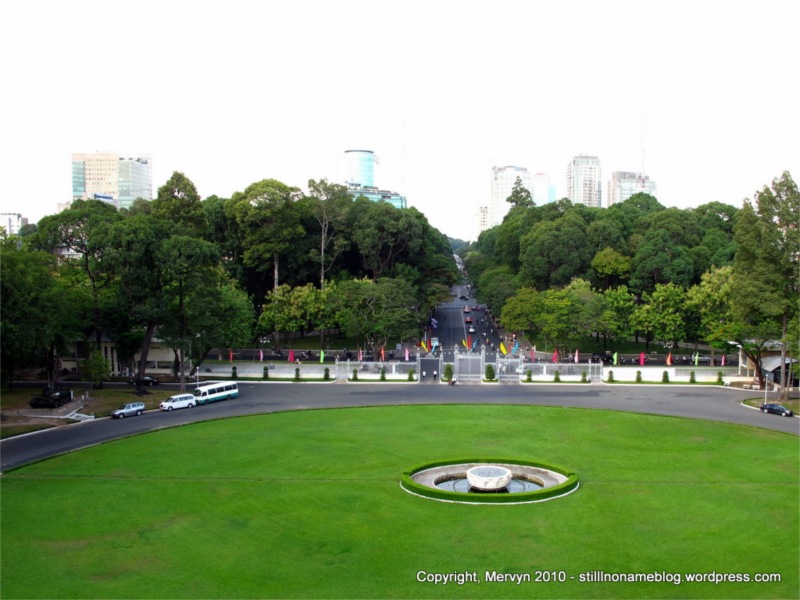
Other than the repaired gate and a couple cosmetic changes (communist flags and regalia, including a giant picture of Ho Chi Minh) the palace hasn’t changed much since the end of the war.
Right away you can see that the façade of the palace is dated. The building is a giant box with features that attempt to break up the monotony. It ends up looking like a half-hearted attempt at a giant wedding cake. Scooped pillars sit in front of glass windows. These “modern” features sit atop a cobblestone base. It actually looks a lot like some of the buildings at the CIA headquarters in Langley, Virginia. That is not really a compliment. Even the topiary feels throwback. The plants have been carved into circles and rounded pancakes, as if to try to counterbalance all the right angles on the building.
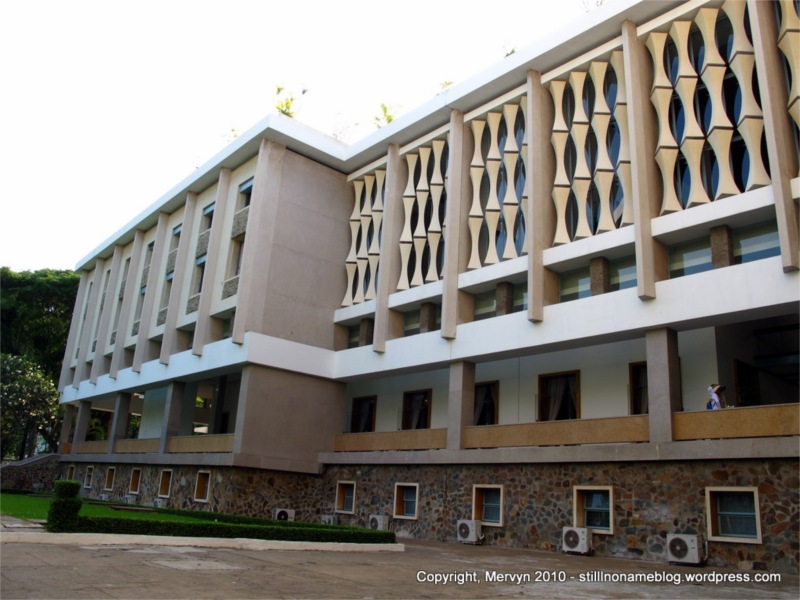
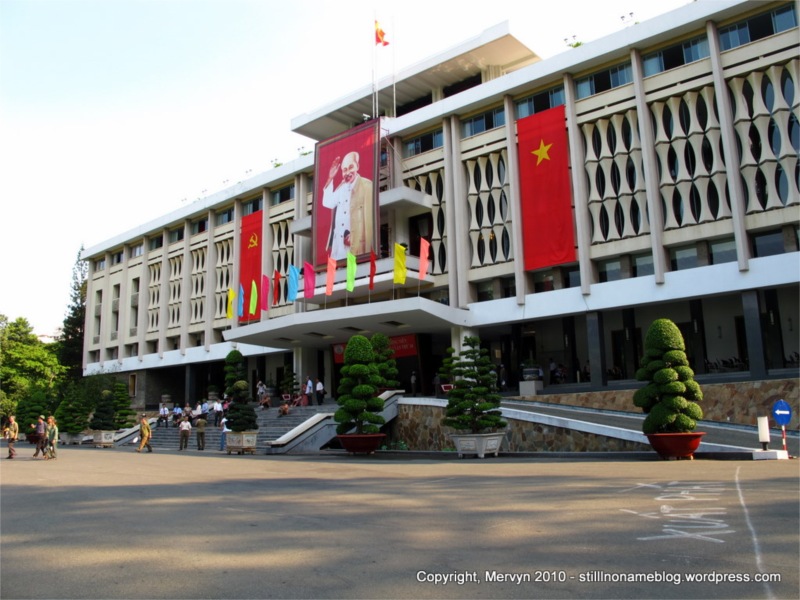
Inside, the first and second floors have a series of formal receiving rooms. I could actually picture American dignitaries seated around these giant tables, taking in the décor of dirty yellow or military green as they sweated through their suits and ties, their thick, black-rimmed glasses slipping down their perspiration soaked noses.
They would have towered over their shorter Asian allies. Lots of smiles, lots of handshaking. An occasional posed picture of the great Americans helping their democracy loving brethren.
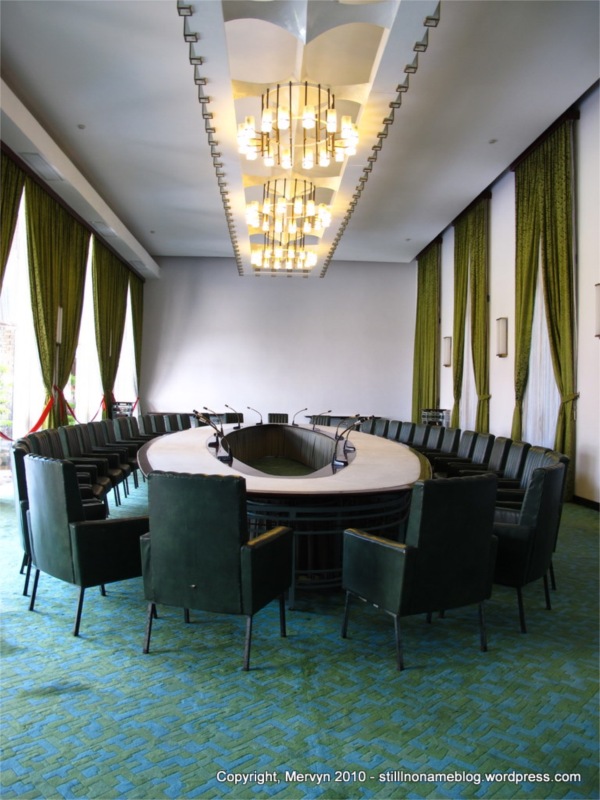
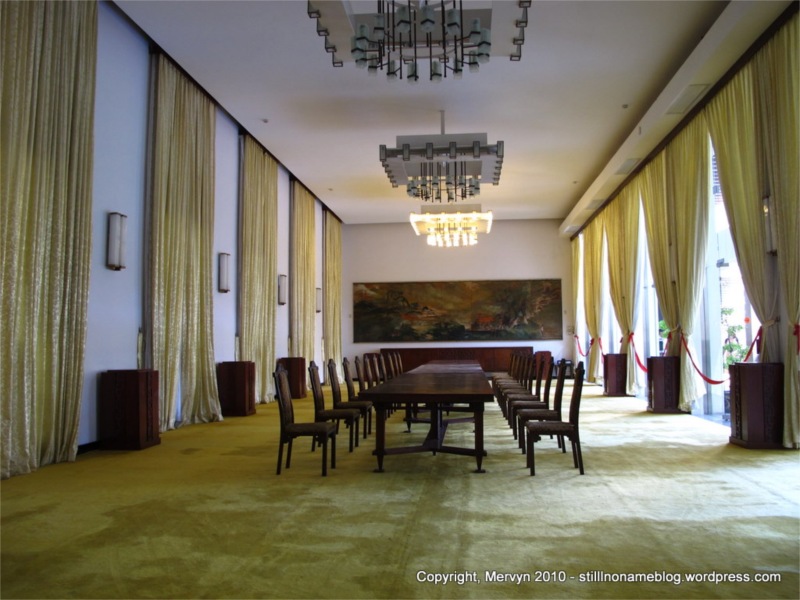
State rooms were filled with all kinds of artifacts showcasing the wealth of the host nation. The same right angles are repeated in the blocky furniture. Like any good Asian nation, there’s a prodigious amount of gold. A wall that lined an inner courtyard on the third floor was decorated with what looked like hunting trophies. Skulls of felled wildlife with their dried tails hanging from their mouths. There were even elephant feet, arranged in three different sizes like the three bears. One too big, one too small, one just right. Across the courtyard was a dining area, closed off from the outdoors by glass doors. Each round table had a Lazy Susan. It felt like I’d walked into a neighborhood Chinese restaurant in San Francisco’s Inner Sunset. It made me want to eat dim sum.
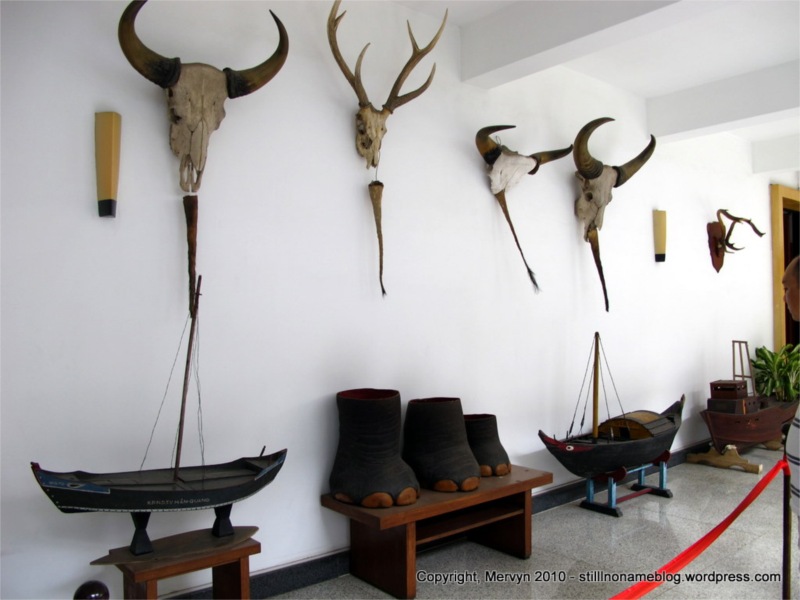
All the stately stuff was interesting and all, but they just couldn’t hold a candle to two of my favorite features. The first was in the basement. The maze of hallways hid the underground war bunkers. It was old school TV come to life. I kept rounding corners expecting to stumble across Maxwell Smart or, better yet, 99. Turns out the TV show wasn’t kidding about the design tastes of mid-20th century spies. They got a lot more right than I would have ever expected. The hallways were an anonymous grey-white, all polished and echoey. Tiny alcoves would have a metal desk, a telephone, and file cabinets—the sort of place junior spooks went to die. Transistor radios still sat waiting for the next signal. Everywhere there were heavy looking AT&T standard phones on the verge of ringing.
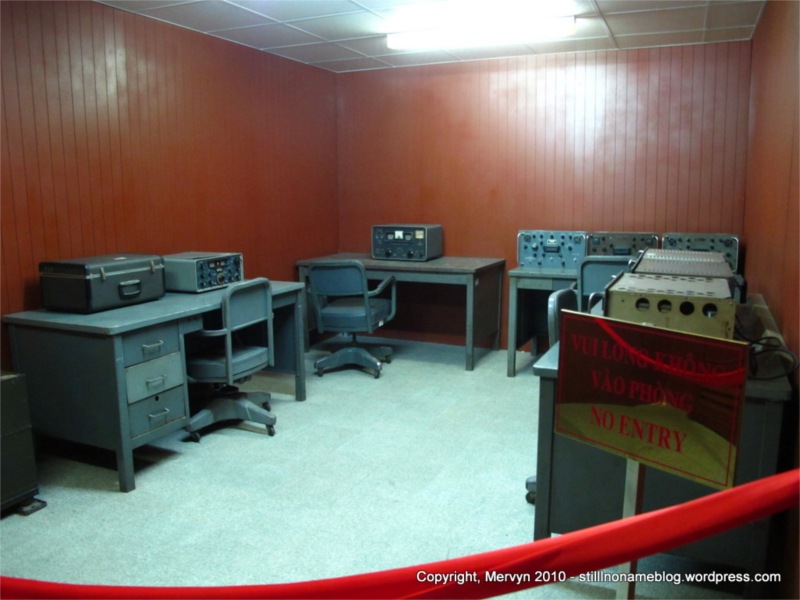
Hidden in the maze, was a presidential hideout–a single bed where he could wait out a bomb attack. Next door was an office where he could direct the war if the palace were under assault. Maps lined the wall around a desk with two phones. It didn’t seem like much. Perhaps it was high tech for the time. Perhaps they didn’t have much money. Seems like such a bare, uninteresting, disconnected place to run a war.
Walking those halls, there was a clash between the comedy of Maxwell Smart and the serious business that was conducted here. It was a time machine or, perhaps better yet, a time capsule. No one told this place that we’d made it to the next century. Locked away deep underground the war never ended here. Operatives were just around the corner, ready to fire up the radar station and start talking into their telephone shoes.
I got the same feeling upstairs in my second favorite spot: the “Gambling Room.” This was straight out Sinatra, Dino, and Sammy Davis, Jr. Washed out oranges and yellows balanced by off-white and dark brown. Plush leather high-backed chairs. A circular leather couch around a low table. You can imagine the Rat Pack dropping in for cigars, booze, girls, and a game of cards. There was even a little bar underneath what looked like poker chips crossed with roulette wheels on the wall. The only thing that gave away the fact that you weren’t in old school Vegas or Beverly Hills was a table set up for mahjong.
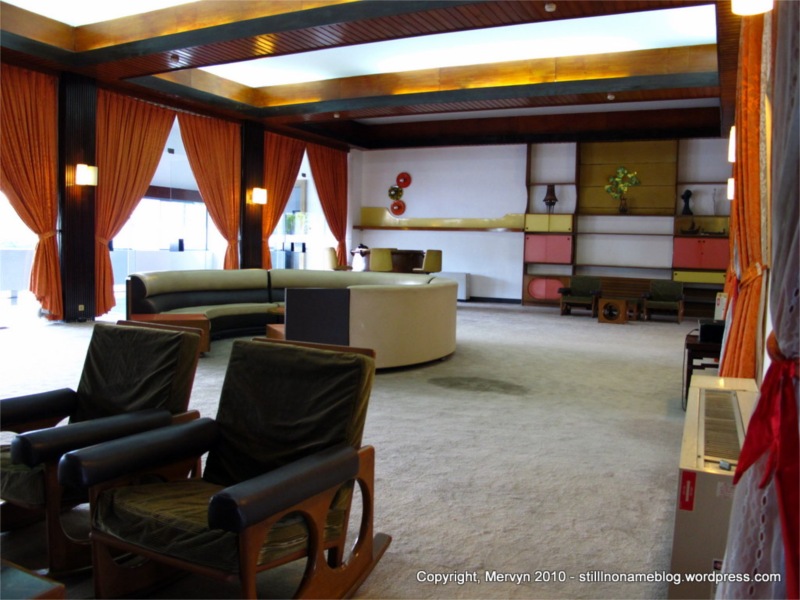
Maxwell Smart would’ve felt right at home in the Gambling Room, meaning he’d be happy to spill a drink on a dignitary or accidentally light a chair on fire, all to be rescued by 99. I wouldn’t have been surprised if there’d been a secret panel on the wall that opened into a hidden lair.
Outside the palace, a group of what looked like Vietnam Vets gathered for a picture. Actually, I should clarify—these were Vietnamese Vietnam Vets. They were older and had green jackets or hats. Perhaps they’d fought to liberate Saigon. I couldn’t tell. I may look Vietnamese, but I sure don’t speak it. The main difference between their American counterparts that I noticed: they do a lot more smiling in pictures.
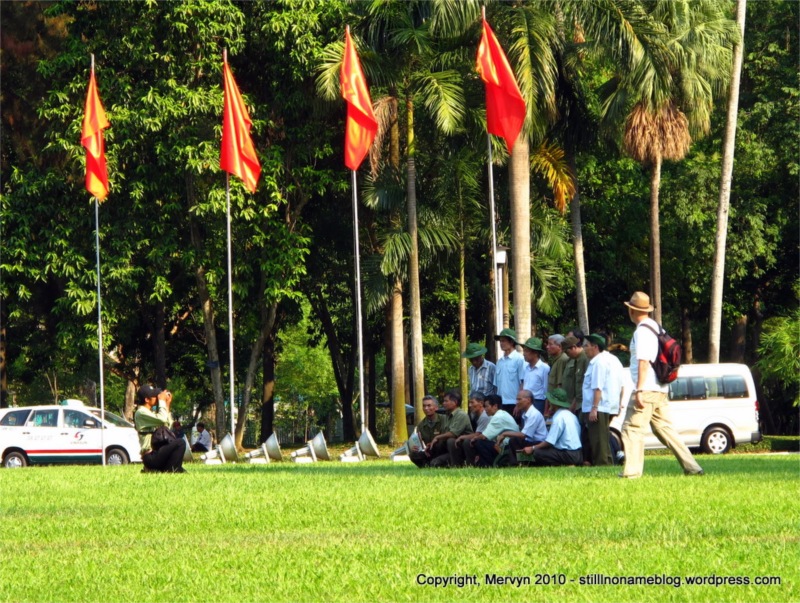
The experience was compelling. It felt like living history, particularly because there’d been no attempt to modernize the place. Unlike the White House, the décor is frozen in time. There are no computers sitting around. The current administration hasn’t added any modern or personal touches. It doesn’t feel like a living, active building. It’s like all the people just up and disappeared one day in the 70’s and the people that followed just decided to occasionally vacuum and dust to keep up appearances. It’s as it was the day Saigon fell. All the communists did was brand it with pictures of Uncle Ho and toss on some red and yellow flags.
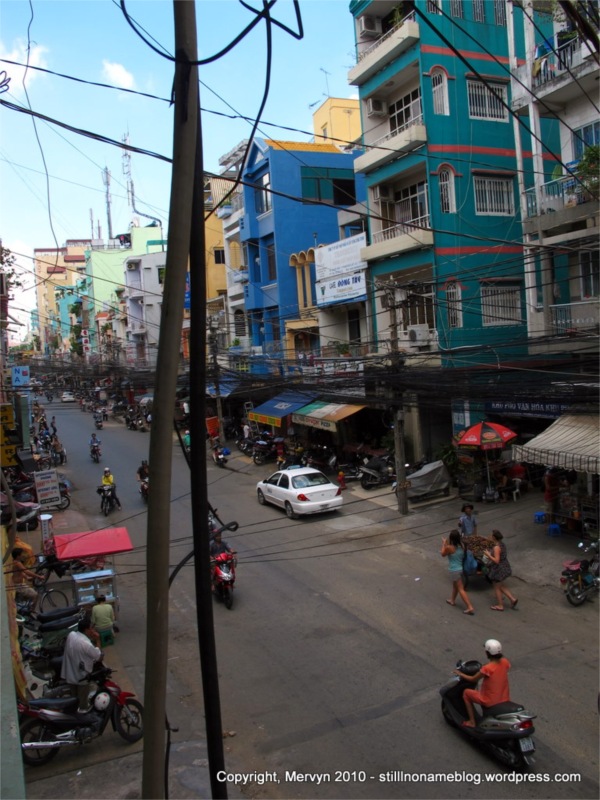
I headed out of the palace, back towards my $4 a day motorbike. I flipped over my ticket to the palace and read the following: “Some of the rooms in the Palace are available for hire for meetings and banquets. The palace [sic] also has facilities for celebrations such as weddings and birthday parties. . .”
A time capsule for rent. Guess some things have changed. So, to anyone out there that cares, feel free to book the Independence Palace for December 31, 2012 and my “surprise” Get Smart themed 35th birthday party. Do it. You might even present me with my own commemorative shoe phone. And a telephone booth elevator. And a horde of Agent 99 clones acting as cocktail waitresses. Your secret birthday plans are safe with me; I promise not to ruin the surprise.
 The Overpacker